


 SEARCH



On the Danube, a micro-state entity born in 2019 is experimenting with digital citizenship and alternative institutional and democratic models.

In the global landscape of innovation, it's not just technologies that are redefining existing balances. More and more often, the very concepts of sovereignty, citizenship e governance, especially in contexts where legal boundaries are uncertain. It is in this space of ambiguity that the Free Republic of Verdis, self-proclaimed entity in 2019 along the course of the Danubio, between Croatia and Serbia, which in recent years has become a case study for lawyers, political scientists and observers of institutional innovation processes.
Verdis was officially proclaimed the 30 May 2019 by a small group of international promoters led by the British entrepreneur and activist Daniel Jackson, supported, in the initial stages, by collaborators from Central Europe and the Baltic countries, with expertise in law, technology and political communication. From the outset, the founders made Verdis's intention clear: not an armed secession nor a military challenge to neighboring states, but a conceptual and institutional experiment, avowedly peaceful, based on the use of digital technologies.
The entity claims a territory of approximately 0,5 square kilometers, known as Pocket-3, formed as a result of cartographic disagreements that emerged after the dissolution of Yugoslavia. Despite the lack of international recognition, the project developed its own organizational structure over time, presenting itself as a testing ground for alternative models of governance rather than an immediate attempt at formal statehood.
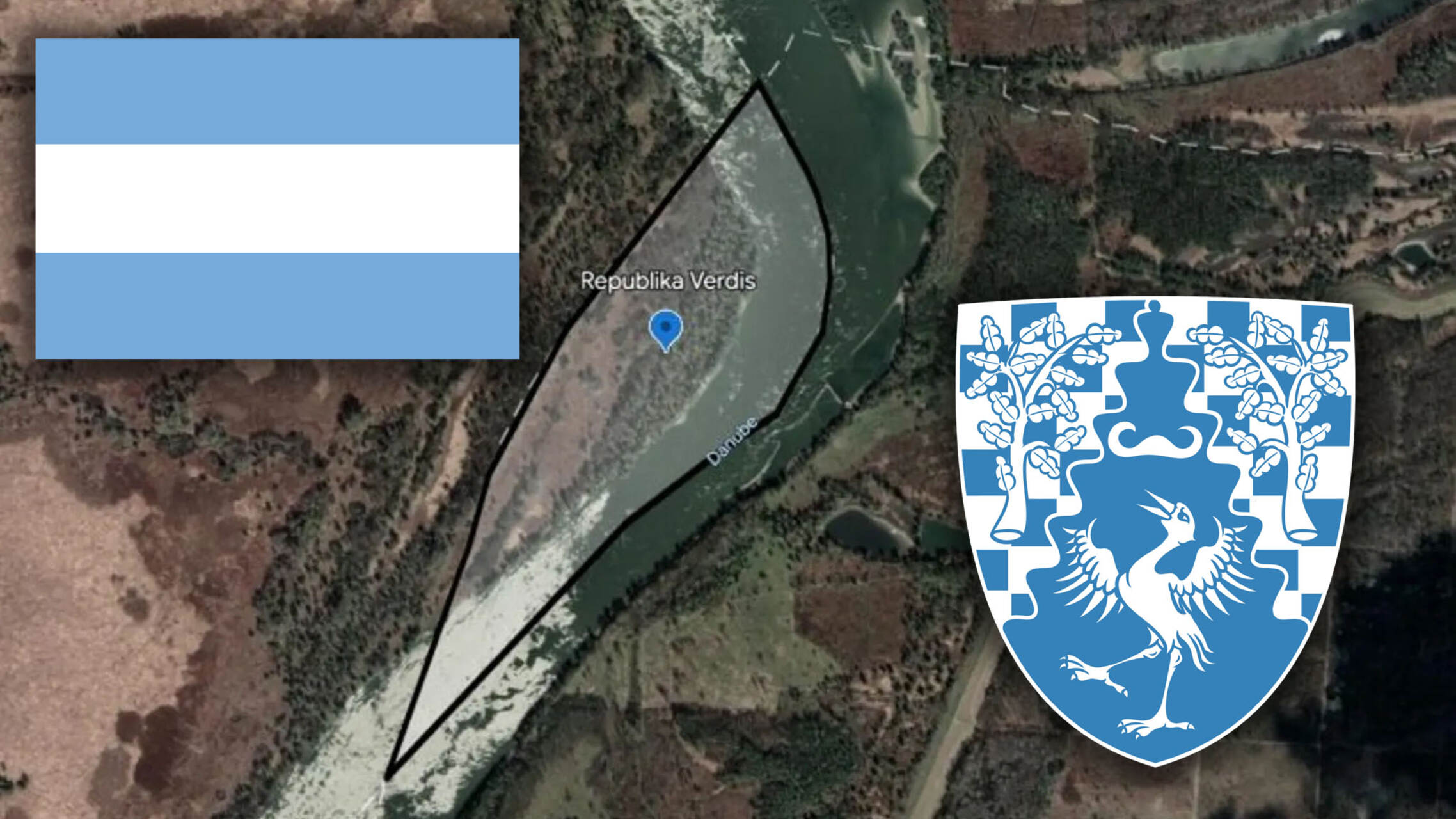
(Illustration: Free Republic of Verdis)
A border area and the unresolved issue of sovereignty
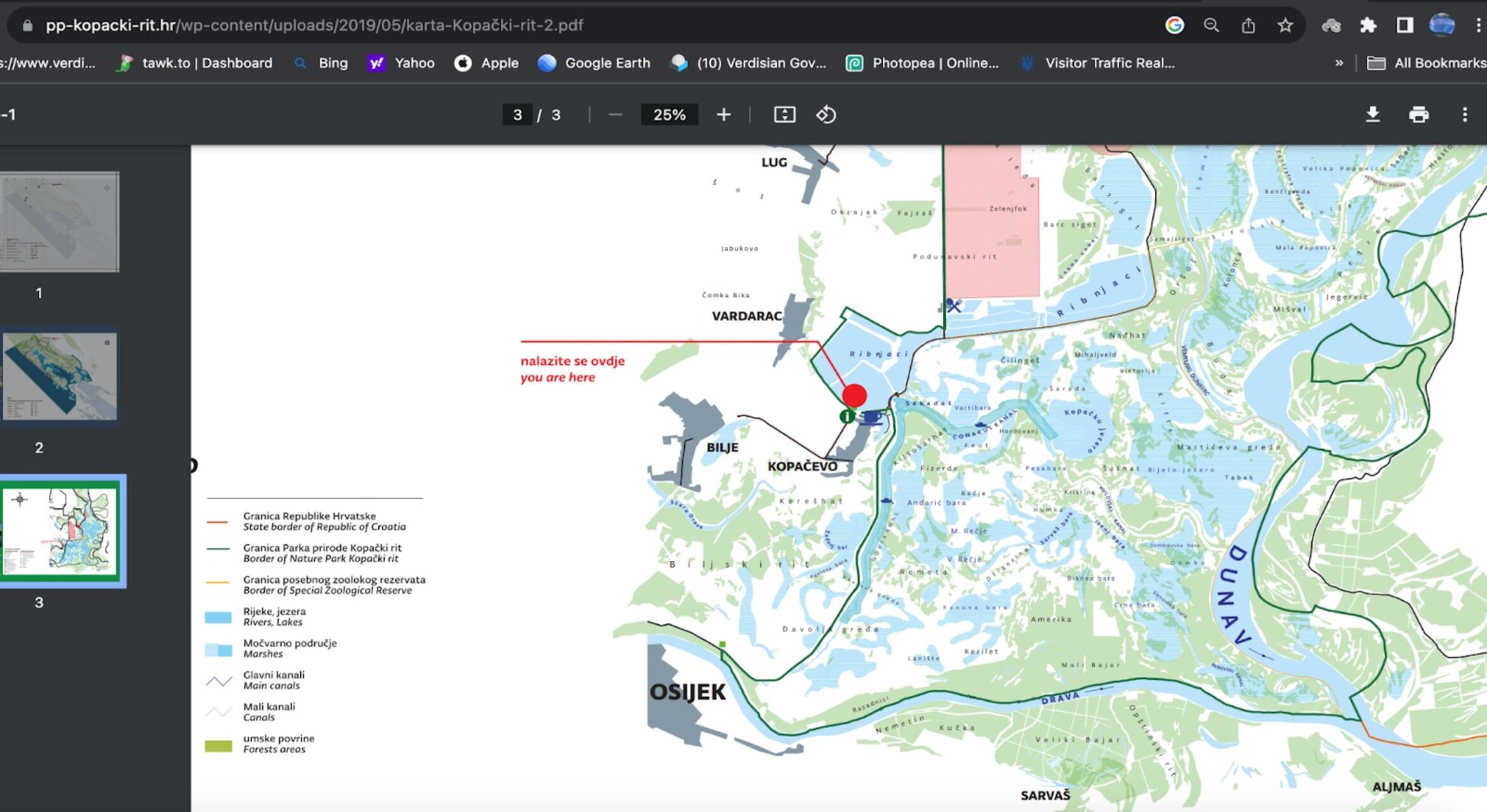
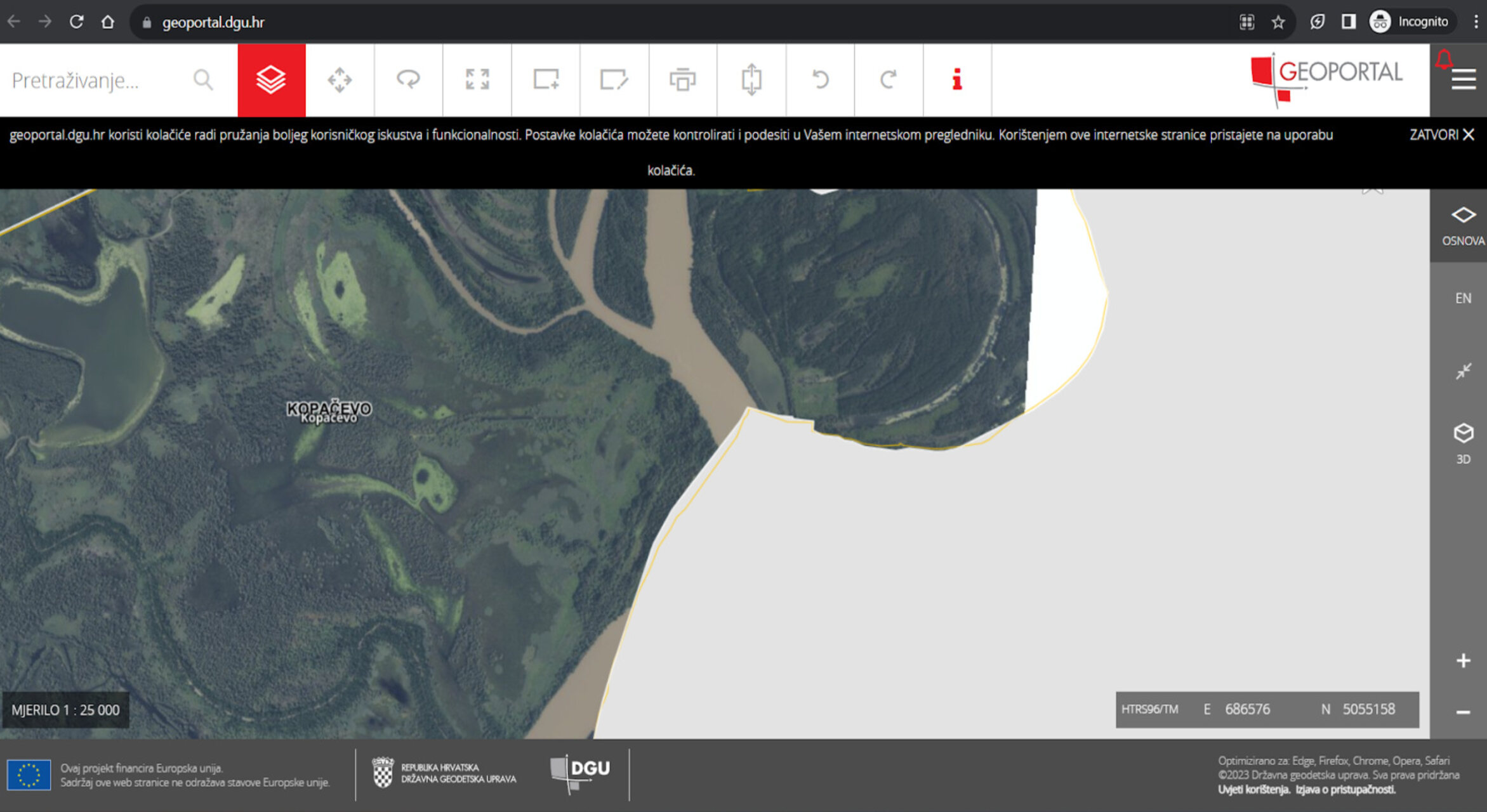
The area claimed by Verdis is located along a stretch of the Danube where Croatia e Serbia apply different criteria for delimiting the river border: Zagreb follows the historical cadastral line, while Belgrade refers to the current course of the river. This discrepancy has left some portions of territory formally not integrated into their respective legal systems, creating a condition of administrative vacuum which the promoters of Verdis interpret as a legitimate space for political initiative.
According to this interpretation, the territory would not be effectively claimed by any State, while remaining under the de facto control of the surrounding authorities, which limit physical access and discourage permanent settlements. From the perspective of international law, however, this condition does not automatically equate to a zero ground, a legal concept with extremely limited applicability in the contemporary context.
“In current international law, the idea of freely appropriable territories is essentially outdated,” explains Marco Gestri, professor of International Law at the University of Modena and Reggio Emilia.
“Even in the presence of border disputes, sovereignty is defined through established practices and mutual recognition, not by unilateral initiative.”
A clarification that helps to frame Verdis as symbolic and experimental project, rather than as an emerging legal entity.


A global citizenship built online from scratch
One of the central elements of the Verdis experiment is the model of digital citizenshipThrough dedicated online platforms, the project has collected over the years 15.000 membership requests, formally granting citizenship to approximately 400 Guests Distributed across numerous countries, from Western Europe to Southeast Asia. Selection is based on internal procedures that include declarations of adherence to the founding values and, in some cases, project contributions or specific expertise.
Membership does not entail recognized legal rights or valid passports, but is configured as membership in a voluntary political community, built around principles of participation, institutional experimentation, and the conscious use of technology. In this approach, citizenship is detached from territory and residence, taking on a predominantly symbolic and relational character.
Secondo Rainer Bauböck, political scientist and scholar of transnational citizenship at the European University Institute in Florence,
“Experiments like Verdis show how citizenship is taking on increasingly voluntary and identity-based dimensions, but remain external to state systems, which continue to be based on territorial criteria.”
A distinction that clearly delimits the field of innovation from that of formal legality.
Governance structures and institutional experimentation
In addition to citizenship, Verdis has defined his own government architecture, composed of self-appointed executive and advisory bodies, with roles that include a Council, an Executive Board, and thematic working groups. Decision-making processes take place primarily online, through digital tools that allow for voting, consultations, and open discussions among registered citizens.
Although it does not formally adopt Decentralized Autonomous Organization (DAO) models based on blockchain, the project recalls some logics of the decentralized governance, focusing on transparency, traceability of decisions, and reduction of bureaucratic intermediations. Among other things, Verdis has also experimented with the symbolic issuance of its own internal digital currency, used exclusively for demonstration and community engagement purposes.
These structures do not produce recognised legal effects, but constitute a testing ground for forms of institutional innovation which aim to overcome administrative rigidities and vertical models of power. In this sense, Verdis stands alongside other European initiatives testing new ways of engaging citizens through digital media.
However, as he notes Sabino Cassese, jurist and emeritus judge of the Italian Constitutional Court,
"Institutional innovation cannot exist without a shared regulatory framework. Without common rules, participation risks remaining a symbolic exercise."
A reminder of the need to distinguish between conceptual experimentation and the ability to impact existing systems.
Between Verdis, Liberland and other European micro-experiments
The Verdis case fits into a regional context already marked by similar initiatives, such as freeland, which also arose along the Danube and is often cited as a term of comparison. Unlike more explicitly libertarian or provocative projects, Verdis tends to present itself as institutional reflection platform, with a language closer to academic debate and less oriented towards media spectacularization.
Over the past two years, the project has strengthened its communications presence through online conferences, policy papers, and informal collaborations with researchers interested in digital sovereignty issues. While remaining on the fringes of official diplomatic processes, Verdis has gradually consolidated a active international community, especially in the European context.

(Photo: Daniel Jackson)
A conceptual laboratory for the future of institutions
Verdis will hardly be able to evolve into a state recognized according to the criteria of the contemporary international law. However, its value does not lie in the prospect of a formal sovereignty, but in the ability to query consolidated categories such as legitimacy, participation and political belonging.
As a institutional innovation laboratoryVerdis highlights both the limitations and the potential of alternative governance models, offering useful insights for traditional institutions as they engage with increasingly mobile, connected, and critical citizens. In an era of crisis of confidence in established forms of representation, these experiments contribute to broadening the debate on how political architectures might evolve in the 21st century.
More than a new state, Verdis represents a signal: that of a growing tension between consolidated legal structures and new, technologically mediated ways of building political community.
Here are three insights that might interest you:
In Wyoming the city of Blockchain and decentralization
Liberland, the Blockchain State Where Freedom is Programmable
Why DAOs Are Real Legal Entities in the Marshall Islands
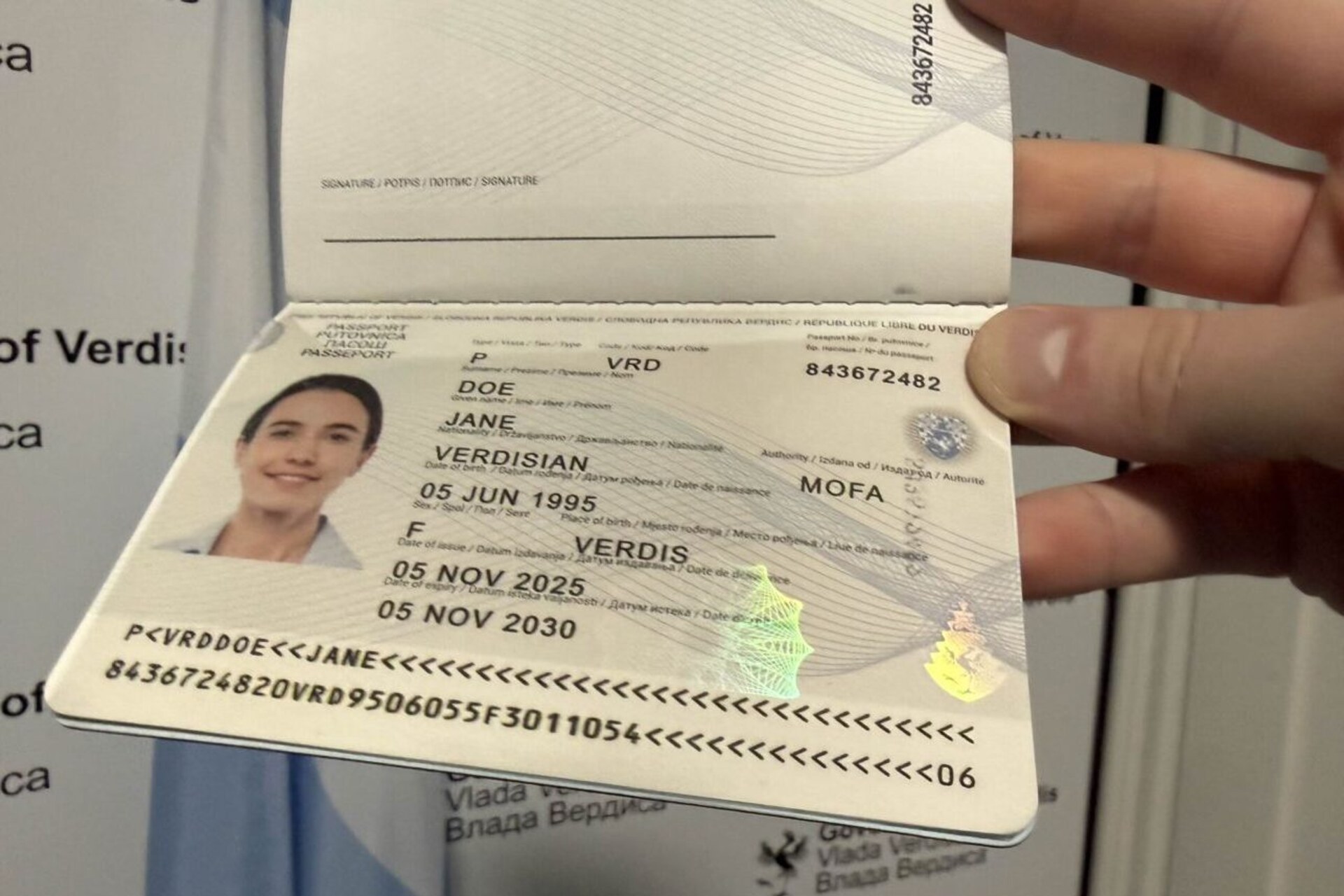
(Photo: Free Republic of Verdis)


