SEARCH


Researchers from the ETH Zurich and Lausanne have made the generation and transmission of chemical, phosphorescent and non-phosphorescent light 10 times more effective

When fluorescent dye molecules “nest” together perfectly, something completely new is generated: an excited state, distributed across many molecules.
Such collective excitations can be used in various ways: for example for organic solar panels, in sensors, for ultra-fast data transmission or in microscopy.
In Switzerland, researchers at EMPA, together with colleagues from the Federal Institutes of Technology in Zurich and Lausanne, the Paul Scherrer Institute, and IBM Research Zurich in Rüschlikon, have succeeded in making these chemical light amplifiers ten times more efficient than before.
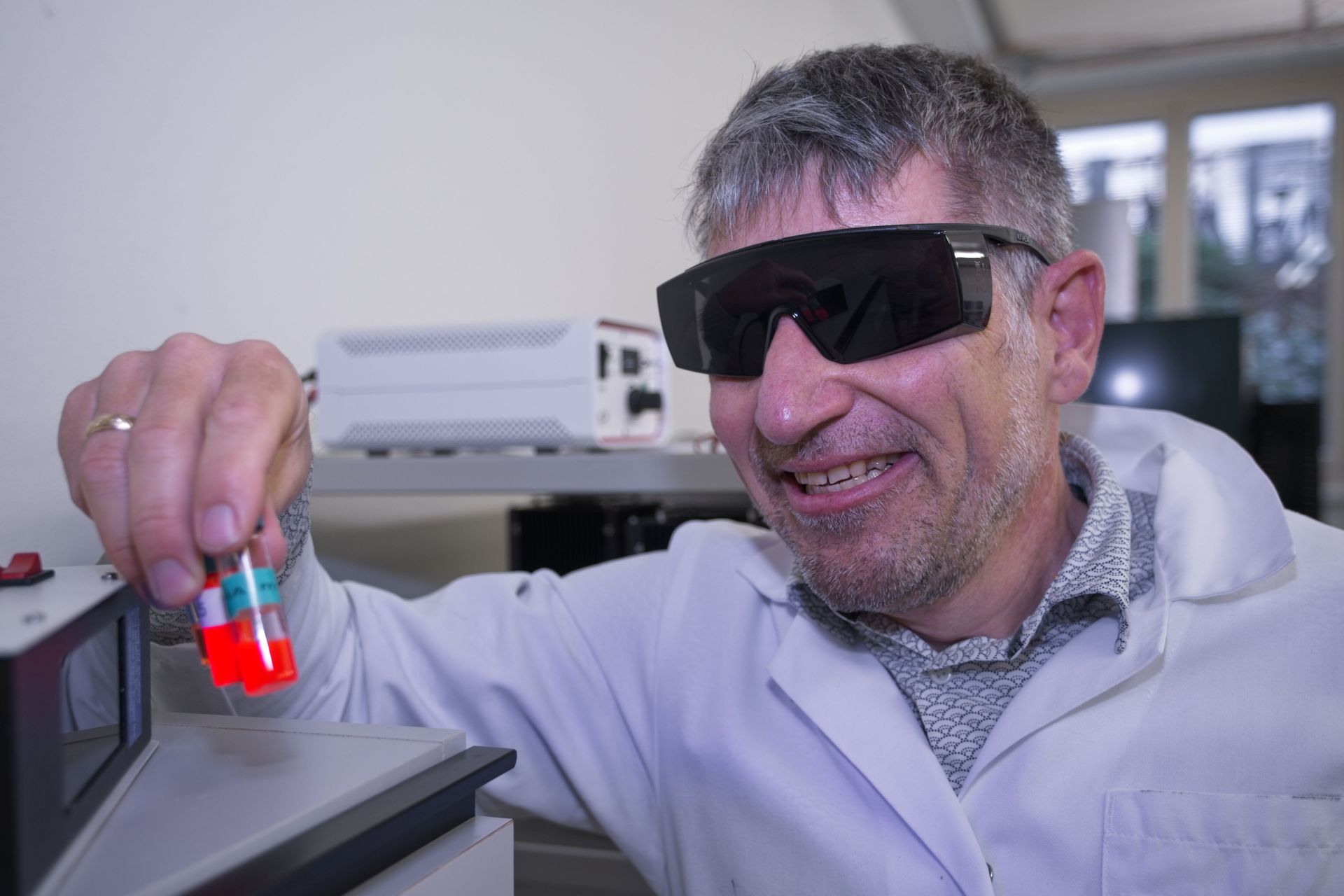
“What we see in these cases is a much faster energy transfer than in any semiconductor,” enthuses Jakob Heier.
The physicist works in the Functional Polymers Cabinet of the Swiss Federal Laboratories for Materials Science and Technology, and the discovery he and his team made could cause a stir in many areas of activity, such as sensor technology, optical data transmission or the fabrication of organic solar cells.
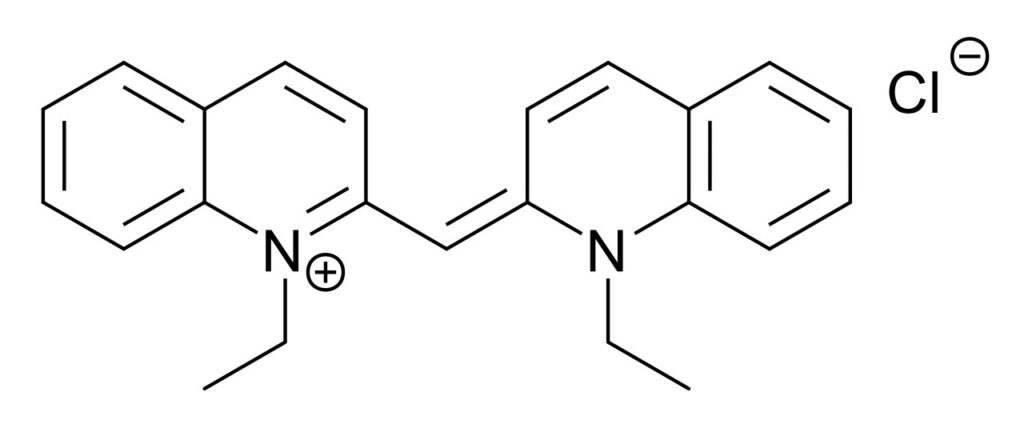
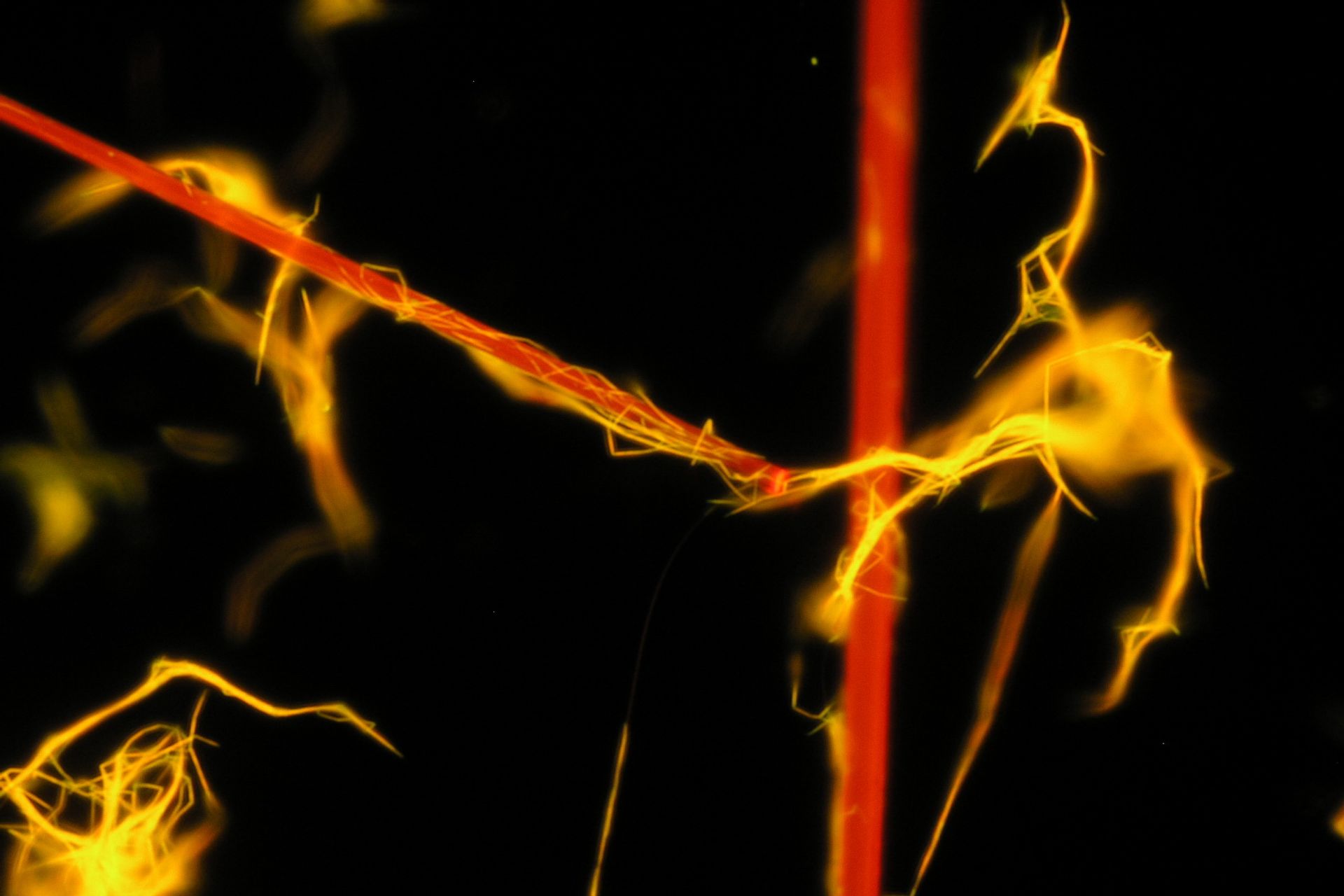
We are talking about islands of dye molecules, with a perfect internal structure. Among experts, such structures are called J-Aggregates. Although they have been known for more than eighty years, they have recently attracted renewed attention in research.
This is due to the special internal electronic life of these dye islands. To understand what Jakob Heier and his colleagues have found, a brief excursion into the world of dyes is useful.
If a dye is to glow, the molecule must first be activated, also by light. Optical brighteners in detergents, for example, absorb UV light and emit bluish (visible) light: this is why white clothing shines so brightly in the ultraviolet light of a disco.
The emitted light has a lower energy than the photons used to activate the dye, because some of the energy is converted into vibrations, i.e. heat, in the dye molecule.
In Switzerland, the signs of Alzheimer's detected in the blood
Particles as "antennas" for the transmission of energy force
The J-aggregates studied by the Swiss scientist and Surendra Anantharaman, a doctoral student at EMPA, behave differently from single dye molecules.
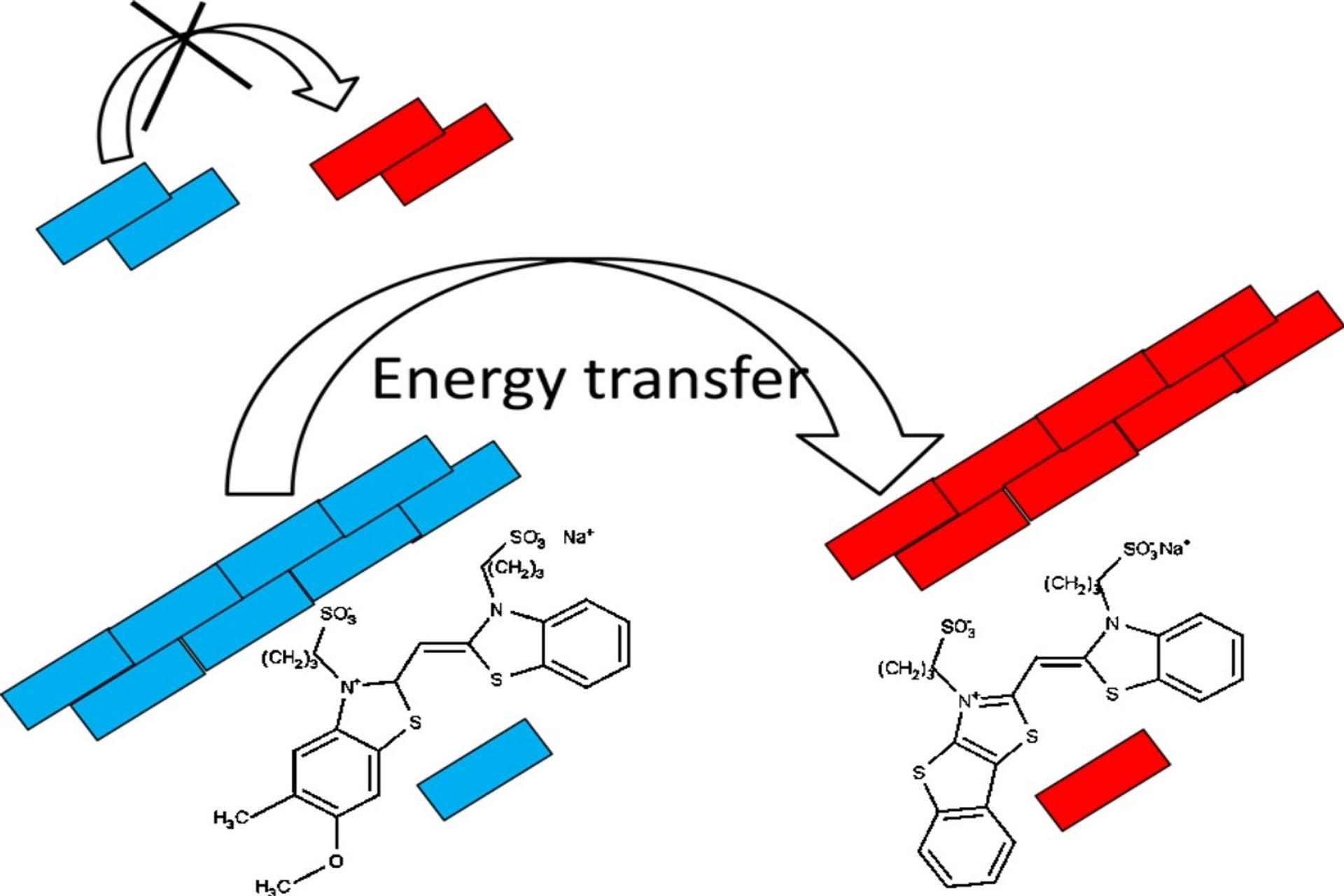
In these molecular islands, the dye molecules are well-ordered and very close together, like matches in a box. In this constellation, the dye molecule does not “have to” glow, but “can” pass its energy to a neighboring molecule.
Compared to classical semiconductors made of silicon, there is, however, one crucial difference: in a silicon semiconductor, such as a solar cell, the excitation energy is transported via charge carriers, for example electrons, which “jump” through the material, so to speak.
In J-Aggregates, however, the electrons simply oscillate back and forth in the dye molecule and never leave it. Instead of electrons, only oscillations are transmitted, similar to those used by transmitting and receiving antennas in the macroscopic world.
In fact, J-Aggregates can “transmit” energy on a much smaller scale, yes, but extremely quickly and across hundreds of molecules.
Liquid robots like… cells to explore extreme environments
From 1936 to today high losses due to "construction errors" of the system
The phenomenon of J-Aggregates and their special energy transmission was first discovered way back in 1936 by Edwin E. Jelley in the United States and Günter Scheibe in Germany.
But until now, about 95 percent of the radiated energy was lost and could not be transmitted. The blame was on the “construction errors” of the system.
In reality, the molecules were not so perfectly aligned. And every time the energy pulse encountered one of these defects on its journey through the J-Aggregate, the energy transport was interrupted.
A normal molecular vibration would finish the transfer, some heat would be generated, and the game was over.
A new process will make cotton flame retardant and comfortable
A dye where 60 percent of the incoming light is re-emitted
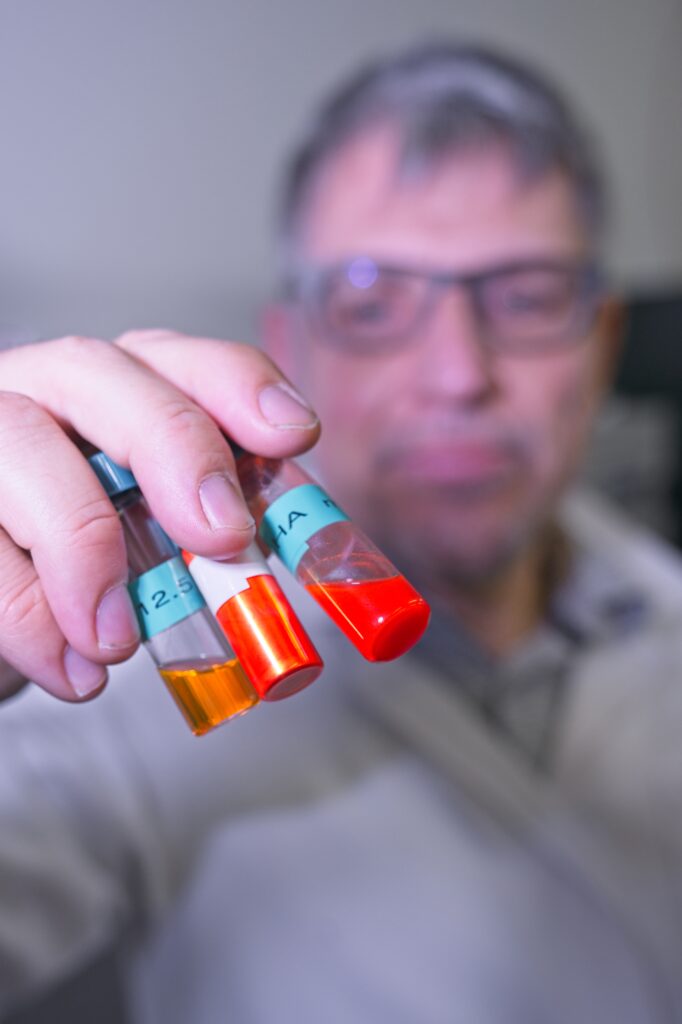
The team ofEMPA, supported by researchers from theETH in Zurich,EPF of Lausanne, from the PSI and IBM Research Zurich, managed to develop a dye system, in which until 60 percent light ; is reissued.
This also means that until 60 percent of the energy can be transmitted without loss: compared to previous five percent, this is a discovery of sensational importance.
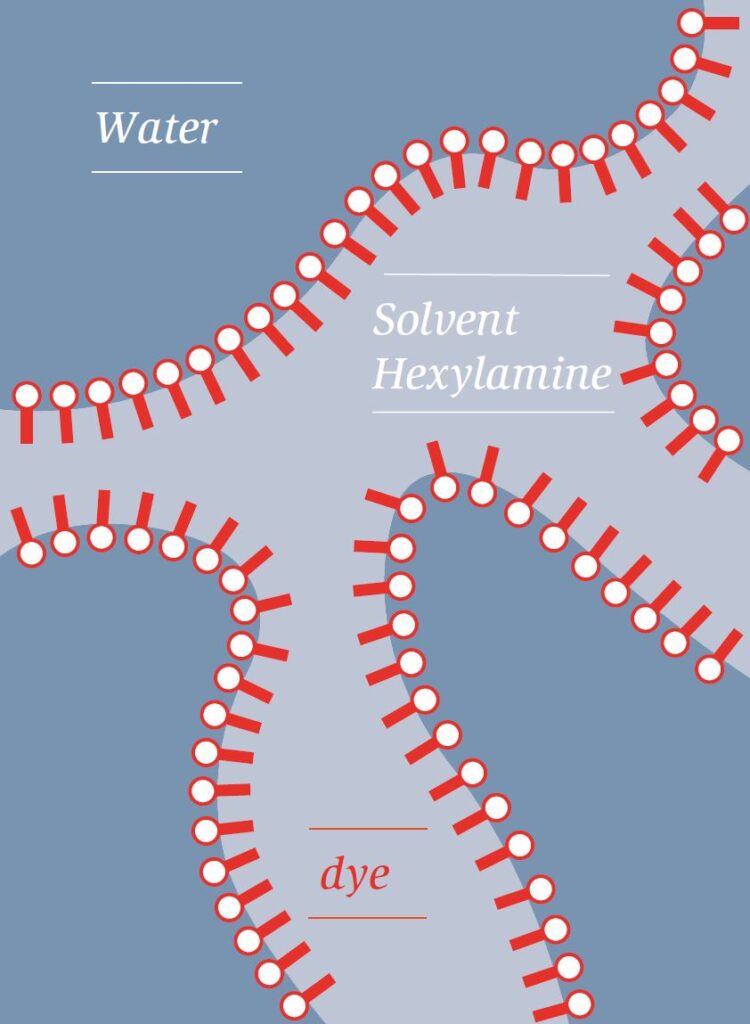
La key to success it was there perfectly constructed islands of dye, which were created in an end emulsion of water and hexylamine.
A emulsion is a mixture of liquid droplets in another liquid: milk and mayonnaise they are emulsions that everyone knows.
The researchers of the Swiss Federal Laboratories for Materials Science and Technology they observed that not any emulsion it would do the job.
It had to be a so-called bicontinuous emulsion, which means that the suspended droplets since external liquid They do not have to be distant from each other, but they must have combine to form structures similar to Stripes.
Only then the dye in question form the desired Faultless J aggregates and can "sending" the absorbed energy su long distances without losses. That's how the dye molecules they line up in abicontinuous emulsion, similar to matches in a box.
Only then is the signal transmission successful.
Flexible CIGS solar cells: record efficiency achieved!
Before bicontinuous emulsions, failures were the rule
The study that has now been published also mentions, in the good tradition of scientific research, the failed attempts and the history of the successful experiment. After all, chemists and physicists around the world should be able to benefit from the experience of the EMPA team.
For example, it was not possible to crystallize the dye in the form of thin films on a solid surface. Too many defects in the crystals often ruined the transfer.
Aqueous solutions, in which the dye aggregates into tiny droplets, also do not work. Only bicontinuous emulsions lead to signal transmission, and only if there are individual dye molecules left in the liquid phase that can fill the holes and close the gaps in the J-Aggregates: in other words, “repair” the defects.
An unprecedented synthetic plaster to seal internal wounds
Which applications are concretely conceivable: cells and sensors?
Researchers certainly have a long way to go before what they've achieved in an emulsion can be made technically useful. But signal transmission through dyes could find its way into many areas of everyday life.
For example, it is possible to capture weak infrared light with the help of these dyes and convert it into digital signals with the help of quantum dots – a boon for sensor technology and solar cells, which should provide electricity even in very weak light.
Due to their unique properties, J-Aggregates also lend themselves to applications in quantum computers and optical data transmission.
Finally, the signal-conducting dye clusters could become useful in diagnostics of living organisms: infrared light, or thermal radiation, penetrates deep into human tissue without damaging cells.
J-Aggregates could indeed make this radiation visible and digitize it. This could greatly facilitate and improve high-resolution microscopic imaging of living tissue, and contribute to the fight against disease.
The first… biodegradable battery is already a reality in Switzerland