SEARCH


Google vs ChatGPT, men vs. machines, dialectic between optimists and pessimists: analysis on the many opposing fronts of Artificial Intelligence
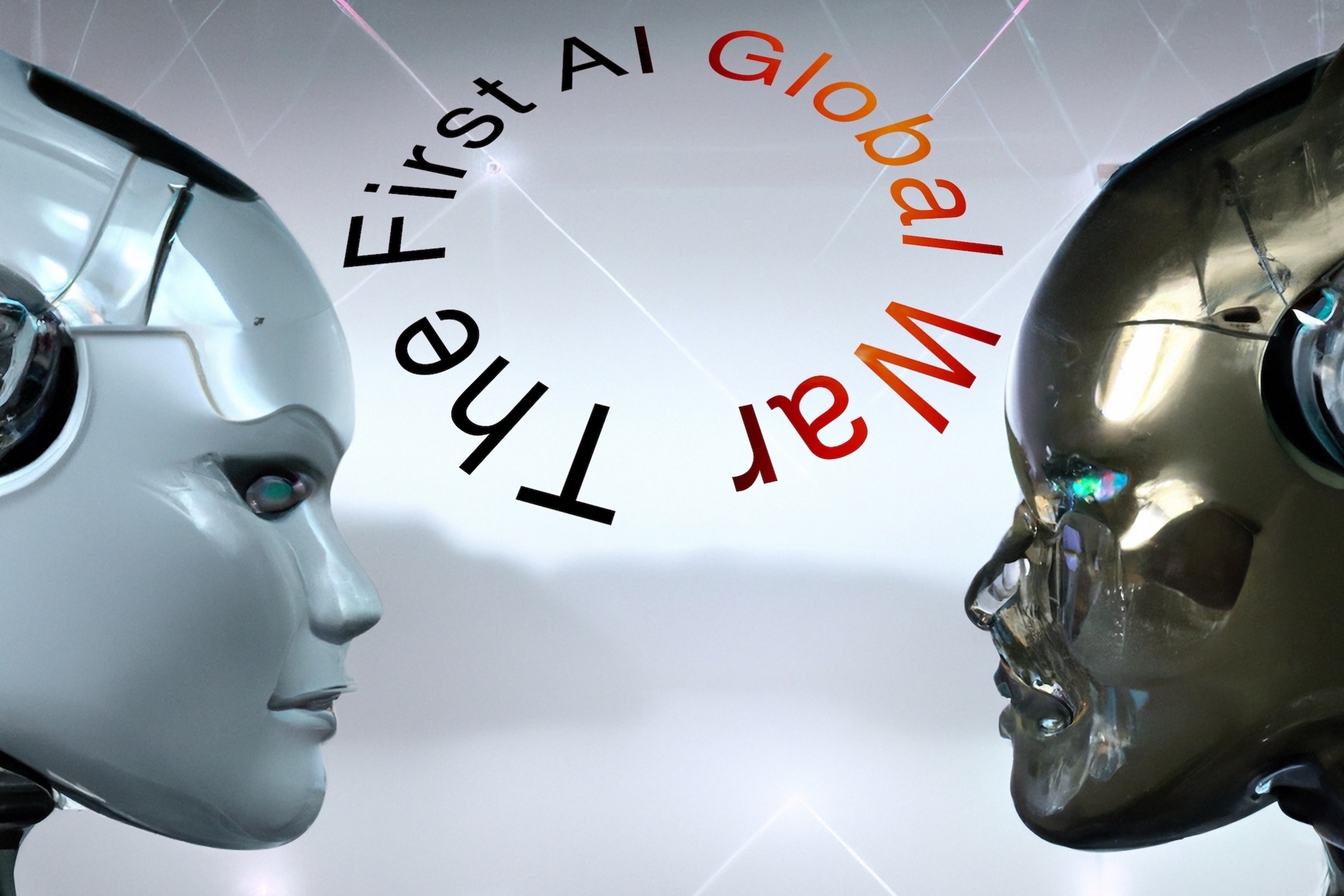
(Image: Edoardo Volpi Kellermann/Dall-E)
For those who still haven't noticed it (excluding the regular readers of Innovando.news) a revolution is beginning on a global level comparable, according to some even greater, to those caused earlier by the advent of "personal" information technology.
An even more extreme metamorphosis than that induced by the diffusion of the Internet and, finally, by the diffusion of pocket computers.
After the first stirrings of LaMDA and the case related to it (which we have already dealt with in an article) and after the controversies born in the artistic field following the sharing on the Net of systems capable of generating images starting from requests ("prompt ”) of users, here she is ChatGPT and messed everything up.
LaMDA, Google and the virtues of a… “pocket professor”
“Artificial Intelligence” yes, but what are we talking about?
In technical jargon, we are talking about an Extended Linguistic Model specialized in dialogue with people: GPT is the acronym of “Generative Pre-Trained Transformers” in English.
In practical terms, ChatGPT is a "ChatBot" (a system that automatically replies via chat to users) capable of performing various functions, all worthy of being listed.
support a natural dialogue with a human user in different languages, including Italian;
provide contextualized and generally accurate answers on all topics;
generate texts (reports, reports, articles) that are well written and different every time;
write great code in all software languages;
improve the code of previously written software;
go crazy like mayonnaise.
If your jaw hasn't dropped by now, you may not have read the previous six points carefully, which is why I suggest you start over.
Since it was shared online by the OpenAI foundation to be able to test it in the field, ChatGPT has had such a success with the public, reaching one million users in a week and 100 million in a couple of months, to send Google into a panic.
ChatGPT: “I, Artificial Intelligence, will explain Innovando.News…”
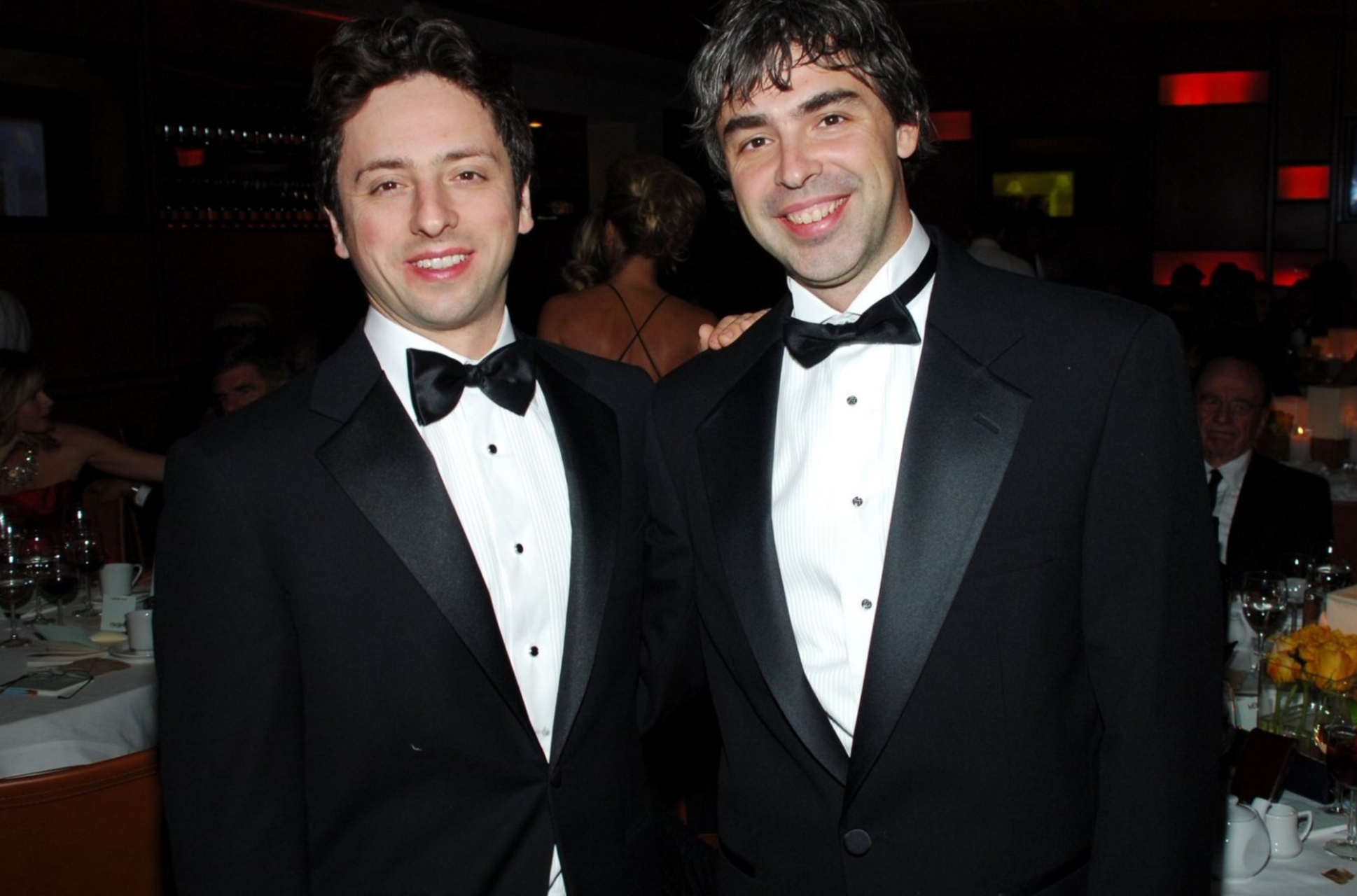
Why recall from the "leave" Larry Page and Sergey Brin
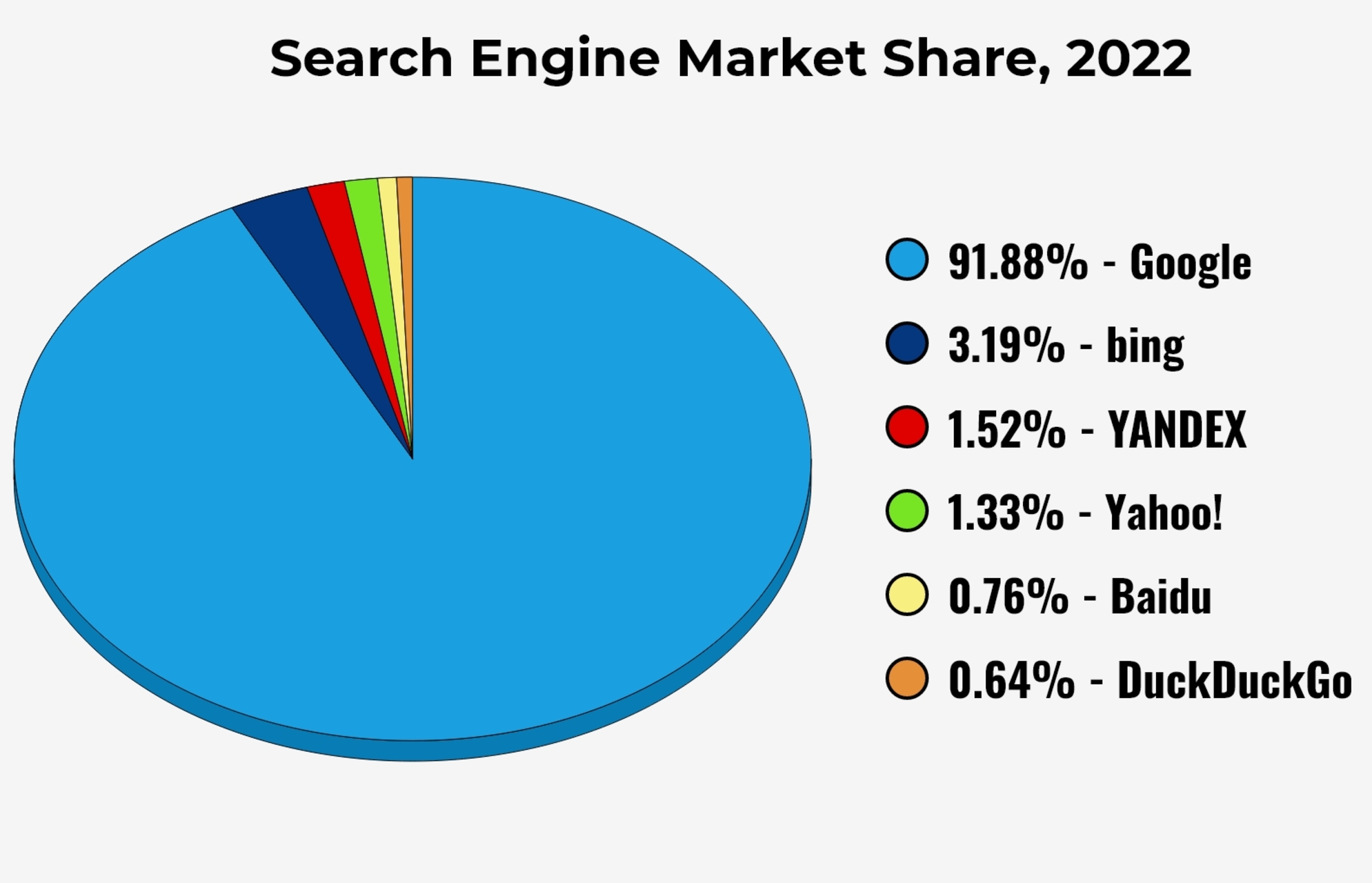
The board of Alphabet, the holding company which also owns Google, recalled the founders Larry Page and Sergey Brin to address what will probably be the first real crisis of the company that has so far reigned supreme on searches on the Net (so much so that many now confuse Google search and the Web itself).
According to several analysts, a system like ChatGPT could in a short time "undermine" Google from its position of absolute dominance in search engines.
But is this real Artificial Intelligence?
No. Or at least, it all depends on what we mean by Artificial Intelligence.
Let's forget SkyNet or Hal, from which we are far away, provided that they are plausible hypotheses.
Let's forget science fiction for a moment, a paradoxical request from the writer, and look for a metaphor to better understand what the latest generation ChatBots do.
First of all, they are all systems based on neural networks, the technology that comes closest to a mild imitation of our brain.
These networks are capable of "learning" by weighing the impulses exchanged between their own "neurons": in short, they are capable of self-programming.
In this sense they differ totally from the "classical" computer, which needs a complete and man-made instruction listing (until now).
From Artificial Intelligence a decisive boost to cryptocurrencies?
Fruit of human training up to "own" algorithms
During the training phase, enormous amounts of data are fed to them: for example, the AIs that recognize patterns (shapes in images), such as the traces of a tumor in a CT scan, are made to analyze thousands, millions of CT scans and in the Initially humans signal to them when they are wrong and when they are right.
It is during this phase that neural networks create their own recognition algorithms and this is where the problems start because we have no idea how these algorithms work.
The current AIs are "Black Boxes", black boxes; the problem of AI transparency is currently one of the most debated among researchers.
If we don't know why an AI responds in a certain way, we can never be sure that at some point it won't give one, ten, a hundred completely wrong answers. In short, let him go crazy.
And here the Turing test also fails.
Thus Artificial Intelligence at the service of Sauber Alfa Romeo


The first battle: Alan Turing antagonist of John Searle
The brilliant and unfortunate Alan Turing, who gave us modern information technology starting from the Second World War - and paradoxically thanks to it - had a long view and thought that sooner or later computers would reach such a degree of complexity as to become indistinguishable from people.
He conceived a test in this sense, which in a very simplified way states that having two separate rooms, in one of which there is a human being and in the other a computer (but the human being does not know it), if the person talking textually with the computer can not distinguish it from another person, we can consider the computer "intelligent".
Already, Dr. Turing had described ChatGPT and the like a few decades in advance.
Now, the Turing test is based on a number of assumptions, the most important of which is that good syntax implies semantic proficiency.
That is, that if you get sensible answers from the other side, whoever answers you understands the meaning of what you ask. And here comes another fine head, John Searle, and his "Chinese room".
In Searle's counter-example we always have two separate rooms, both occupied by people of whom one speaks Chinese and one does not.
But the second person has at their disposal a fantastic manual that contains all the possible questions or statements written in Chinese with the most probable answers to those questions or statements next to them.
In this way he is able to maintain a - apparently - sensible chat with the interlocutor, responding in kind without understanding anything of what he is actually writing. Good syntax does not imply understanding.
More efficient genetic repairs with Artificial Intelligence

Forgive them, because they (AIs) don't know what they're saying
Current AIs are not semantic. We still have no idea how to give a neural network understanding of meaning.
An advanced language model like ChatGPT contains a database of about 175 billion nodes, the equivalent of the big book described by John Searle, on which the neural network has been trained for months thanks to current super-computing capabilities (which are at the basis of the AI explosion we are about to assisting).
ChatGPT limits itself to calculating the most probable lemmas and syntactic constructions on certain topics, but has no idea of what it writes, in fact it doesn't even have the necessary functions to create a mental image, an idea.
Current AIs don't just lack semantic competence: experience is missing, perceptions are missing, sensations are missing. And thank goodness, otherwise they would be "monsters".
What creates an intelligence devoid of empathy?
A sociopath.
Here's how Google's Artificial Intelligence wins every challenge
(Graphic: Internet Advisor)
From a moment of crisis one or more new opportunities?
To conclude this first excursus, it must be said that for some weeks now the major digital majors (except one) have been laying off a lot.
The old markets are saturated (starting with smartphones) and many look around bewildered, some dreaming of improbable virtual universes, others taking refuge in their privileged positions.
But everyone, more or less, feels the chair shaking.
Yet the current is a period of great stimuli, from the point of view of computer science.
Super-computing resources continue to grow exponentially (another "exascale" supercomputer, capable of billions of billions of operations per second, was inaugurated a few days ago).
We'll be back soon to talk about these partly related phenomena because, as an ancient Chinese curse says, we're living in interesting times.
Michael von Liechtenstein on geopolitics and artificial intelligence
The birth and development of the Internet over approximately thirty years
The countries with the highest number of Internet users between 1990 and 2021