


 SEARCH


The Gaziantep earthquake has caused over 40 deaths, but the suffering will be eased by the first aid in digital currency in history
In the night between Sunday 5 and Monday 6 February, an earthquake measuring 7,8 on the Richter scale struck the area between Syria and southern Turkey, with its epicenter in Gaziantep and was detected by seismographs from all over the world.
The provisional toll counts over 40.000 dead between Turkey and Syria.
In Turkish territory there are tens of thousands injured, while more than 8.000 people have already been rescued from under the rubble.
According l 'World Health Organization 350.000 elderly people and 1,4 million children would be affected by the earthquake.
Vesuvius study in Zurich: still centuries for an eruption?
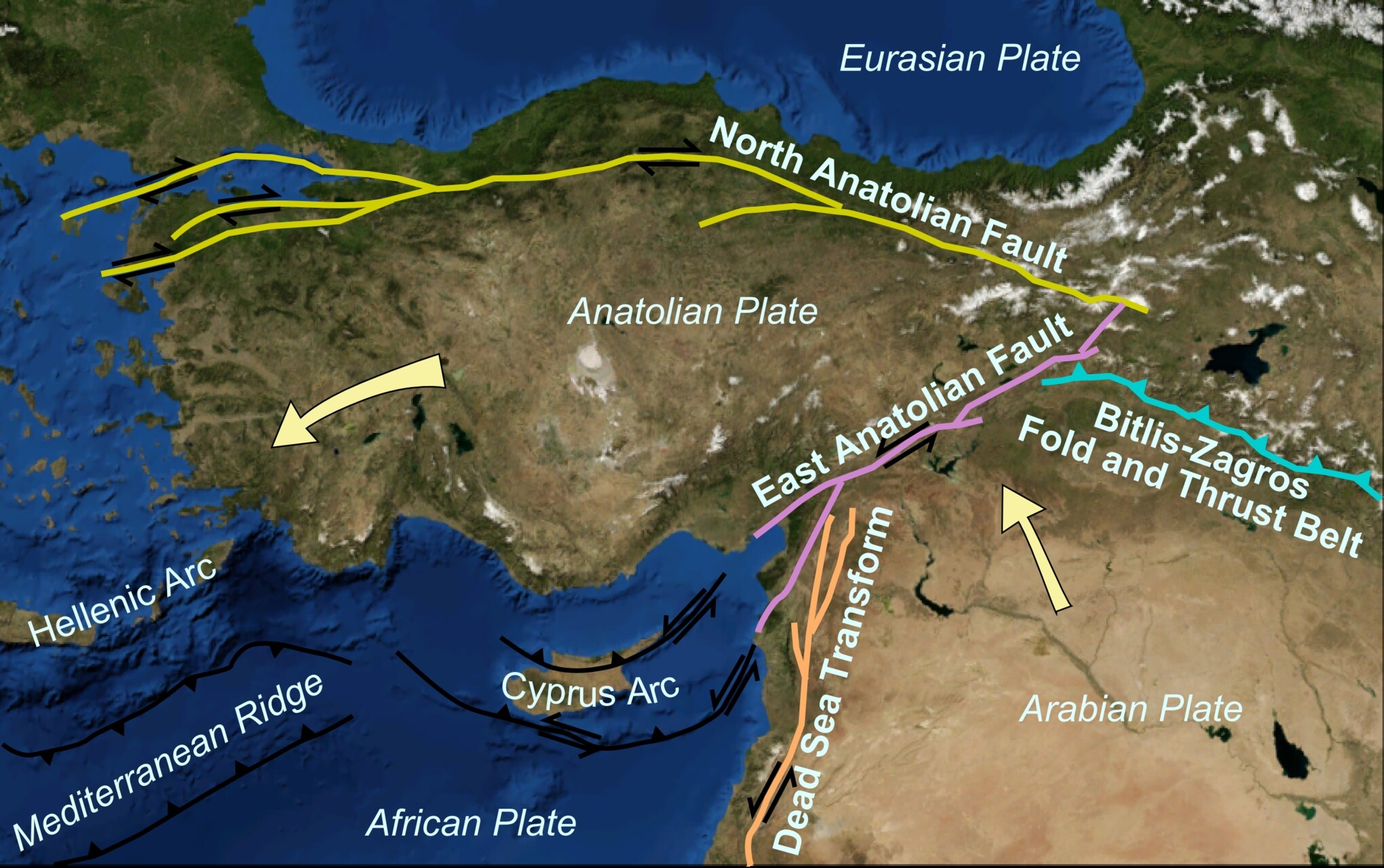
Here's what really happened in Asia geologically
The ground of Anatolia has moved at least three meters: one of the most violent earthquakes ever recorded in Turkey.
According to the expert president of theNational Institute of Geophysics and Volcanology (INGV), Carlo Doglioni, one of the two major faults that cross the Turkish territory was activated, the South-East Anatolian one, which is one of the most active in the Middle East, together with that of the Dead Sea that crosses Syria, Lebanon, Israel and Jordan and which separates the Arabian Plate from the African one.
And it is along this fault line that the two edges of the ground have moved.
Carlo Doglioni also claims that a shift of at least three meters occurred in the area of maximum movement.
The cause of the slip was a "transpressive" movement, i.e. that along the fault the ground moved horizontally (therefore with a transcurrent type movement), during which there was also a compression between the Anatolian Plate and the Arab one.
However, the missing data, which will allow us to go beyond these first estimates, are expected from the Sentinels of the Copernicus programme, of the European Commission and the European Space Agency (ESA) and from the Cosmo Sky-Med constellation, of the Italian Space Agency (ASI).
Seismic imaging is the innovative gas search technology
120 large tremors as aftershocks along the Anatolian and Arabian Plates
Unfortunately, after the first quake mentioned above, the ground in Turkey continued to shake again.
In fact, at least 120 aftershocks have occurred since the first, according to an update from Turkey's Disaster and Emergency Management Agency (AFAD).
According to the US USGS, which reports only the most significant aftershocks that are actually felt by those in the earthquake zone, there were at least 43 aftershocks of magnitude 4,3 or greater.
Three of the aftershocks measured 6.0 or more, including the massive 7,5-magnitude quake that struck 95 kilometers (59 miles) north of the epicenter of the morning's main quake.
On the Säntis thanks to the deflected laser for the first time lightning
The crypto community stands by the affected populations
Following the massive earthquake in Kahramanmaraş Province, the global cryptocurrency industry is also making efforts to help the victims.
In fact, more than forty Blockchain entities in the country have signed a petition asking authorities to set up official crypto wallets to accept donations in Turkey, similar to what happened in Ukraine.
The most relevant exchanges in the crypto world have said that they are looking for ways to send support or have started preparing aid packages.
In particular, the cryptocurrency exchange BitGet has already pledged 1 million Turkish lira (about 53.000 dollars) for humanitarian aid, while Huobi Global has pledged 2 million lira.
Bitget & Sorare: here are Lionel Messi's technological partnerships
Bitget has committed 1 million Turkish Lira to aiding the relief efforts in solidarity with people impacted by the earthquake in Turkey.
If you can assist with local logistics, please message @bitgetturkey.
Our local team is working around the clock to make a positive impact.
— Bitget (@bitgetglobal) February 6, 2023
5 million Turkish lira from Tether, in pendant with Huobi Global and BitGet
The Tether (USDT), the asset-backed cryptocurrency stablecoin, is the third cryptocurrency they pledged to help Turkey with TRY 5 million after the earthquake.
In general, crypto communities around the world are generally quick to respond to humanitarian crises, with millions of dollars in donations pouring into Ukraine following last year's Russian invasion and COVID-19 relief efforts in India as it struggled with a deadly epidemic in 2021.
The problem is that cryptocurrency donations can be more complicated than traditional payments or bank transfers when local authorities are less welcoming to digital assets, which are in a regulatory gray area in jurisdictions around the world.
In Rome, NFTs help minors in difficult conditions
Bitfinex, Keet, Synonym and Tether Pledge 5 Million TRY for Turkiye Earthquake Recovery 🇹🇷
Türkiye'de yaşanan üzücü Deprem felaketi için;
Bitfinex, Keet, Synonym ve Tether olarak toplamda 5 Milyon TL'lik Destekte bulunacağız.#GeçmişolsunTürkiyehttps://t.co/AB81n96cqB pic.twitter.com/G1WJSKbu9X— Tether (@Tether_to) February 6, 2023
A Petition for Ankara to Accept Blockchains as “Normal”
It is the reason why theBlockchain industry and research bodies in Turkey have put together a petition asking the authorities to allow donations based on cryptocurrencies to be accepted in Turkey.
They immediately came forward also Bitfinex, Bybit, Gate io, Binance and BitMEX, in fact.
However, the more than forty entities that signed the petition ask the Ankara authorities to create "official wallets of cryptocurrencies and share them through official channels", in the same way Ukraine did shortly after the start of the war in February 2022, to avoid "harmful aid schemes".
It is unclear whether the aid extends to Syria, a war-torn nation subject to heavy economic sanctions from major economies including the US and the European Union.
In Borgo d'Anaunia the first mining in a hydroelectric plant
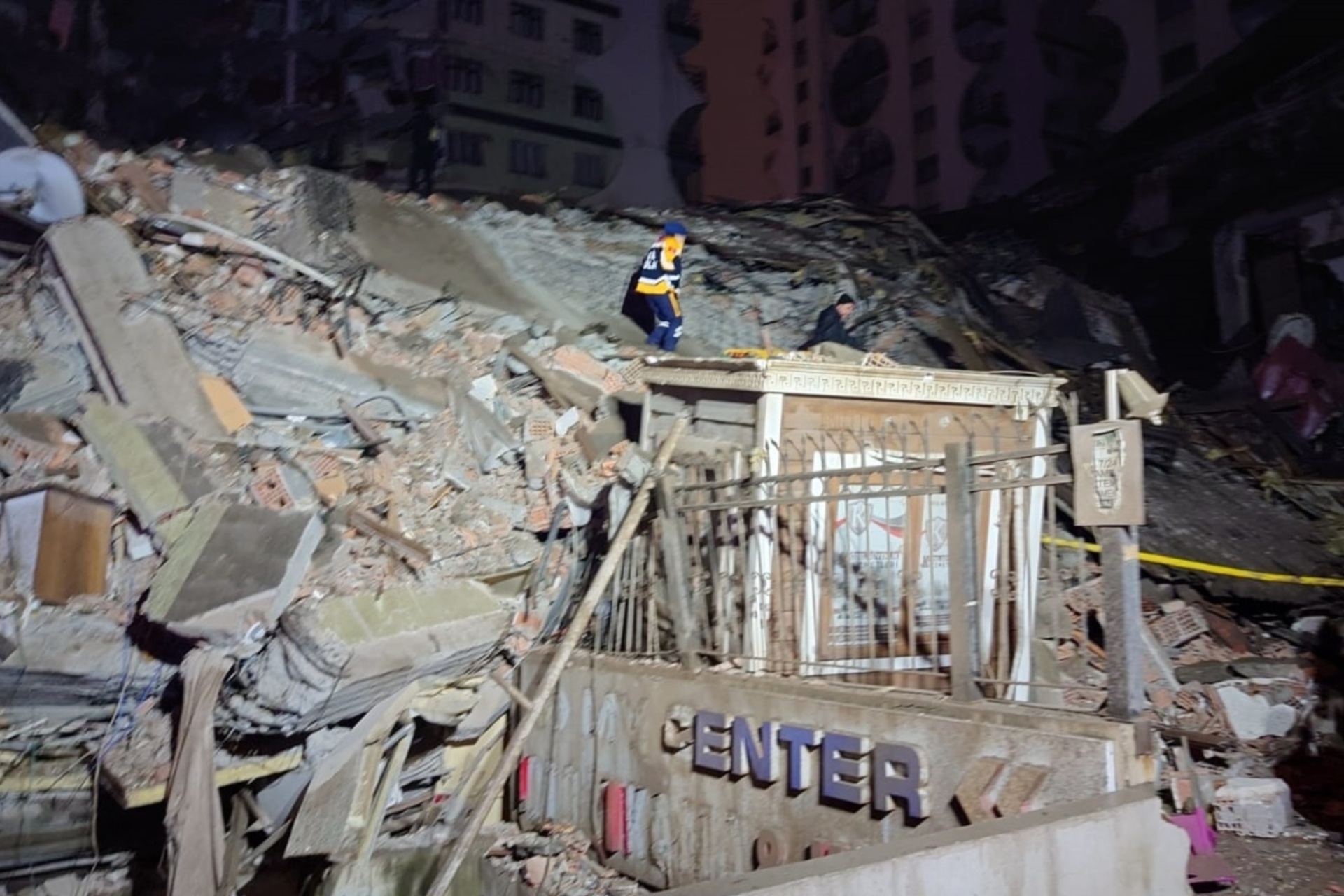
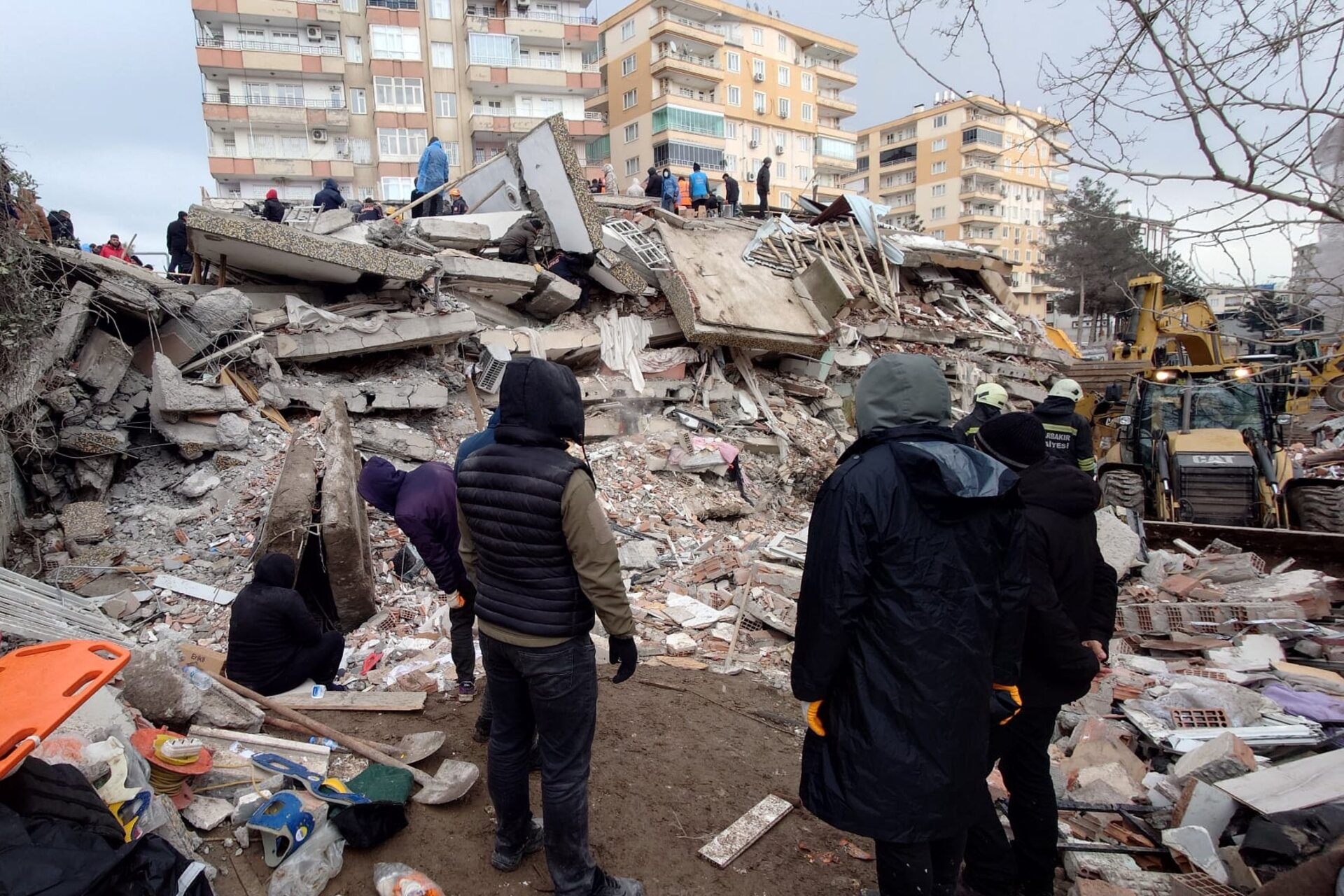
The wreckage of a collapsed building in Galeria Business Center in Diyarbakır, Turkey, as a result of the earthquake that occurred in Southern Anatolia between 5 and 6 February 2023


