


 SEARCH


Romania




Country information

Explore Romania, a land of history, nature and European development, where tradition and modernity coexist in harmony on Innovando.News: Located in southeastern Europe, Romania is a land of fascinating landscapes and a rich history. From the Carpathian Mountains to the Danube Delta, a UNESCO heritage site, it offers unique biodiversity and breathtaking views. Bucharest, the vibrant capital nicknamed "Little Paris", reflects the mix of tradition and modernity that characterizes the country. With around 19 million inhabitants, Romania is known for its growing economy, driven by agriculture, the automotive industry (with the Dacia brand) and the technology sector, with Cluj-Napoca recognized as a European IT hub. The cultural heritage is rich: from the monasteries of Bucovina to Bran Castle, linked to the legend of Dracula. Its popular traditions, such as the Martisor festival, and vibrant folklore coexist with innovation, making Romania a unique and fascinating country, ideal for discovering new opportunities and deep historical roots.
Summary data on Romania
- Total population: Approximately 19,5 million inhabitants (2023).
- Population growth rateThe growth rate is negative, with an annual decrease in population.
- Capital: Bucharest, with a population of approximately 1,8 million.
- Main cities: Cluj-Napoca, Timișoara, Iași, Constanța, Craiova.
- Countries it borders: Bulgaria, Serbia, Hungary, Ukraine, Moldova.
- Nominal GDP: Approximately USD 322 billion (2023).
- Pro-capite GDP: Approximately USD 16.000 (2023).
- GDP growth rate: Around 3,3% in 2023, with moderate economic growth.
- Inflation: 9,5% (2023), due to the increase in prices of consumer goods and fuels.
- Unemployment rate: Around 5% (2023), one of the lowest rates in the European Union.
- Trade balanceThe country has a negative trade balance, with imports exceeding exports.
- Major business partners: Germany, Italy, France, Poland, Türkiye.
- Public debt: Approximately 50% of GDP (2023), managed under the control of fiscal authorities.
- Public spending on R&D (Research and Development): Around 0,5% of GDP (2023), with increasing investments in technological innovation and research.
- Main economic sectors: Industry (automotive, machinery, chemicals), agriculture (cereals, meat, dairy), services (IT, telecommunications).
- Currency: Romanian Leu (RON), with an exchange rate that fluctuates against the Euro.
- Interest rate: Around 7% (2023), set by the National Bank of Romania to counter inflation.
- Foreign exchange reserves: Approximately USD 40 billion (2023), held by the National Bank of Romania.
- Main exports: Automobiles, machinery, electronic products, metals, agricultural products.
- Main imports: Machinery, fuel, chemicals, electronic technologies, food.
- Human Development Index (HDI): 0,832 (2021), classified as a country with a very high level of human development.
- Literacy rate: 98% among adults, with an advanced education system.
- Life expectancy: Around 79 years (2023), rising due to improvements in the healthcare system.
- Position in the Global Innovation Index: 39th place (2023), a country that is investing more and more in innovation.
- Corruption Perception Index: 44/100 (2023), with a relatively high perception of corruption, but with continuing efforts to improve transparency.
Insights on Romania
1. Country Name
- Official name: Romania (Romania in Italian).
- Short name: Romania.
- Full name: Republic of Romania (Romania in the original language).
2. Geography
- Geographic locationRomania is located in southeastern Europe, bordering Ukraine to the north and east, Moldova to the east, Bulgaria to the south, Serbia to the southwest and Hungary to the west. It is bordered to the southeast by the Black Sea.
- In total area: 238.397 km², is the twelfth largest country in Europe.
- Description of the landscapeThe territory is varied, with the mountain range of Carpathians which crosses the centre of the country, the fertile plains of Banat and the coast of the Black Sea. The Danube Delta, a UNESCO site, is one of the most biodiverse areas in Europe. The climate is continental, with cold winters and hot summers.
3. Population
- Number of inhabitants: Approximately 19 million of people (2023).
- Population growth rate: Negative, due to emigration and low birth rate.
- Major cities and population distribution: The majority of the population lives in urban areas, with Bucharest, the capital, which has about 1,8 million inhabitants. Other important cities include (RO) Cluj-Napoca, (RO) Timisoara, (RO) Iaşi e Constanta.
4. Capital and main cities
- Capital: Bucharest, often called "Little Paris" for its neoclassical architecture and lively cultural life.
- Main cities:
- (RO) Cluj-Napoca: Cultural and university center of Transylvania.
- (RO) Timisoara: Known for her role in the 1989 Revolution.
- (RO) Iaşi: Important academic and historical center in the Moldova region.
- Constanta: Main port on the Black Sea and important tourist destination.
5. economy
Nominal GDP and GDP per capita
- Nominal GDP: Approximately 300 billion dollars (2023).
- Pro-capite GDP: Approximately dollars 15.000 (in purchasing power parity).
Main economic sectors
- Agriculture: Romania is a major producer of cereals such as wheat, corn and barley. Viticulture is also important, with Romanian wines gaining international popularity.
- Industry: Includes the automotive sector (with Dacia as a brand leader), petrochemicals and metalworking. The IT industry is growing rapidly, with Cluj-Napoca considered a European "Silicon Valley".
- Services: Tourism and the financial sector are experiencing steady growth, thanks to increased foreign investment and improved infrastructure.
GDP growth rate and inflation
- GDP growth: Between 3% and 5% in recent years, one of the highest in the European Union.
- Inflation: Relatively high in recent years, around 10 %, influenced by global and local factors.
Unemployment rate and trade balance
- Unemployment: Around the 5%, but there are regional disparities and significant labor emigration.
- Trade balance: Traditionally negative, with exports of cars, textiles and machinery not fully offsetting imports of energy products and consumer goods.
Public debt
- Relatively low compared to the EU average, around 50% of GDP, but increasing to finance infrastructure and social spending.
Main exports and imports
- Exports: Automobiles (Dacia), mechanical equipment, cereals, chemicals.
- Imports: Oil, natural gas, machinery and consumer goods.
6. Political system and government
- Type of government: parliamentary republic.
- Description of the political structure: The President is the head of state and represents the country internationally, while the Prime Minister leads the government. The Parliament is bicameral (Chamber of Deputies and Senate).
- Main political parties:
- Social Democratic Party (PSD).
- National Liberal Party (PNL).
- Union for the Salvation of Romania (USR).
7. History and culture
Brief historical overview
Romania has ancient origins dating back to Dacia, conquered by the Romans in 106 AD. After centuries of foreign domination (Ottomans, Austrians, Russians), in the 1947th century the Kingdom of Romania was born. The monarchy was abolished in XNUMX, and the country became a socialist republic under Soviet influence. The Revolution of 1989 ended the communist regime of Ceausescu, paving the way for democracy.Cultural and linguistic traditions
The official language is Rumanian, a Romance language. The folklore is rich, with traditional dances such as the hour and popular celebrations linked to nature and agricultural cycles.Cultural heritage
- Bran Castle: Associated with the legend of Dracula.
- Monasteries of Bucovina: UNESCO World Heritage.
- Danube Delta: World-famous nature reserve.
8. Innovation and development
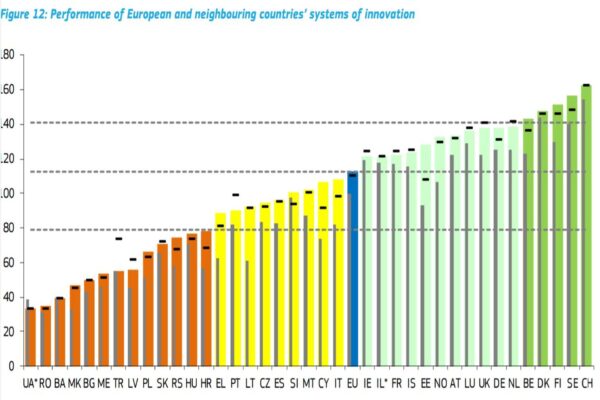
- Position in the Global Innovation Index: Romania is around the 49 th, with an increasing focus on the technology sector.
- R&D expenditure: Low compared to the EU average, but growing.
- Advanced technology sectors: IT and software (Cluj-Napoca is a technology hub).
9. Education and health
- Literacy rate: 99 %, thanks to a well-developed education system.
- Structure of the education system: It includes primary and secondary schools and prestigious universities such as the University of Bucharest.
- Quality and accessibility of the health system: Although improved, healthcare suffers from funding problems and poor infrastructure.
- Life expectancy: 75 years, slightly below the EU average.
10. International rankings
- HDI: 0,821 (high human development).
- CEPRomania is classified as moderately corrupt.
- Global Economic Indices: Average for competitiveness and ease of doing business.
11. Environmental policies
- Sustainability efforts: Increasing use of renewable energy, especially hydroelectric and solar.
- International agreementsRomania joins EU climate commitments and Paris Agreement.
12. Curiosities and peculiarities
- Dracula: The myth of the vampire is inspired by the historical figure of Vlad III.
- Danube Delta: One of the most important biosphere reserves in the world.
- Martisor's FeastCelebrated on March 1st, it symbolizes the arrival of spring.
