SEARCH


Audi and Navistar demonstration in the US shows how C-V2X system can anticipate risks around school stops
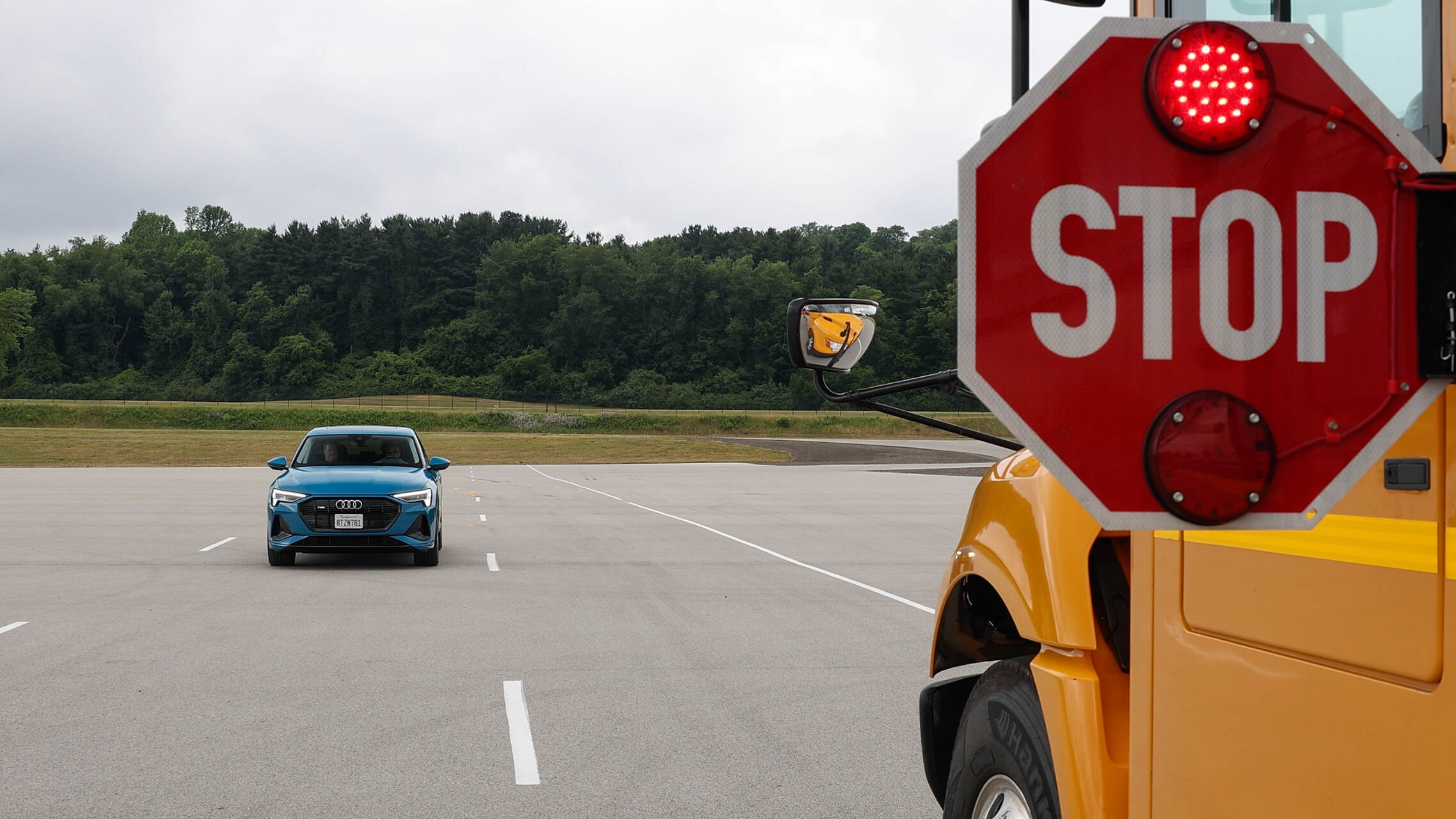
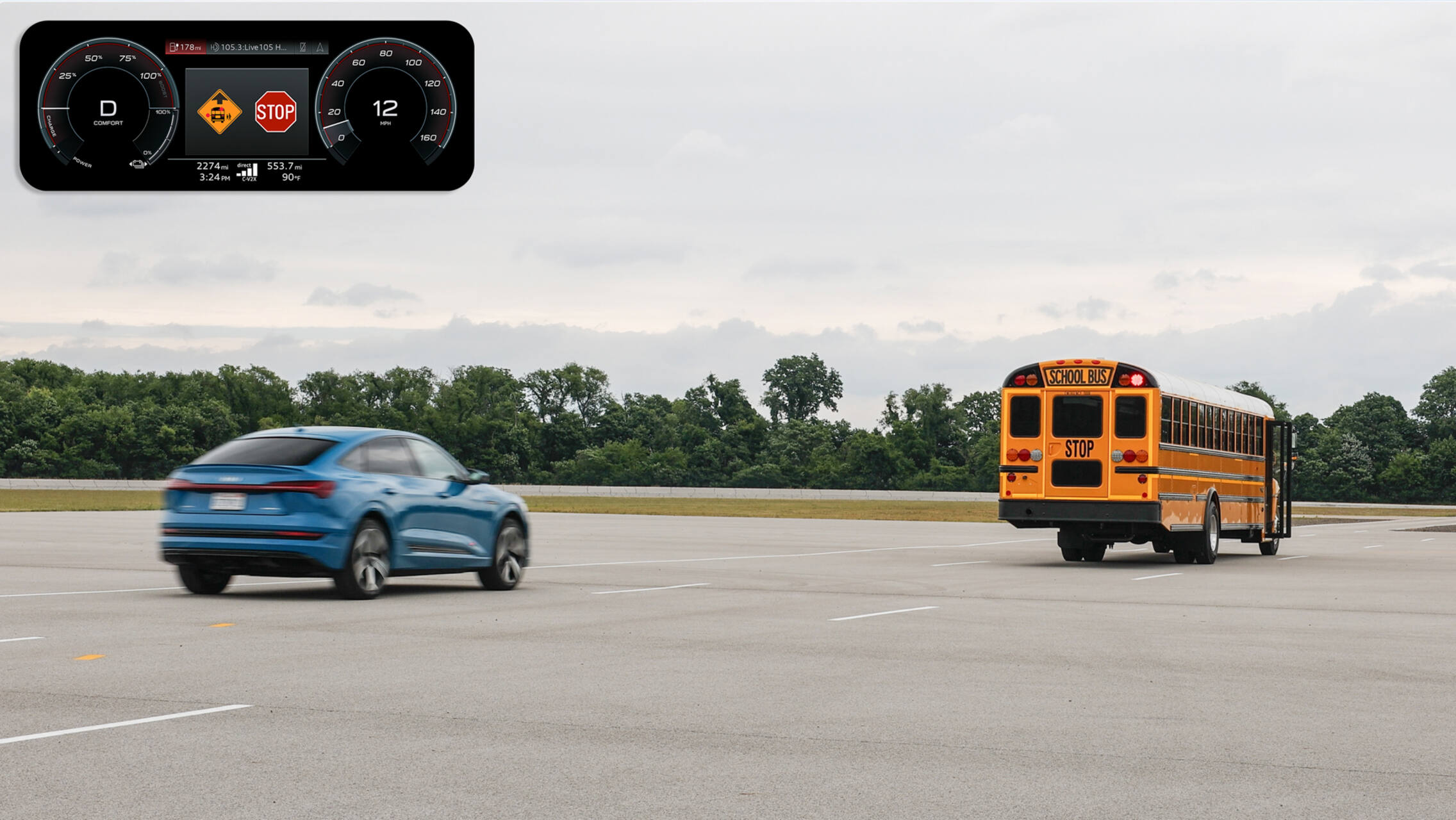
The school bus stop is one of the most delicate points of daily mobility. It's an ordinary place, often near houses, intersections, curves, or secondary roads, but it concentrates a complex sequence in just a few seconds: the bus stops, children get on or off, other vehicles approach, visibility can be limited, and the ability to react quickly diminishes. It is in this context that Audi of America e Navistar they presented a demonstration based on the Cellular Vehicle to Everything, C-V2X, applied to school bus safety.
The case, announced in Herndon, Virginia, concerns school transportation in United States, where according to the material released by the Mark of the Four Rings about 26 million children They use school buses every day. The choice of the return-to-school period isn't just a matter of communication: it coincides with a time of year when local communities are once again faced with repeated journeys, crossings, stops, and unpredictable driving behavior.
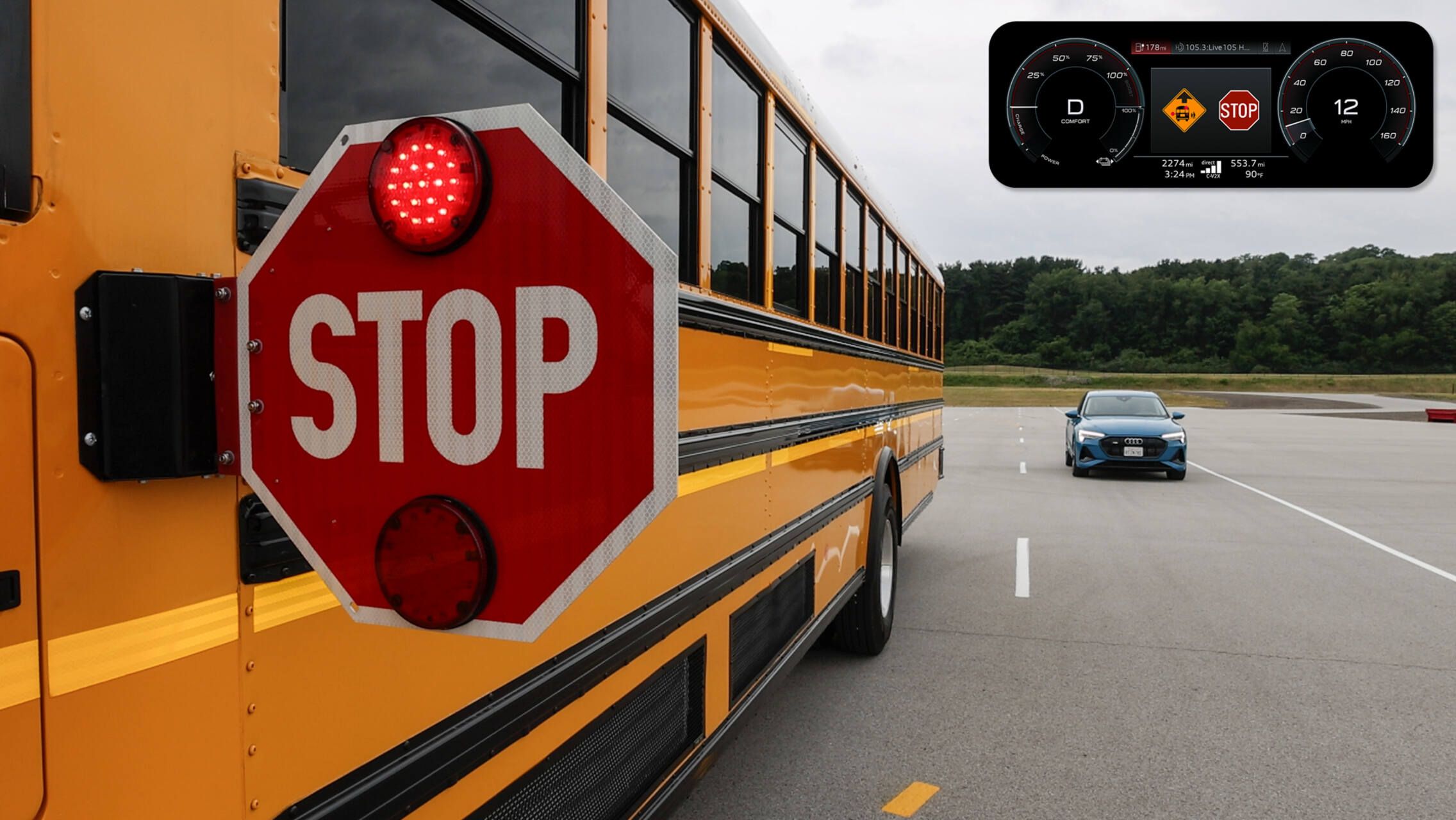
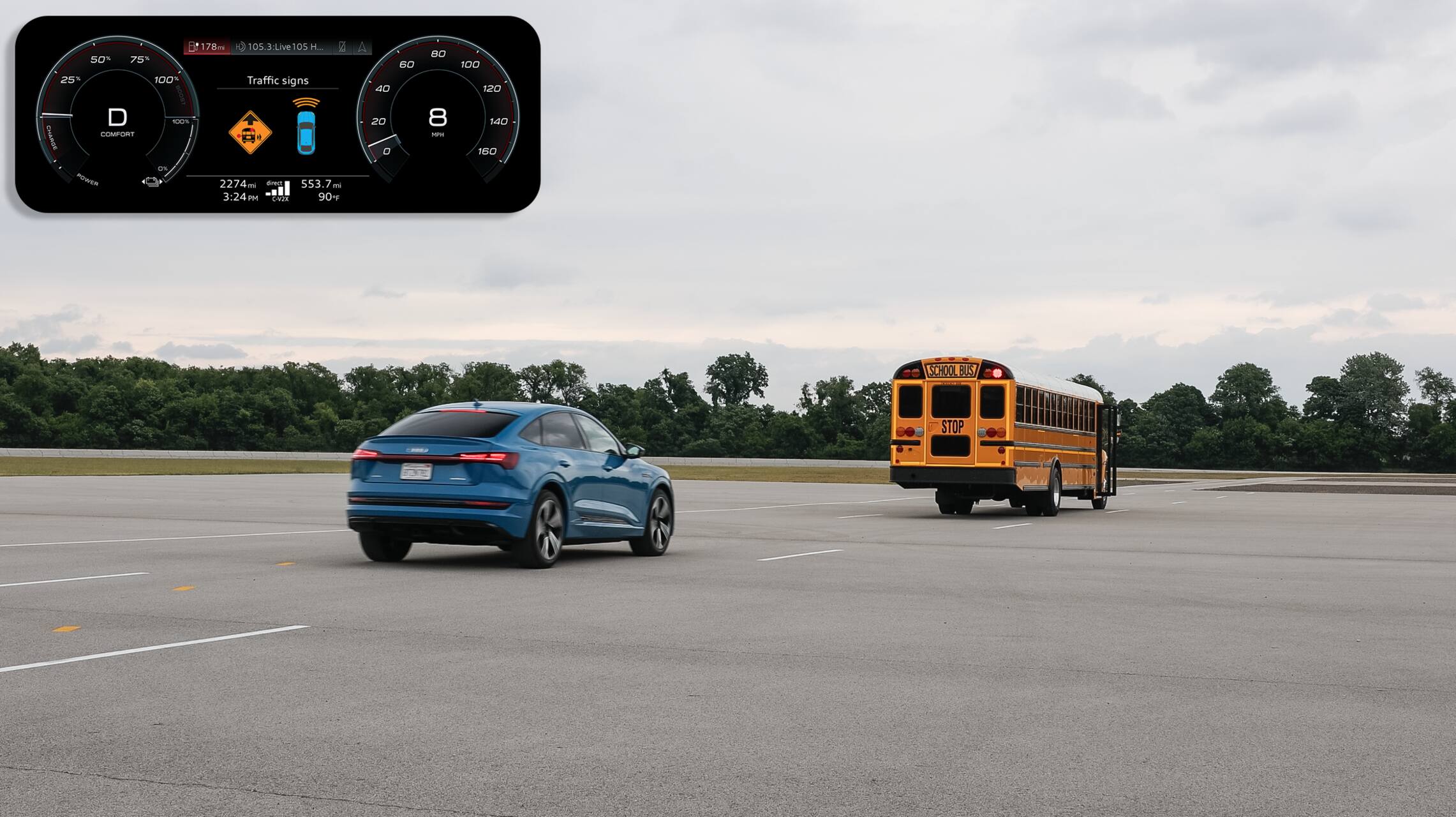
The central technical element is direct communication between vehicles. In this demonstration, an Audi car and a school bus IC Bus Navistar Group's vehicles don't just receive information from maps, sensors, or remote infrastructure: they exchange messages directly, in near real time, to alert their respective drivers of a potential risk situation at the stop.
From on-board sensors to direct communication between vehicles
The logic of C-V2X It differs from advanced driver assistance systems based solely on cameras, radar, or lidar. These devices observe the surrounding environment but may be limited by physical obstacles, lighting conditions, traffic, curves, or elevation changes. Vehicle-to-everything communication adds an additional layer: it allows vehicles to transmit essential data about their position, speed, and direction even when they are not yet visible.
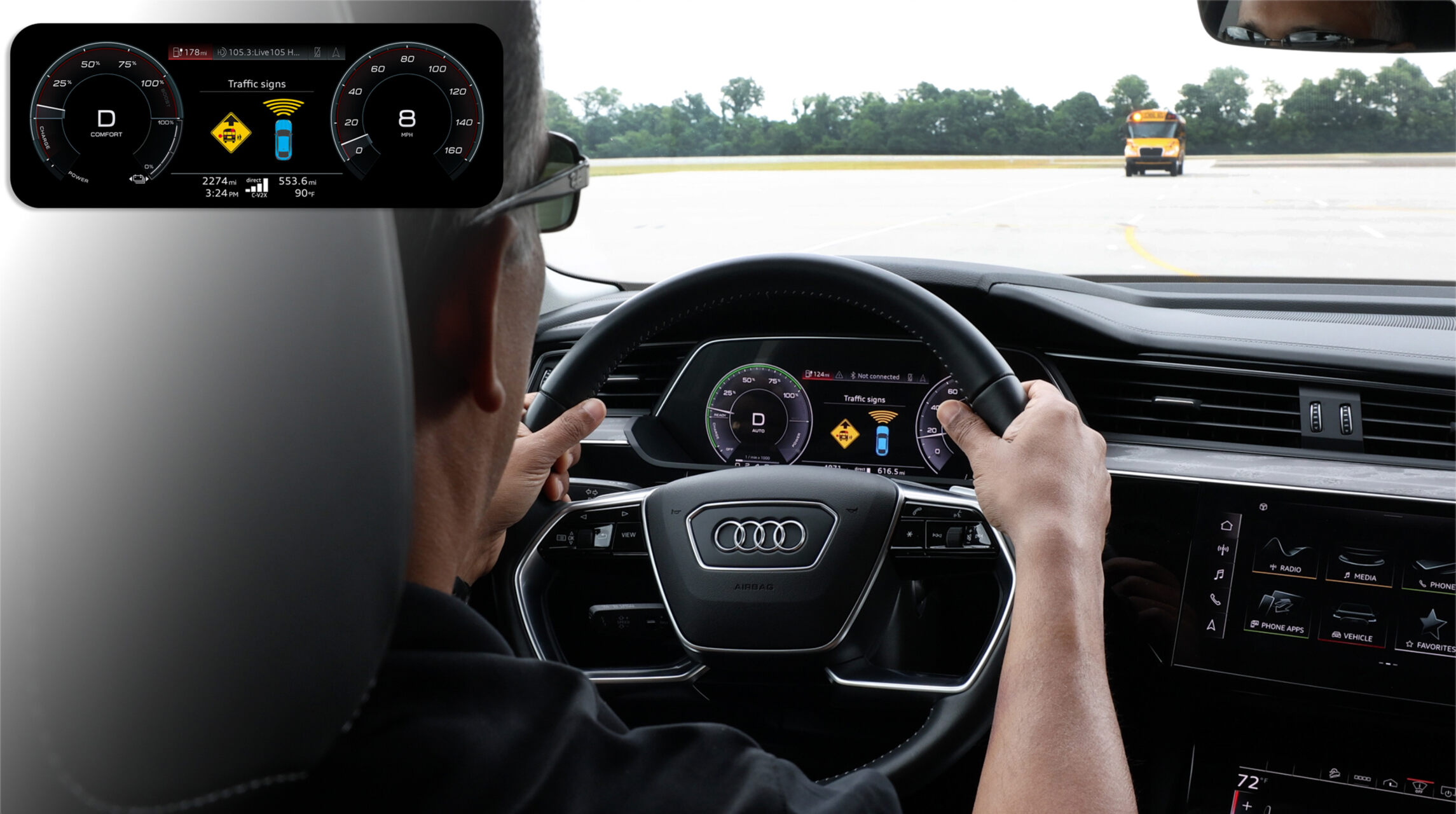
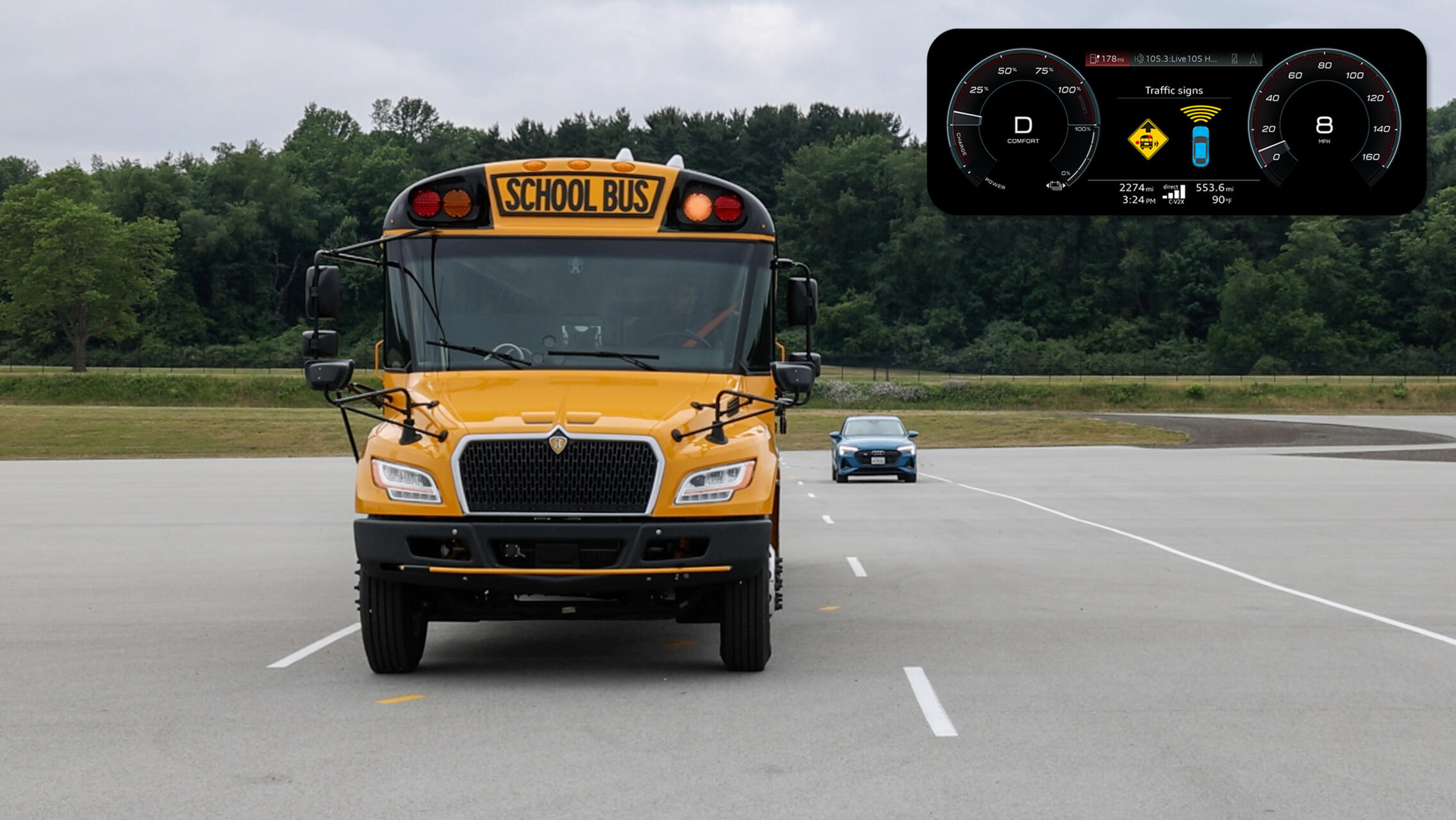
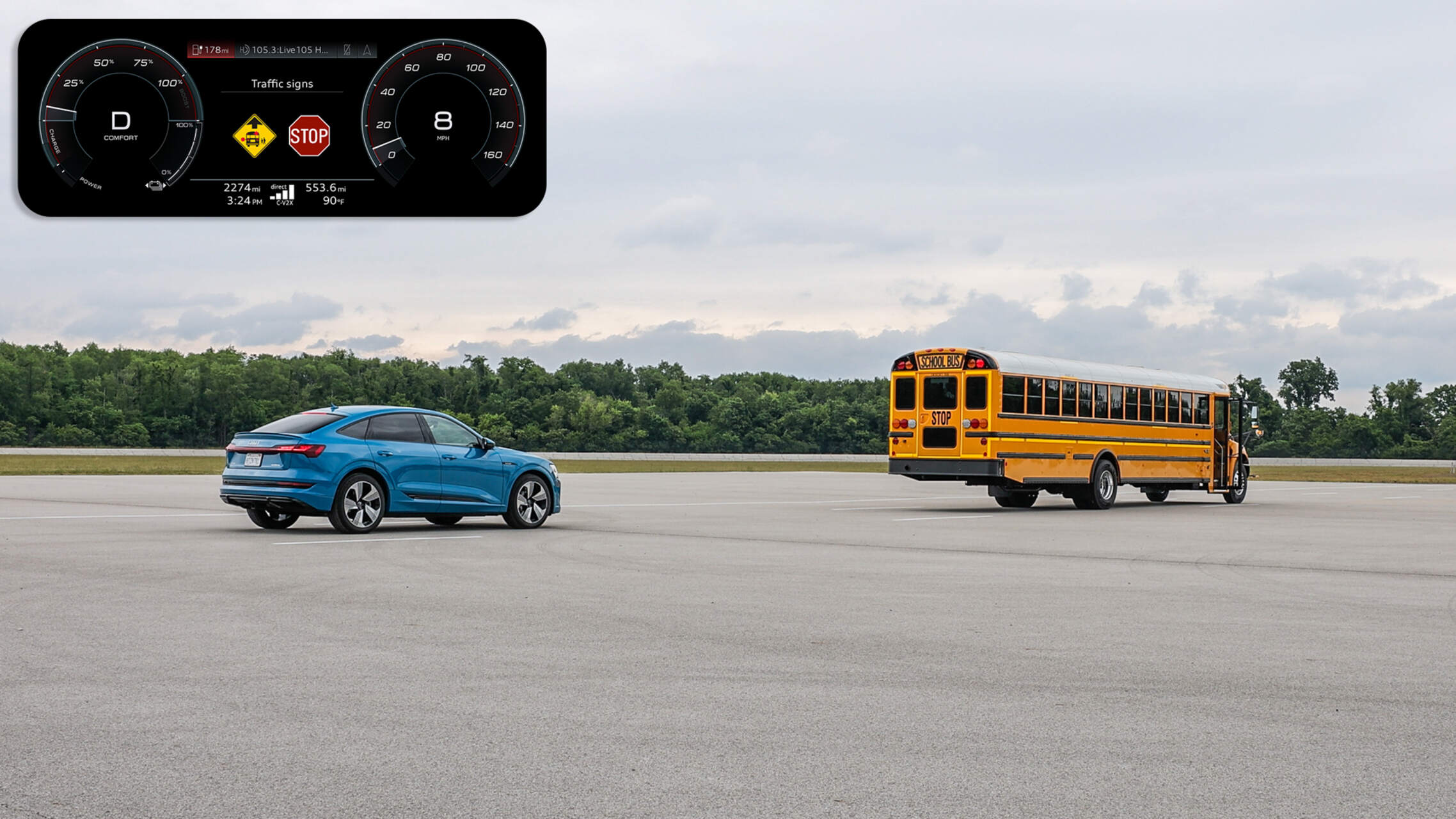
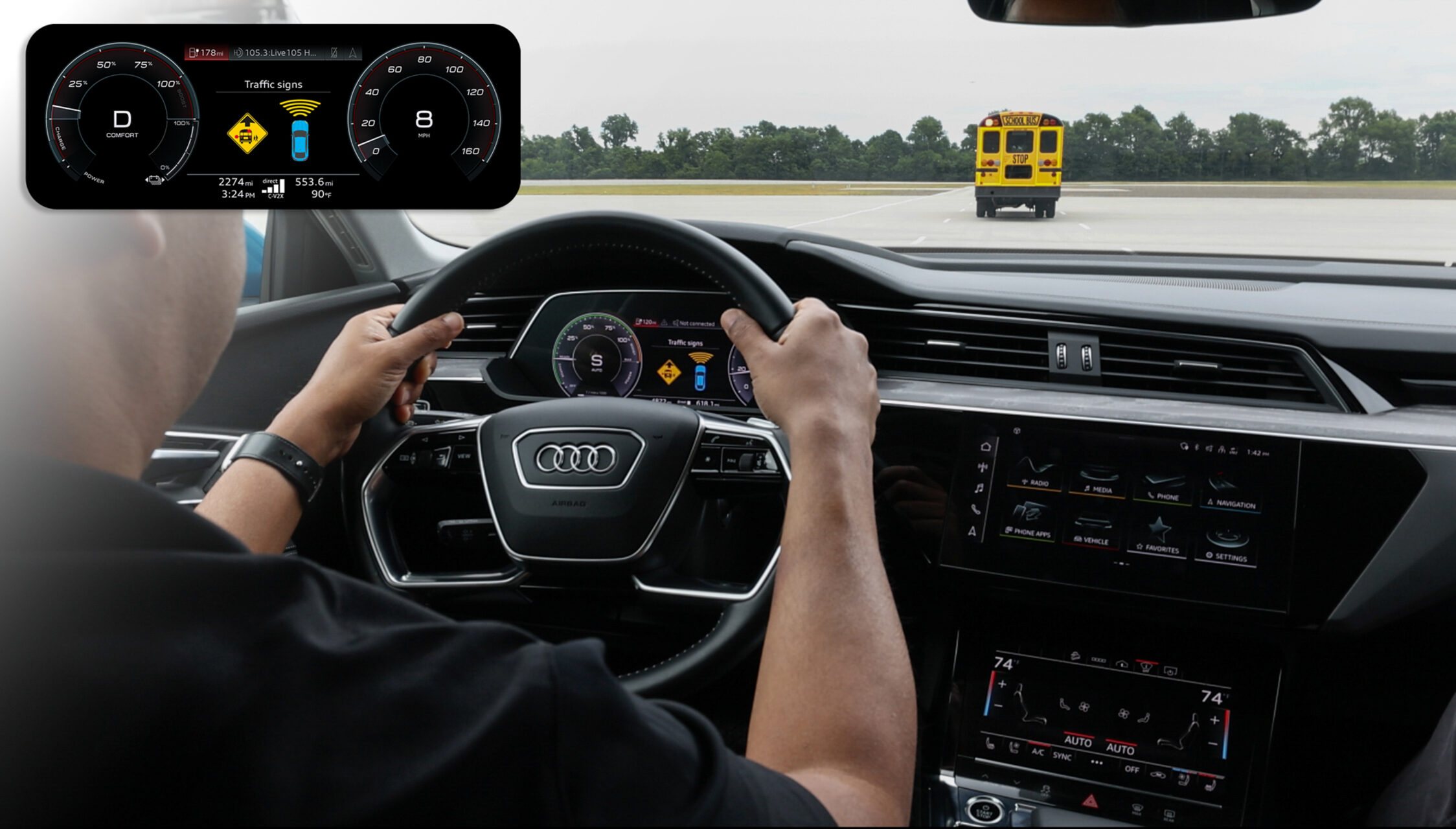
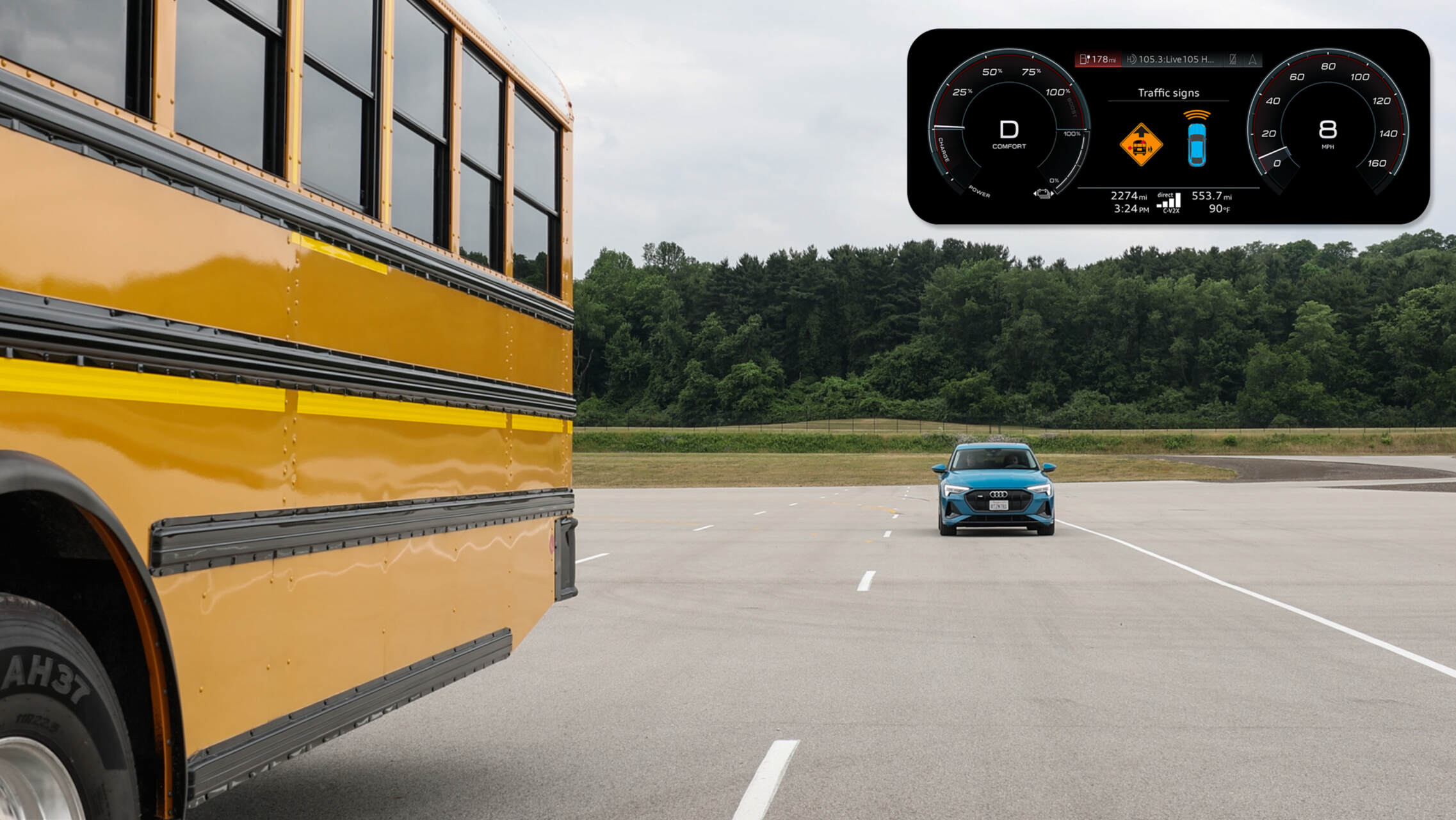
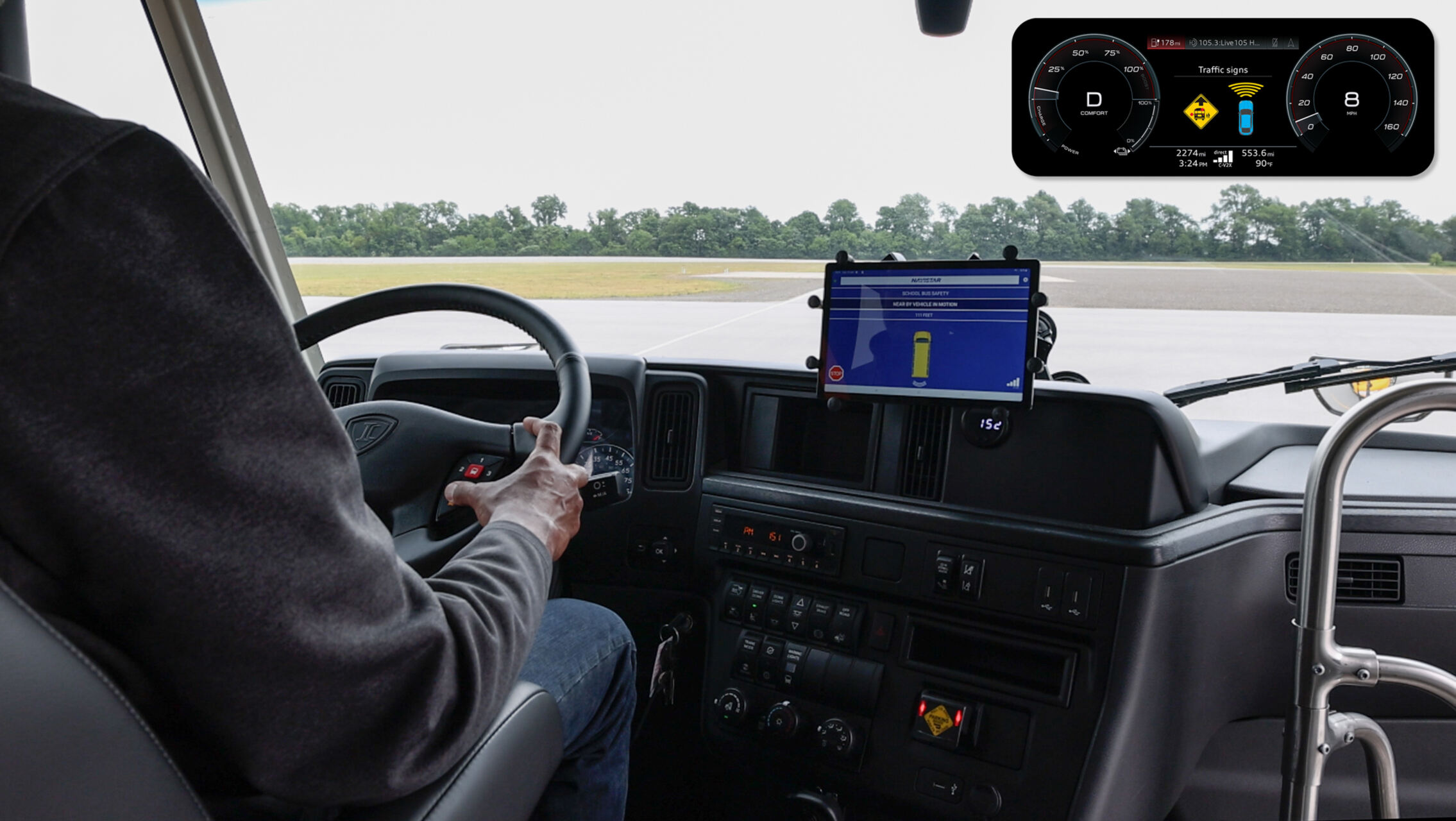
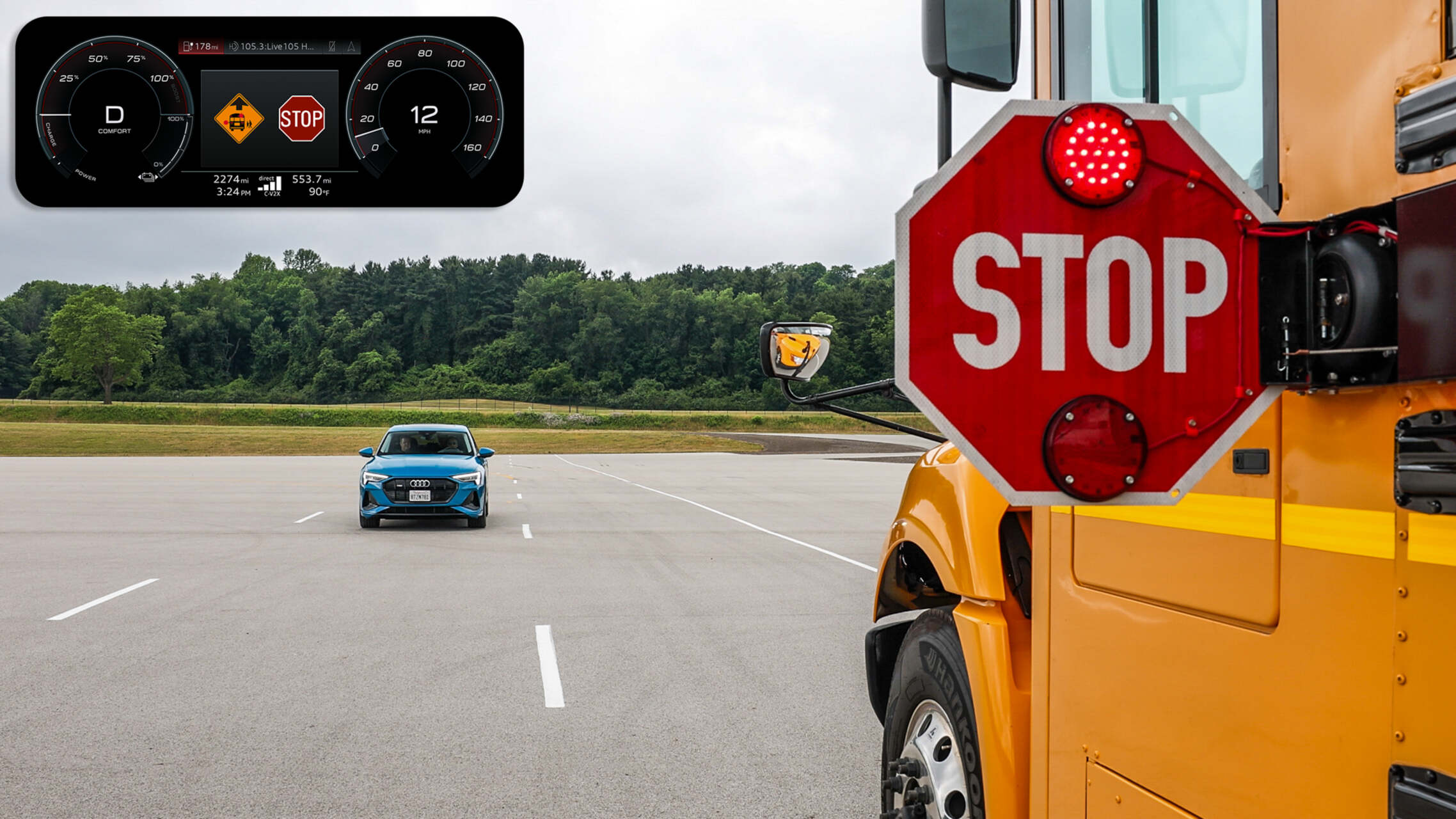
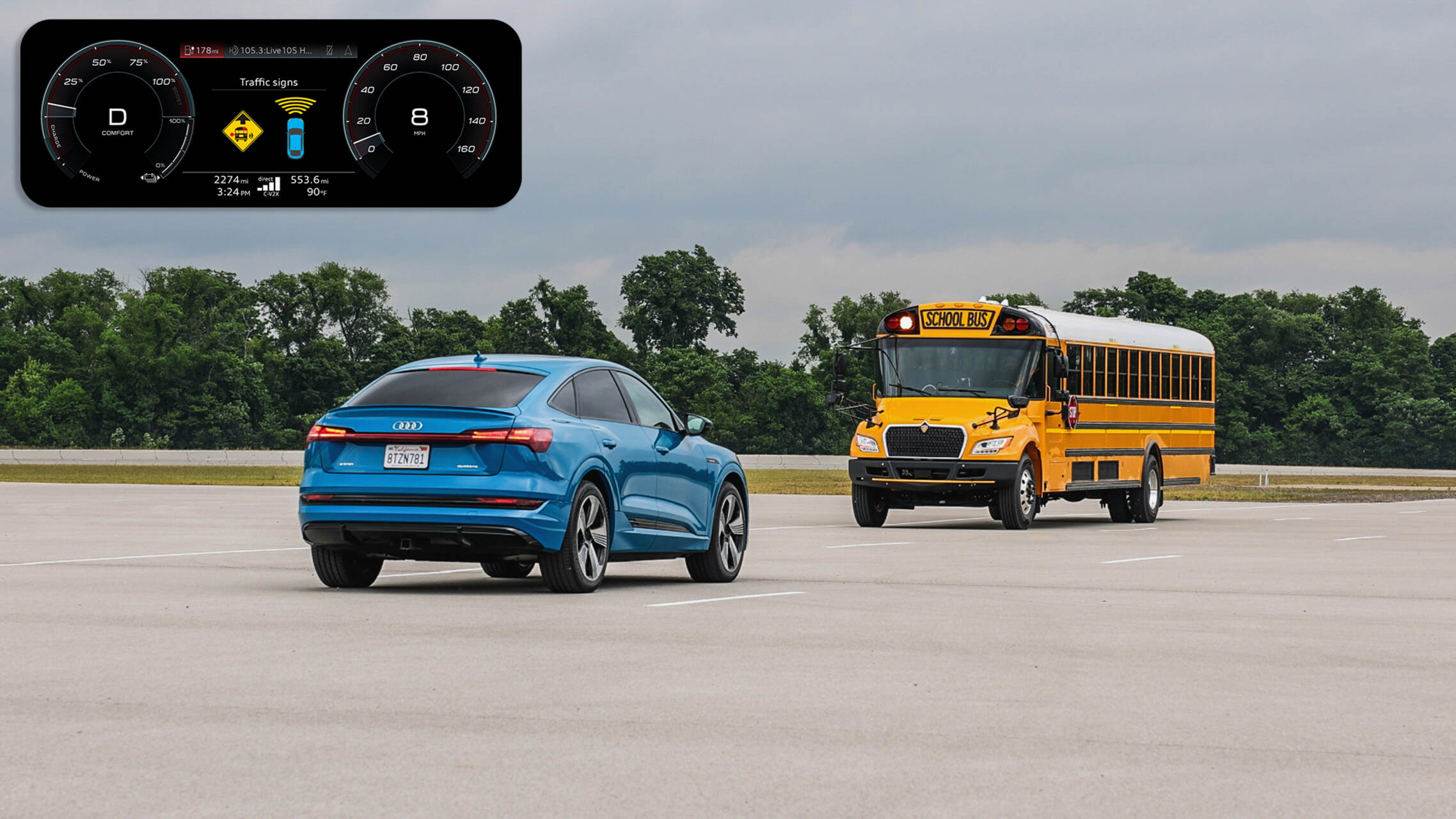
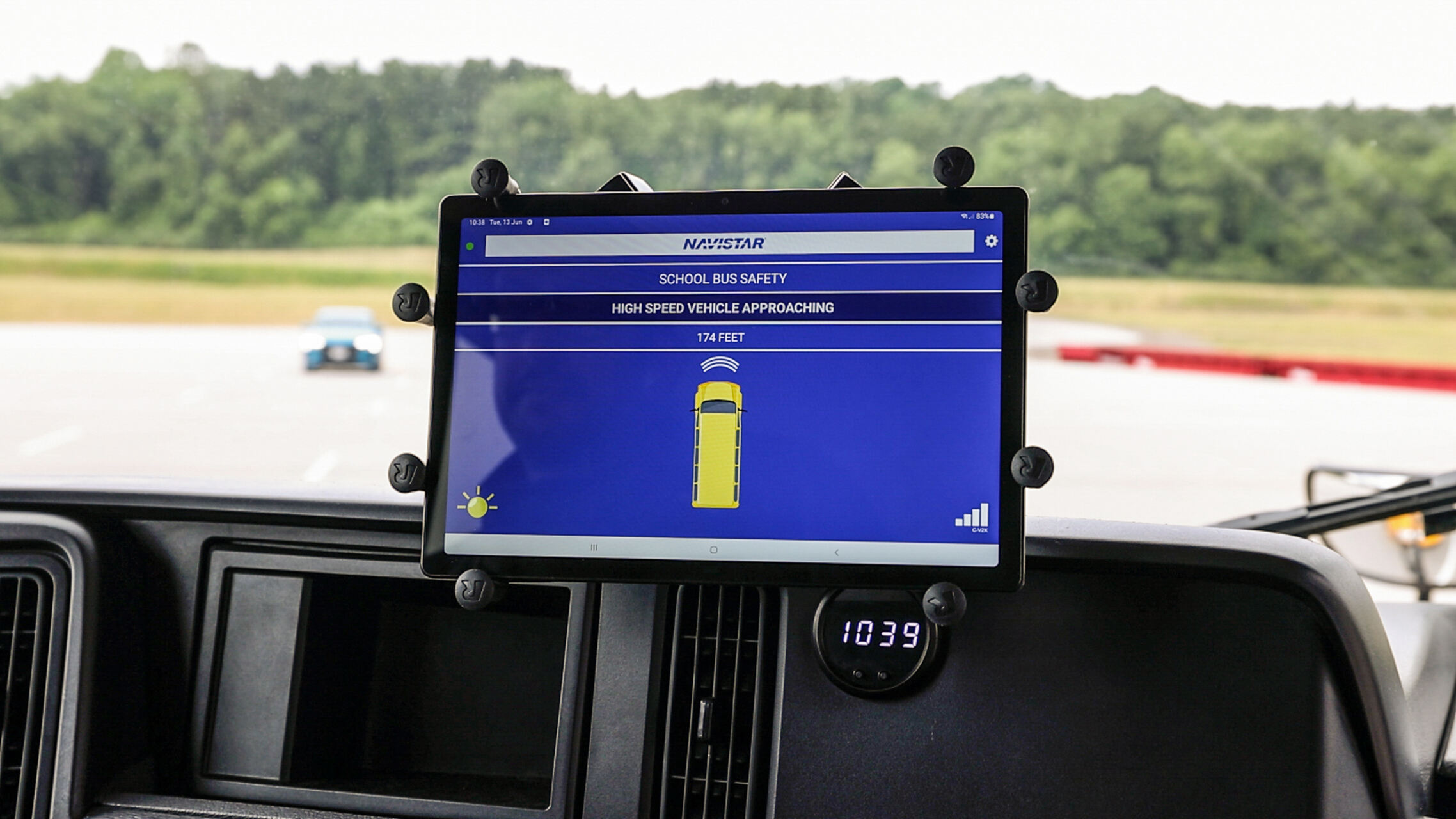
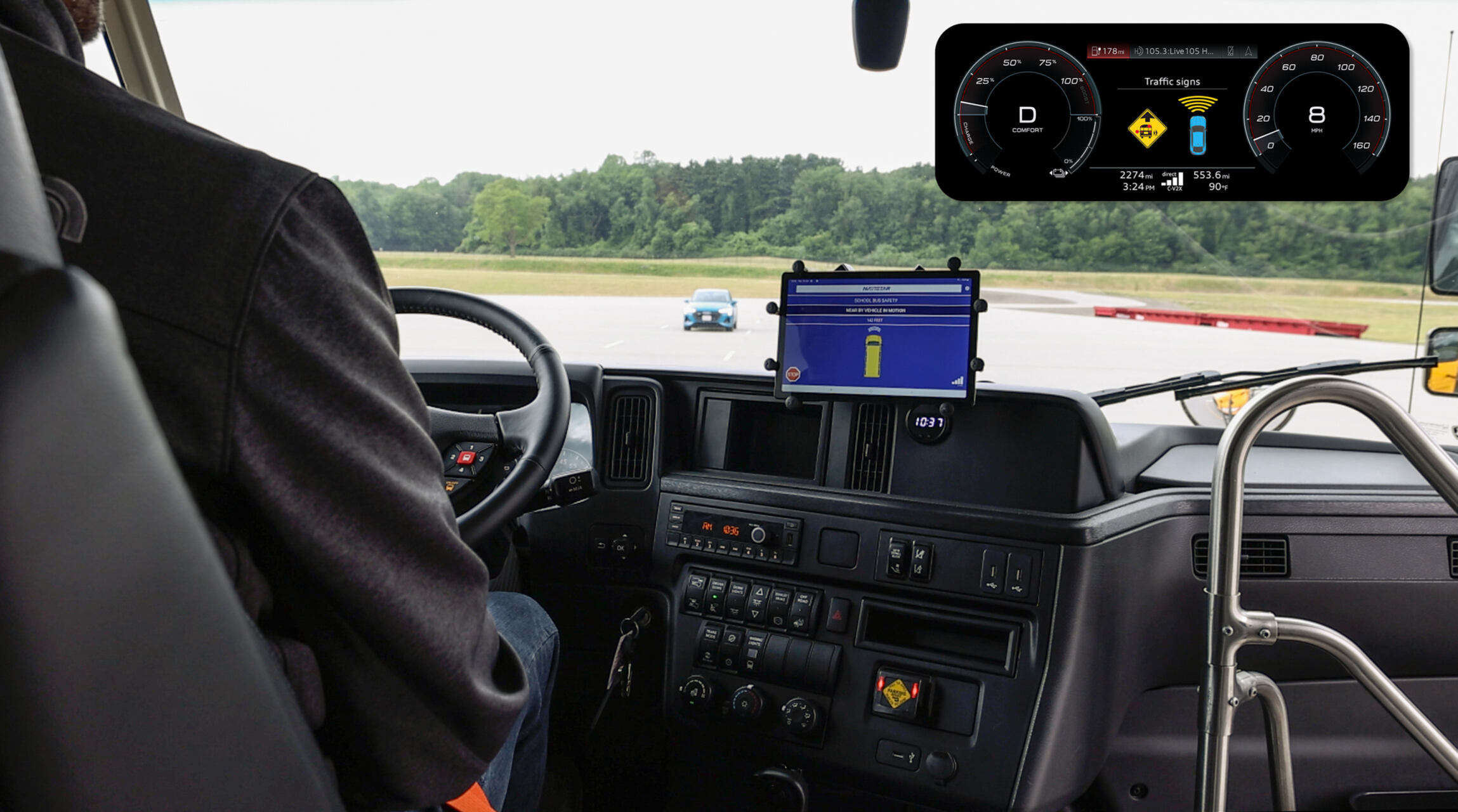
In the case illustrated by Audi and Navistar, the driver receives an advance warning in the cockpit when a school bus is approaching. The alert can be given even if the bus is around a curve, over a hill, or obscured by other vehicles. At the same time, the driver receives information about the car's approach and, if the vehicle approaches at a speed potentially incompatible with a safe stop, receives a specific warning.
The operational consequence is concrete: the bus driver can decide not to open the door, or ask the children to stay on the sidewalk. This isn't a complete automation of the decision, but rather an advance information support. The system doesn't replace the driver, but rather gives them more time to assess the situation, in a context where a few seconds can change the outcome of a crossing.
According to information released by the two companies, direct communication allows vehicles and school buses to exchange messages ten times per second up to a distance of approximately 400 yards, equal to just over 365 metersChoosing direct transmission is important because it reduces dependence on the traditional cellular network and the latency associated with passing through communication towers.
Why low latency is crucial for school stops
In connected mobility, latency isn't a technical detail for specialists: it's the time between the generation of information and its availability to those who need to act. At a school stop, a communication delay can reduce the effectiveness of the alert, especially when the driver doesn't yet have a direct line of sight of the bus or the children.
Il C-V2X direct It uses a local message exchange model. Each vehicle periodically transmits essential data, allowing other compatible vehicles to estimate trajectories and risk conditions. In industrial terms, this architecture shifts part of road safety from passive detection alone to cooperation between vehicles. This is an important step for the research and development in the automotive sector, because it connects software, telecommunications, human-machine interfaces and driver operational responsibilities.
The case of school buses is particularly suitable for experimentation because it presents repetitive scenarios with high social value. Stops occur in familiar locations, with behaviors regulated by local regulations, but traffic around the bus remains variable. A system capable of providing advance warning of the presence of a stopped vehicle and children near the roadway can help reduce this risk, provided it is reliably integrated into vehicles, infrastructure, and driver procedures.
The demonstration also highlights a point often overlooked in the connected car debate: communication shouldn't just serve to improve navigation, comfort, or commercial services. It can be designed for public use cases, from protecting vulnerable users to managing emergency vehicles. The German company, initiating the initiative, says it has already tested similar applications in school zones and construction sites, as well as for cyclists and road workers. The same system, according to the source, could be adapted in the future for motorcyclists, emergency vehicles, and pedestrians.
An industrial network of cars, buses, and smart infrastructures
The demonstration does not come from a single manufacturer. Audi and Navistar have worked with Applied Information, a company active in connected road infrastructure solutions. This is significant because the success of vehicle-to-everything depends on more than just the equipment on cars. It requires a network of stakeholders: vehicle manufacturers, bus manufacturers, software providers, local governments, infrastructure managers, and regulatory authorities.
The presence of IC Bus, a school bus brand affiliated with Navistar, is expanding its reach beyond the premium automotive market. The issue of bus stop safety affects public and semi-public fleets, school districts, municipalities, and transport operators. This makes adoption more complex than introducing a feature to a single vehicle model: it requires common standards, device compatibility, in-service updates, and clear rules for managing transmitted data.
In the United States, the issue is also linked to radio spectrum policy. Federal Communications Commission adopted in November 2024 final rules for the use of the C-V2X in the band a 5,9 gigahertz dedicated to Intelligent Transportation Systems. The regulatory transition follows the Audi and Navistar demonstration, but it helps to understand the context: without shared frequencies, technical parameters, and message priorities, vehicle-to-vehicle communication remains confined to local tests or pilot projects.
For manufacturers, the key is not simply installing a communications module. It's also important to define how the alert is presented to the driver, how it should be prioritized over other alerts, what speed thresholds trigger the signal, and how to avoid false positives that could lead to habituation. Safety in this field is as much a matter of radio engineering as it is of interface design and field validation.
From local experimentation to mobility governance
The promise of the vehicle-to-everything It's often associated with automated driving, but its application to school buses suggests a more pragmatic approach. Even before coordinating autonomous vehicles in complex scenarios, direct communication can be used to warn human drivers in limited, high-risk, and relatively easy-to-describe situations: a stopped bus, a door about to open, children on the side of the road, a car approaching too quickly.
This approach bridges the gap between applied research and real-world deployment. Local governments can evaluate limited use cases, measure reliability and driver acceptance, and integrate alerts with connected signs or smart traffic lights. For businesses, however, the value lies in building interoperable components: on-board modules, roadside units, messaging software, fleet management systems, and remote update tools.
The available material does not allow us to establish time to market, implementation costs, or large-scale distribution plans. Audi, Navistar e Applied Information They state that they intend to share the knowledge gained and collaborate with local, state, and national officials to promote adoption. This is a cautious formulation, which signals the need for institutional work.
The issue of interoperability also remains. A road safety solution delivers value when many vehicles and infrastructure speak a common language. If the system remains limited to a few models, experimental fleets, or pilot areas, the impact is inevitably limited. However, if standards, spectrum, and devices converge, applications could extend to schools, construction sites, ambulances, heavy vehicles, and vulnerable road users.
Audi and Navistar's demonstration therefore points in a clear direction: using connectivity not as a cockpit accessory, but as a component of collective safety. The point is not to transform every stop into a fully automated environment, but rather to provide drivers with information that today often arrives too late or not at all. This gap between seeing and knowing in advance lies a significant part of the evolution of connected mobility.
When the car approaches the school bus: C-V2X can anticipate the risk
When the car approaches from behind: The connected school bus warns before stopping
Here are three insights that might interest you:
Volvo and Google bring Gemini into the real-world context of the car
“iamo”, the Swiss laboratory for autonomous driving in Furttal
Thus the Swiss government intends to allow automated driving