SEARCH


Plastic and chemistry: all the contours of a dangerous relationship
There are over 10.000 chemicals in plastic that are released throughout the life cycle of an object: UNEP study
When it comes to pollution from plastic bags, the first images that come to mind are often the sad ones waste fields piled up by the currents on beaches and on the edge of coastal cities around the world. Yet the dangers go far beyond what happens after plastic products become waste.
According to a recent report by the United Nations Environment Programme (UNEP), it is necessary to address the problem ofpollution from plastic taking into consideration theentire life cycle of materials, starting from the elements they are composed of and from the chemical agents which are used for the production and treatment of objects of more or less common use.
We know that plastic pollutes, and how much. But what are the substances actually dangerous for man and for thetechnology, among those that make up the multiform and variegated world of plastics?
Innovations and protection: Ocean Cleanup for plastic-free seas
Future chemistry: the new challenges of the industry for sustainability
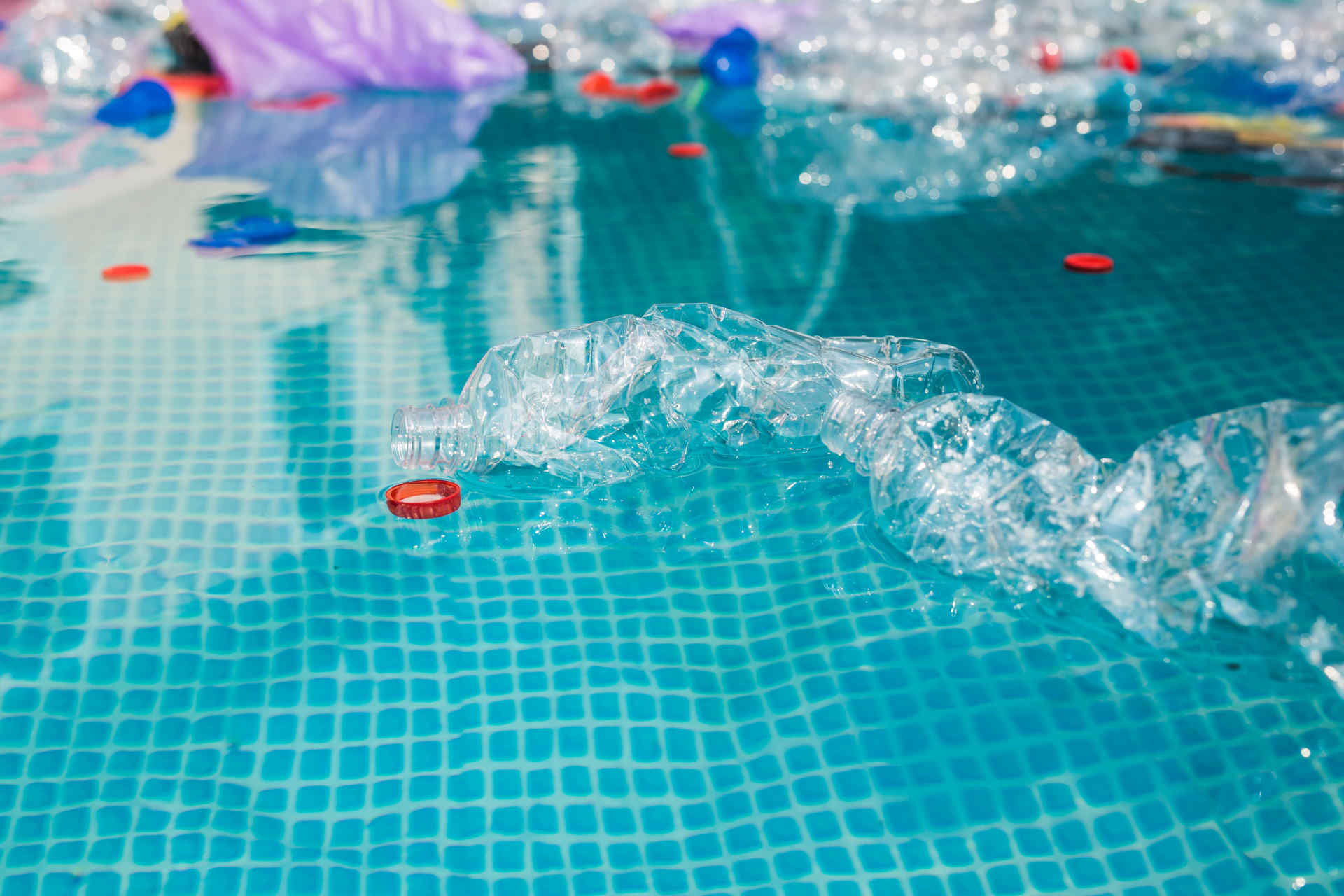 Plastic contains thousands of potentially dangerous chemicals: the new United Nations Report (Photo: Envato)
Plastic is a chemical: historic United Nations resolution
In March of 2022, theUnited Nations Assembly for the Environment (UNEA) adopted a historic resolution, which calls for the urgent establishment of international instruments and treaties that would allow us to address the pollution problem from plastic starting from a new awareness of its scope.
While we are all more or less aware of the dangers posed bymicroplastic pollution, underlines UNEP, there is in fact very little awareness of thechemical pollution generated by the abandonment of plastic.
Some specific substances, such as the fearsome bisphenol A (which were used, for example, to make resin coatings for food containers), have over time attracted the attention of the general press, but according to scientists this is only the tip of an iceberg that still lies largely hidden.
As stated in the new UNEP Report, the situation is more complex than one might think: “We can show that there are over 13.000 chemicals in plastics; about a quarter of these have already been shown to be potentially harmful, and for about half we don’t have enough information.”
These are extremely varied substances, often used in the industrial production of plastic objects including solvents o precursors, or how additives used during the coloring and treatment of the materials.
Some in particular have ended up under the scrutiny of scientists chemical agents used for UV stabilization and as flame retardants.
Source to Sea: the project against plastic pollution at sea
Those reactions on a gold base pioneering a "new chemistry"
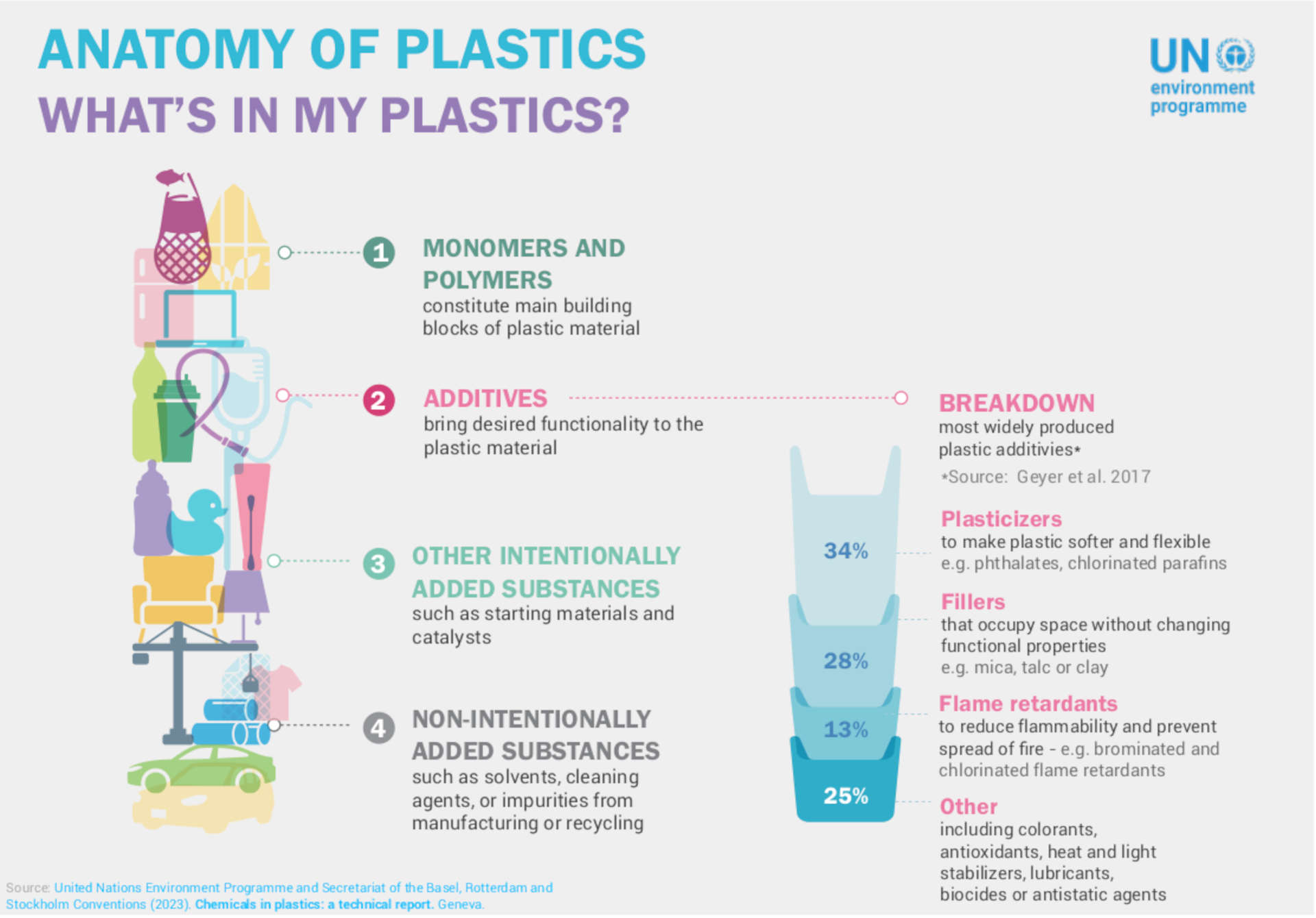 In plastic there are not only polymers: in addition to additives, there are also the additions of "unwanted" substances in the production cycle (Photo: Chemical in Plastics: a Technical Report, UNEP 2023)
Chemistry is an integral part of the history of plastics
The chemicals in the plastic are “a hidden danger that can harm public health and the environment on a global scale”, said the co-authors of the UNEP Report, Zhanyun Wang e Narain Ashta of EMPA (Swiss Federal Laboratories for Materials Science and Technology).
“Their use should be regulated within international treaties”, starting from the sectors that may prove to be more problematic, such as that of the packaging feed and that of children's toys.
According to a 2020 study, approx 90 percent of toys on the market is made of plastic that it potentially contains dangerous chemicals that we don't take into consideration: what happened to phthalates and cadmium and lead residues discovered in toys produced between the XNUMXs and XNUMXs could happen again.
It is therefore time to accept the implications of that everything around us is chemistry and approach the problem of pollution starting from a few, but very clear, assumptions:
- chemicals are integral part of plastic bags;
- exist 10 groups of chemical agents which are indicated as dangerous and on which to act as a priority, and which have been identified in plastic used in various sectors (including that of food packaging);
- scientific studies carried out on approximately 7.000 substances associated with plastics show that over 3.200 of these substances have potentially harmful properties for the environment and for human health, to which women and children are more vulnerable;
- there are more than 2.000 chemicals that are actually found in plastics that we know nothing about, but it is essential to monitor and analyze all those that have been found inside plastics and for which there is a known danger.
Greenwashing and Plastic: How to Distinguish Real Innovations
The seven main points of the Report
Among the data emerging from the UNEP Report onplastic pollution, the seven main points from which to start to address the chemical problem have been defined:
- Le microplastics and nanoparticles (product disposal) are vehicles of potentially hazardous chemical substances;
- The sector of the packaging it is one of the most worrying: it cannot be excluded that harmful substances could contaminate food;
- I toys They are plastic problematic and often underestimated;
- The use of plastic by children and women it's a further concern;
- Many chemicals have not been studied and their impact is unclear;
- One is needed international reform to regulate the use and production of plastic;
- I laboratories and institutions must implement studies and monitoring.