SEARCH


From February 10th, a six-episode series that uses and launches new technical solutions within the story of Gran Turismo competitions
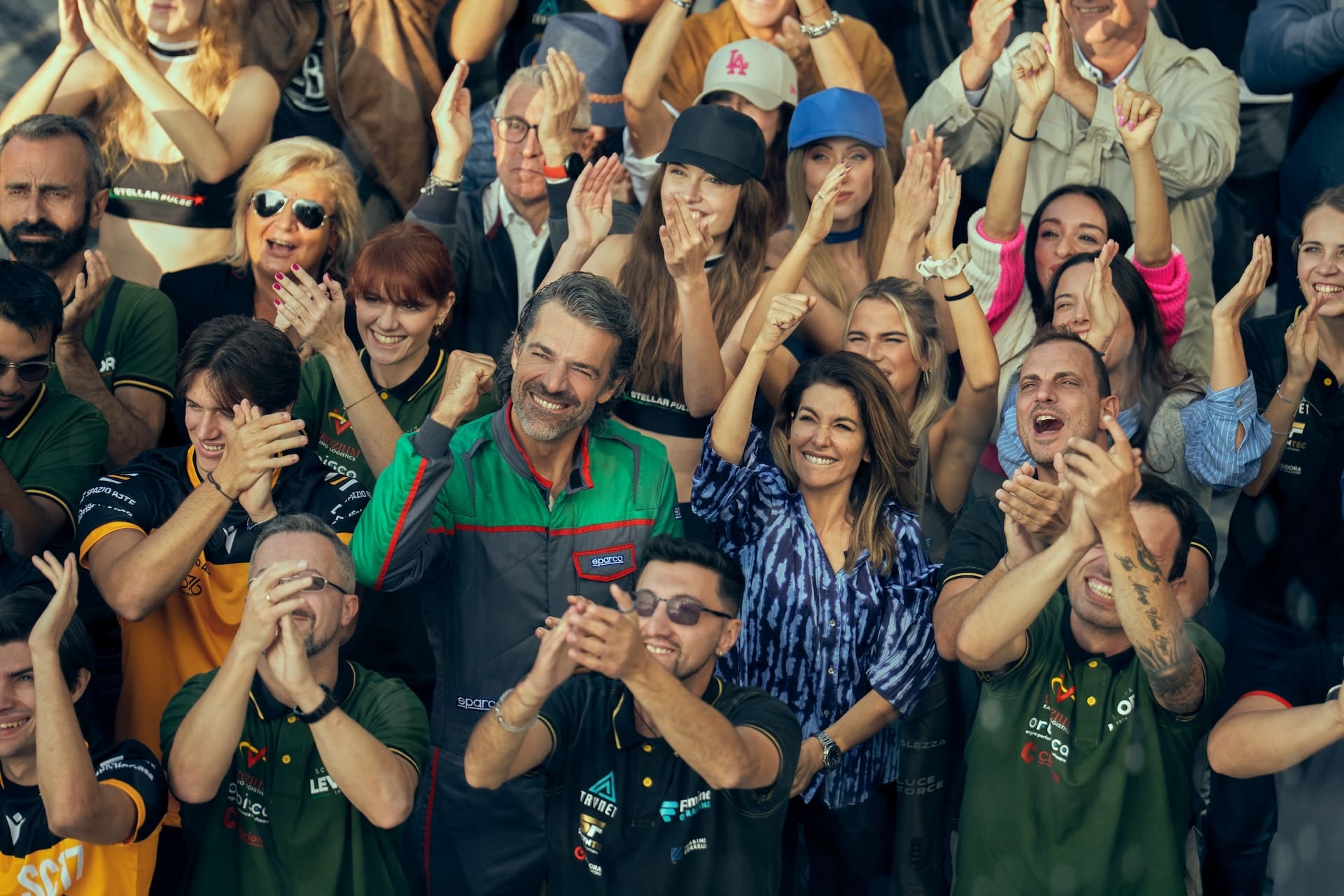
The Land of Motors also conquers Netflix and does so with a product directed by six hands – those of Matteo Rovere, Pippo Mezzapesa e Lyda Patitucci – which focuses on innovation rather than pure storytelling. The series Motor Valley, available from February 10th on the streaming giant, arrives with the support of the Emilia-Romagna Region and brings to the screen one of Italy's most iconic industrial and cultural districts, a symbol of technological excellence and pure speed.
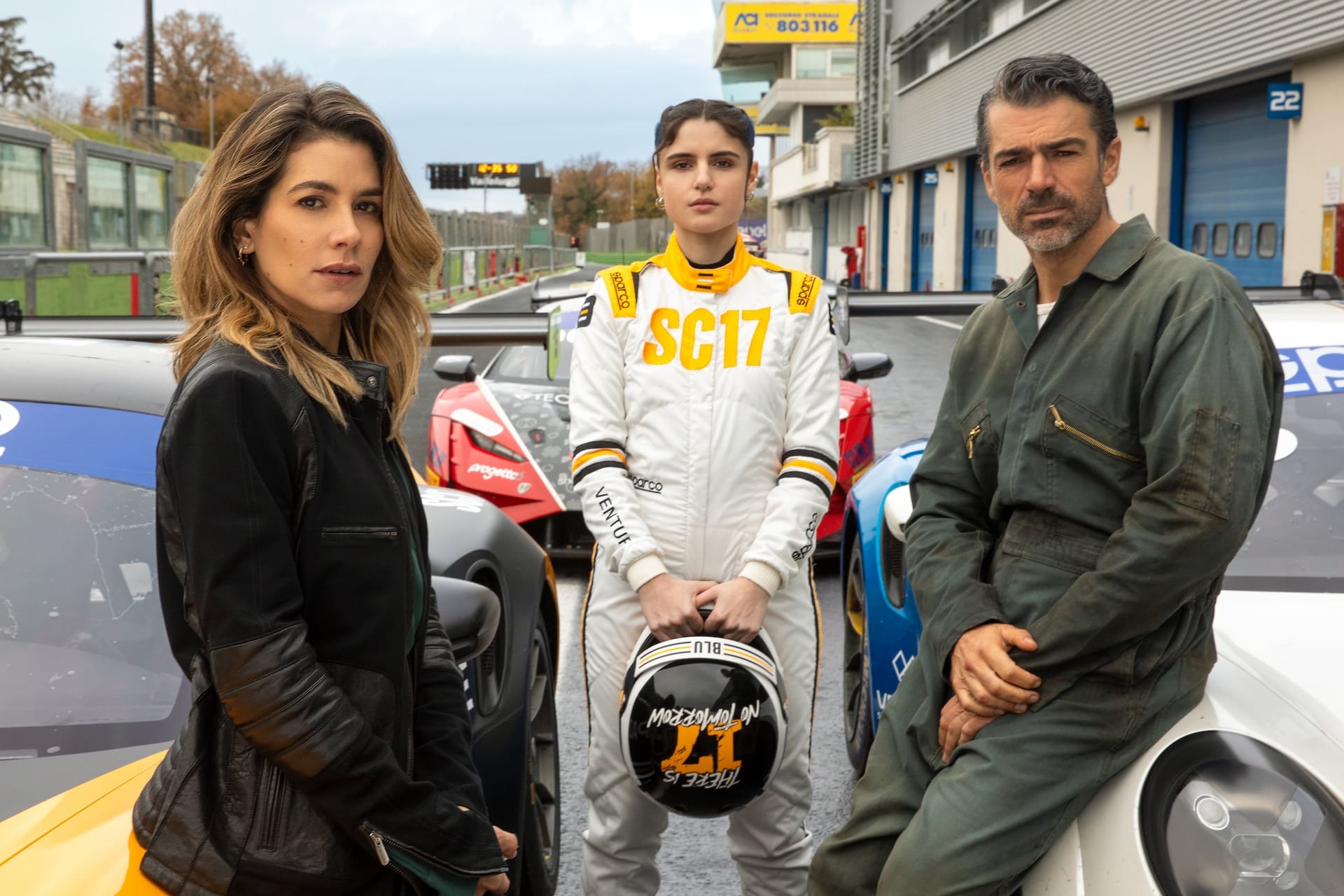
At the centre of the six episodes are Arturo, Elena and Blu, played respectively by Luca Argentero, Julia Michelini e Caterina ForzaThree characters marked by losses and failures, united by a visceral connection to the adrenaline of racing. And since each of them has a reason to race faster than the others, the series can only tell their journey through one of the most exciting motorsports: the Italian Gran Turismo Championship (GT), where cars and racing are not only a shared passion but also a reason for life, or death.
To make Motor Valley a relevant case for those who observe innovation in the audiovisual sector, however, is above all its production architectureThe series takes shape from a clear decision, as well as fitting into the real fabric of GT competitions, following its times and rituals, to the point of integrating with teams, paddocks and official races. The result is an experiment that intertwines track shots, advanced use of LED walls and VFX, seeking a new balance between truth and storytelling.
A golden moment for the big (or small) motoring screen
In recent years, four-wheeled cinema has gone through a particularly fertile phase, bringing the epic of speed back to the center of cultural narrative. The recent journey began in 2019 with Le Mans' 66 - The big challenge, Directed by James Mangold, which reconstructs the historic challenge between Ford and Ferrari at the 24 Hours of Le Mans. Through the interpretations of Christian Bale e Matt Damon, the film tells the story of the rivalry – industrial and human – between two opposing models of doing business, winning in the technical categories of Best Editing and Best Sound Editing.
Three years later, Lamborghini – The Man Behind the Legend, written and directed by Bobby Moresco, shifts the focus from the track to the figure of the entrepreneur. The story of Ferruccio Lamborghini's life becomes the pretext for a journey through postwar Italy and the transition to an industrial modernity marked by ambition, with a perspective that intertwines the individual biography with the transformation of an entire country. The next step is Classic Ferrari for sale, signed in 2023 by Michael MannSet in 1957, the film with A in the role of Enzo Ferrari he brings to the stage the most fragile and tragic side of the myth, with filming also carried out in Emilia-Romagna.
The point of arrival – for now – of this trajectory is F1 – The Movie (2025), directed by Joseph Kosinski, capable of marking a radical production breakthrough. Filmed during real Formula 1 weekends, with modified Formula 2 and Formula 3 cars equipped with over fifty cameras, it introduced unprecedented technical solutions such as a 6K micro-camera designed to place the viewer inside the cockpit.
It goes without saying that the Motor Valley, an industrial district by definition devoted to experimentation, with the support of Netflix, could only to collect and relaunch this productive legacy, adapting it to the serial language and to an idea of realism built directly on the competition field
A productive challenge built within real races as well as on real circuits
As director, producer and screenwriter Matteo Rovere explains, Motor Valley It was born first and foremost as a production and financial challenge. The development work began a long time ago and involved a deep immersion in the region and the people who inhabit the Land of Motors, with the stated goal of distancing itself from the aestheticized and glossy imagery often associated with the racing world. This is also the direction taken by the ongoing dialogue between the teams at Netflix and Groenlandia (a company of the Banijay group), called upon to tackle a complex and under-explored subject matter in the Italian TV series landscape, sharing the need to renew languages and production processes.
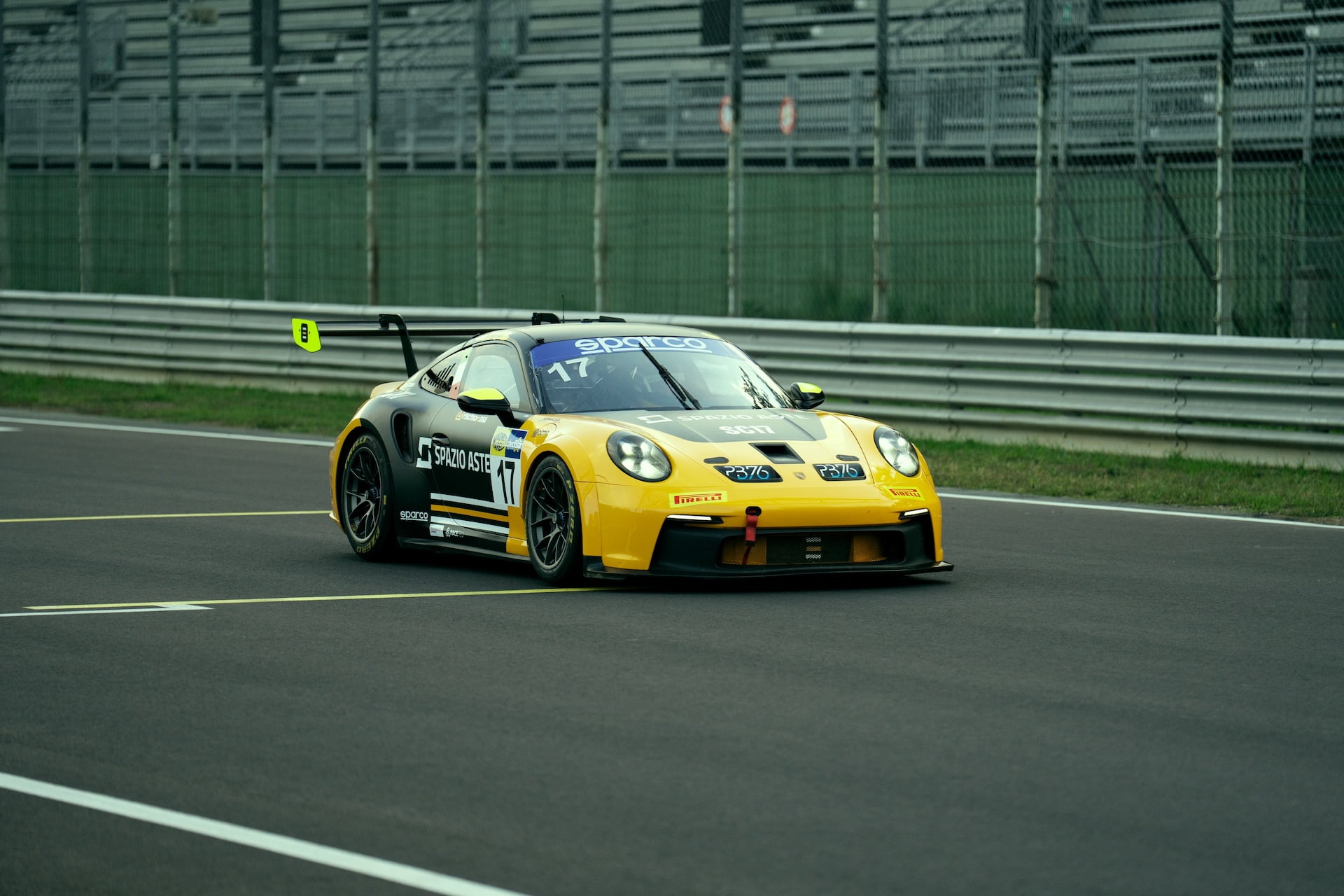
The heart of the innovation lies in the decision to join forces with the real stables of the Italian Gran Turismo Championship, with the support of ACI Sport, even registering and racing the car featured in the story in a real championship. This allowed us to follow the entire racing season, integrating official races with narrative sequences shot directly on the track and creating an unprecedented continuity between real and fictional competition.
The filming also involved the behind the scenes of the races, with actors placed in the pit lane, paddock and boxes, while during the official events the drivers wore suits and helmets of the characters from the series, allowing us to capture authentic images within real-world settings. The project spanned Emilia-Romagna, Lazio, Lombardy, Tuscany, and Abruzzo, tackling complex action scenes thanks to the work of the Top Stunt team and combining real footage, LED walls, and VFX to achieve a coherent and believable result.
Filming on the track between technical experimentation and new action sequences
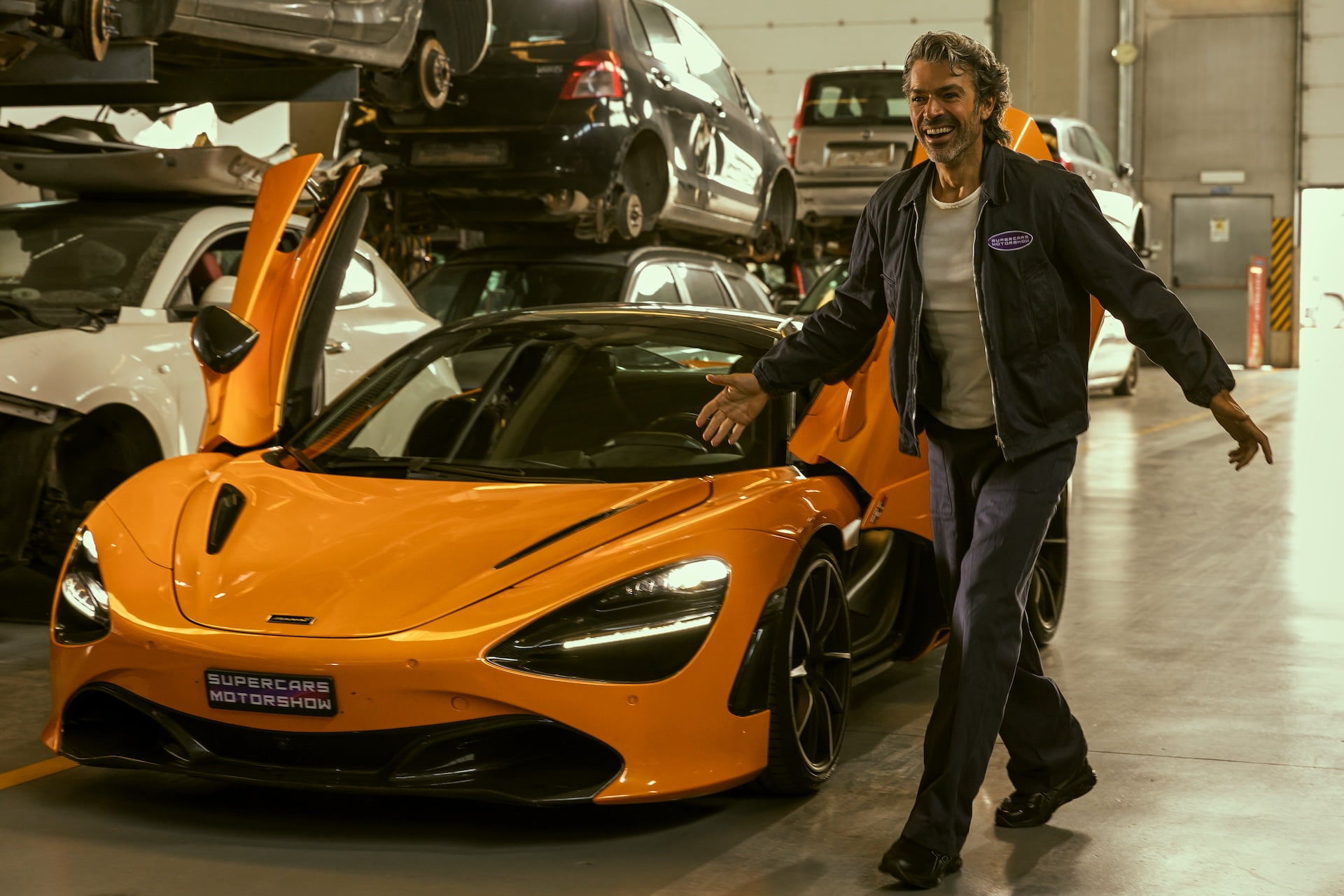
To make Motor Valley An atypical production example is the way different filming techniques are combined within the same visual setup. The use of LED walls, described by Rovere as innovative, is combined with live action footage and VFX to achieve a seamless result, giving the viewer a sense of reality and continuity.
Similarly, as mentioned, the production team worked within the real races of the Italian Gran Turismo Championship. During the official races, the drivers from the various teams drove wearing suits and helmets from the series' characters, allowing them to reconstruct some shots directly within the official events and always move within a concrete reality. This made it possible to follow all the stages of the championship throughout an entire racing season.
The work of the above-mentioned team also fits into this framework. Top Stunt, who designed and created chases, crashes and spectacular sequences while remaining compatible with the real context of the competitions.
The Emilia-Romagna Motor Valley as a human place before an industrial one
Motor Valley It ideally takes on meaning where it was born: in the heart of a region where motors are a shared language and a form of belonging. Matteo Rovere once again says this, insisting on the idea of a world inhabited by people, even before cars: mechanics, drivers, enthusiasts, families who grew up breathing in gasoline and competition. The Motor Valley thus becomes the place where action takes shape because it is rooted in reality, and not because it is sensationalized.
A perspective that complements that of Pippo Mezzapesa, who recounts the entry into an initially distant universe, transformed into a journey of emotional discovery. Racing, here, is not the starting point of the story, but they become the point of arrival, the arena where personal frailties and mistakes are condensed. The direction, even in the most adrenaline-filled sequences, therefore remains at the service of the characters, seeking the deeper meaning of the story in the silences and breathing beneath the helmet.
This is complemented by Lyda Patitucci's vision, which showcases the constant duality between sport and shadowy areas, between official competition and the underground world, bringing different visual and stylistic registers together. Taken together, these perspectives create a series that uses speed to tell the story of connections, accidents, second chances, and belonging, making the Motor Valley a place of unity. a narrative and human engine before being spectacular.
"Motorvalley": The official trailer for the Netflix Italy series
Here are three insights that might interest you:
GELLIFY and Ducati Corse: innovation and speed in MotoGP
An innovative trust for the Dallara generational transition
Protected in Blockchain there is the brand "Made in Motor Valley"