SEARCH


The tasting highlights how, with unchanged production rules, climate and fodder crops influence different organoleptic notes

“Tasting” refers to the organoleptic evaluation of a food. In the case of Grana Padano DOP, however, the word inevitably becomes an umbrella term, capable of enclosing even more depth and complexity. The sensory characteristics of the cheese, first of all, vary according to its maturation. Therefore, in order to correctly analyze all its properties, a vertical tasting.
For the above, we start from different maturations of a cheese produced in the same province. Or, even better, in the same dairy. The methodology then continues to unfold in other and successive phases, where visual, gustatory, olfactory and mechanical descriptors come into play. However, Grana Padano does not mean "only" excellence of the Italian dairy tradition. Grana Padano is also an unparalleled synthesis between Story, crop e territorio. And this is precisely the reason why, for the true tasting of Italian DOP cheese, not only the maturation matters.
He also thinks about fitting in in a preponderant way the different production area. Climate, fodder crops, environment and cattle breeds, that is, cause the cheese to take on distinct characteristics and flavours. By saying this, we cross the boundaries of horizontal tasting. In a completely different way to the previous one, this analysis compares various types of Grana Padano DOP with the same maturation but from different dairies. Although each company responds to the same and strict production rules, there are therefore specific environmental factors that inevitably vary from region to region. Or even from province to province. And it is precisely these elements that give taste, perfume e consistency not only and simply different, but also unique.
In Switzerland, cheese maturing is also innovative
Fermented foods: the laboratory kitchen that creates the food of the future

Vertical tasting: a true journey to discover the senses
The tasting is one ancient wisdom. It is a ritual that with clarity, precision, coherence and uniformity allows us to distinguish, in our case, the characteristics of the cheese. In addition to personal pleasure, the analysis is clearly performed to evaluate compliance with the standards set by the Production Discipline of the products. He himself, in the case of Grana Padano DOP, reports that it must have "a hard paste, with a finely granular structure, radial flake fracture and barely visible holes".
The crust, always according to the aforementioned prescription, has the obligation to appear "hard and smooth, with a thickness of 4-8 mm”. It goes without saying that both the internal and external structure are at the service of the maturing process. In the first case, depending on the maturation, macroscopic crystals are visible which represent amino acids and calcium lactate salts. In the case of the crust, however, the color and thickness will vary. For vertical tasting, as mentioned above, it is necessary to refer to forms from the same dairy. The ideal is therefore to have available representing a product di 9 months, one of Over 16 months and a Reserve Over 20 months.
In order for the analysis to provide comparable results, even if performed at different times and by different evaluators, there are some procedures to follow. Rules, that is, to evaluate the individual parameters and the scale of values to be attributed to each parameter. In the case of vertical tasting, rules are inserted visual analysis, olfactory, gustatory e mechanics.
One hundred years of freezing and innovation in the food industry
Because the Mediterranean diet is not what we… know

Visual evaluation: rind, color and graininess of the cheese
The visual analysis of Grana Padano DOP focuses, in turn, on some different elements. The color, first of all, it will tend to become proportionally more intense as the seasoning increases. From white to straw yellow, to be precise. Secondly, the colour also varies graininess of the pasta and finally, as mentioned, the crust. Grana Padano DOP Over 16 months, for example, has a grainy paste with a uniform color ranging from slightly straw-yellow to white. The thickness of the crust can reach 6-8 mm. The external structure of the Over 20 months seasoning, on the other hand, is between 9 and 10 mm.
Sustainable plastic obtained from agricultural waste is already a reality
Cultured meat and the challenge of sustainable food innovation

The variety of olfactory sensations of Grana Padano DOP
The aromas develop above all during the maturation of the cheese, even if odors related to the cheese remain source milk. The production technique also influences (and not a little) the determination of the olfactory characteristics of the cheese. From 9 to 16 months of maturation the aromas are not too intense. However, after 20 months, more complex aromas are added due to the biochemical processes that occur during maturation, in particular on the proteins.
Plant-based milk: a real alternative to animal proteins?
The first rechargeable and… edible battery in the world

The perceived taste of the product during chewing
Tastes, perceived during chewing, manifest themselves in a different temporal succession. This time, the parameters that allow the analysis of the cheese are the sweetness, the flavor , spiciness. Lactic acid, mineral salts, simple and complex amino acids are the molecules that provide taste sensations. The intensity of saltiness tends to increase with seasoning, while acidity and spiciness must always be at low intensities.
An example of a circular economy from waste crustacean shells
The chemical footprint of cocoa: a great discovery for chocolate

The mechanical descriptors, less intuitive than the previous ones
We conclude the vertical sensory journey with the mechanical analysis, less intuitive than the previous ones. The descriptors, in this case, refer to the consistency. The reaction of the cheese paste to the stresses – precisely mechanical – of chewing is expressed in terms of deformability, elasticity, adhesiveness, hardness, friability and solubility. In particular, the last three characteristics have increasing intensity as the maturation increases. On the contrary, deformability and elasticity are typical of maturations after 9 months.
That innovative search for… iron for our diet
Depression and nutrition: what is the inextricable link?

The correspondence between environmental factors and horizontal tasting
Grana Padano DOP is produced in five regions, from the Po Valley to Veneto and from Piedmont to Emilia Romagna up to Trentino Alto Adige. The rules regarding processing and equipment used remain, of course, the same for each structure. Furthermore, all producers are required to respond to a single and rigid specification. And yet, with such a large production area, the typical characteristics and identity of Grana Padano DOP they are not equally homogeneous and uniform.
Climatic conditions, fodder crops, cattle breeds and territorial conformations are able to settle in the flavour and final consistency of the cheese. The consequence is that, despite the strict production regulations, taste and structure are never standardised on common parameters. This is where horizontal tasting comes in, which uses the same maturation of Grana Padano DOP but produced by dairies in different regions. Or even just different provinces. Only in this way is it possible to delve into the peculiarities of Grana Padano DOP, conveyed by the reference environment itself.
Luca Savoia: “2024 will be the turning point for agrivoltaics…”
Eating during pregnancy with an innovative "trimester" diet

The diversification of the climate landscape in Grana Padano
The climatic variations in the production area of Grana Padano DOP are countless. Italy itself, after all, is an extremely varied country, capable of presenting very different weather conditions depending on the area. Let's start with Lombardia, characterized by natural conformations that range between mountains, hills, lakes and plains. As a result, the climate context is also extremely varied.
La Po Valley has a continental climate. Winters are cold and with frequent days of frost and thick fog. Summers are humid, muggy and moderately rainy. A transition between semi-continental and alpine climate is what we find in Trentino. Among its characteristics we highlight the absolute absence of fog, in stark contrast to the Po Valley. Not to mention the low atmospheric humidity, which ensures a generally dry climate.
The Emilia Romagna, like Lombardy, presents notable climatic differences. The region is moderately windy, with rainfall concentrated in spring and autumn. The variety of climatic conditions does not even exempt the Veneto, where mountain areas with a harsh climate alternate with mild areas of the foothills. The climate of the Venetian plain, despite being milder than the other areas of the Po Valley, is marginally affected by the mitigation of the Adriatic Sea.
The lowest common denominator of the entire region is, in any case, the notable temperature range during the night hours. The Cuneo climate of Piedmont, finally, presents characteristics of marked continentality, thanks to the screen that the reliefs oppose to the influences of the nearby Mediterranean. The different altimetry of the province also leads to notable climatic differences between the Alpine area, the Langhe and the plain.
The first biogas-fired Volvo plant with zero climate impact in China
Climate change: Switzerland allied with Chile, Kenya and Tunisia

The influence of different fodder crops on cheese
As with any chain reaction, climate variations, combined with the conformation of the territory, influence the type of fodder crops at the base of thecattle feeding. The different contribution between the constituents of the food ration, in particular, determines the color and perfume some cheese. But also the taste , structure, as well as its predisposition (or not) to maturing.
Let's take an example. The triangle between Brescia, Bergamo e Cremona is traditionally dedicated to the production of corn. Therefore, the land used for grazing is significantly less than in other provinces. This predisposition determines a less pronounced colouring of the Grana Padano DOP paste. The case of the provinces of Mantova e Piacenza, which are characterized by fodder crops mainly composed of pastures. The vastness of the meadows characterizes a cheese with a more accentuated aroma, a more intense taste and greater resistance to maturation.
Again, the provinces of Vicenza, Verona, Trento e Cuneo, although from different regions, are characterized by hilly and mountainous areas. In this case, it is the spontaneous crops of grasses and stable meadows that dominate cheese production. This feeding leads to the production of Grana Padano DOP with richer olfactory nuances. The intense aromas also stand out, as well as the decidedly straw-yellow color of the paste.
A hub in the heart of Switzerland for healthier eating
Why do we have an unbridled desire for… dessert at the end of a meal?
The dairy quality of milk from many different cattle breeds
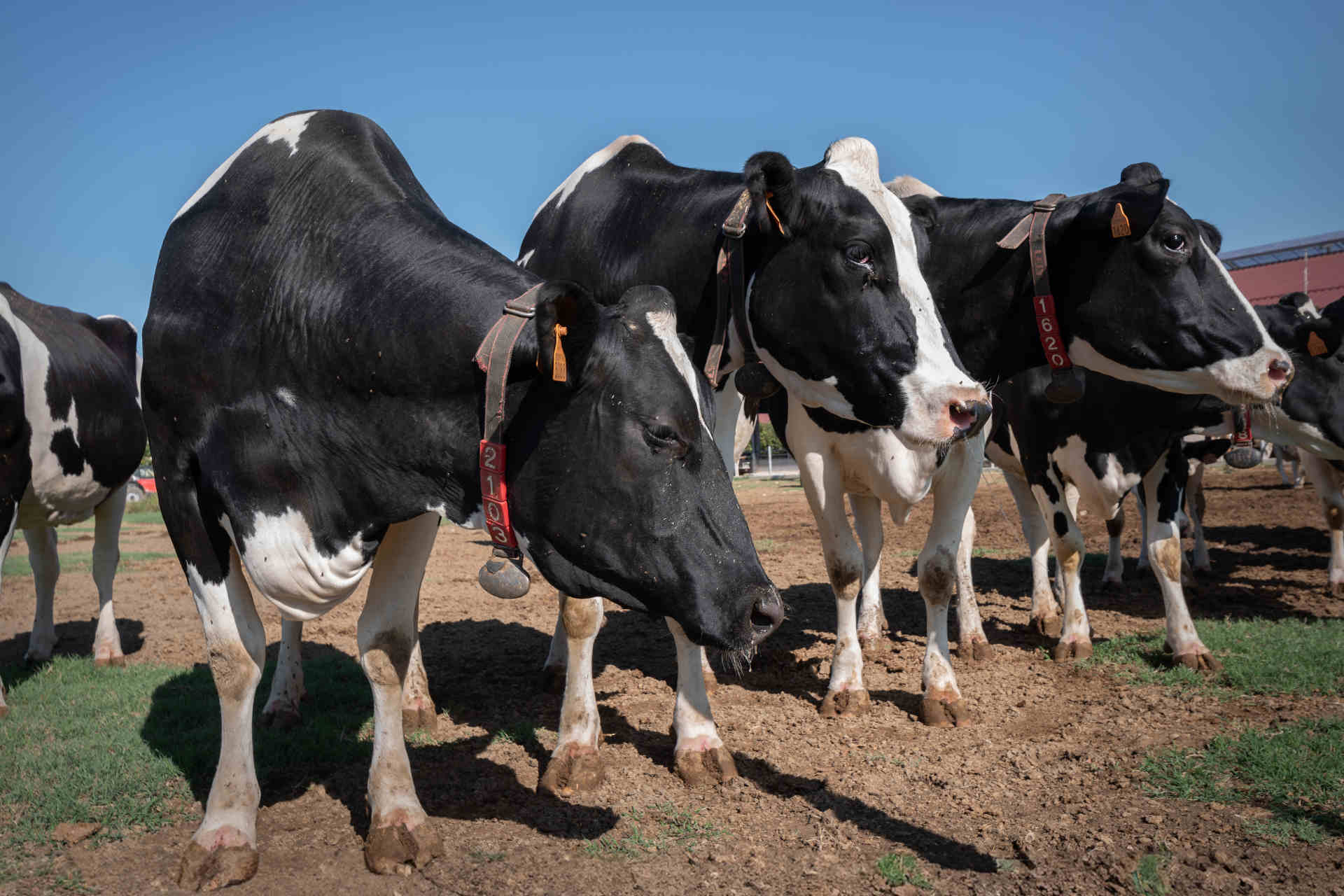
Last but not least, we find the breeds of cows that produce the milk. There technological-dairy quality of milk in fact it represents one of the cornerstones of production of hard cheeses. The livestock and agricultural tradition of the Grana Padano DOP production area, in particular, is characterised by Bruna Alpina , Italian Friesian.
The first represents the Italian strain of the native Brown of central Switzerland. Its introduction in Italy dates back to the 1850th century, even if its expansion took place around XNUMX. Today the Alpine Brown is distinguished by its robust constitution, the longevity , adaptability.
The Italian Friesian, on the other hand, comes from Dutch Friesland, a province in the north of the Netherlands from which it takes its name. Its first significant imports date back to around 1920. However, it was necessary to wait until after the Second World War to reach areas with a high fodder vocation such as the Po Valley. Equipped with a strong dairy vocation has always been robust constitution, over time it ended up replacing many local, less productive breeds.
Plastic in the Atlantic: the 5 riskiest areas for animals
The medical chip that will soon replace animal tests is Swiss