


 SEARCH


EMPA researchers have built a paddle system to irrigate fields and produce rich hay crops like in Switzerland centuries ago…
(Photo: EMPA)
Once upon a time, Swiss farmers ensured rich harvests of hay by systematically irrigating the fields.
In the canton of Zurich, conservationists are reviving centuries-old agricultural methods to recreate a precious natural idyll with high biodiversity, using technologies connected to a water paddle wheel, which researchers at EMPA they helped develop.
In Switzerland, digitalisation is taking hold in agriculture
(Photo: EMPA)
Diversified biotope to be protected in the Hundig floodplain
Dragonflies buzz in the sunny plain; the blue butterflies and other colorful moths flutter from flower to flower.
Common toads in search of females call out, while a snake hunts for food in the damp grass: a diverse biotope for endangered species will be created in the former floodplain called Hundig, near Glattfelden, in the Zurich plateau, thanks to a method that was common in Switzerland a long, long time ago.
Irrigation of fields was probably born in the Middle Ages and was able to more than double the hay harvest of the time.
To divert water from rivers and streams, German Franconian farmers used about 200 water harvesting wheels around the year 1800.

A 1:5 model by entrepreneur Bernhard Krismer in Wallisellen
This genuinely "green" technology is being revived today.
“It is an ecological and at the same time historical-cultural project”, explains project manager Daniela Eichenberger from the “Wässerwiesen im Hundig” association.
But all of this also required the help of external experts, such as Silvain Michel of EMPA's Mechanical Systems Engineering Laboratory.
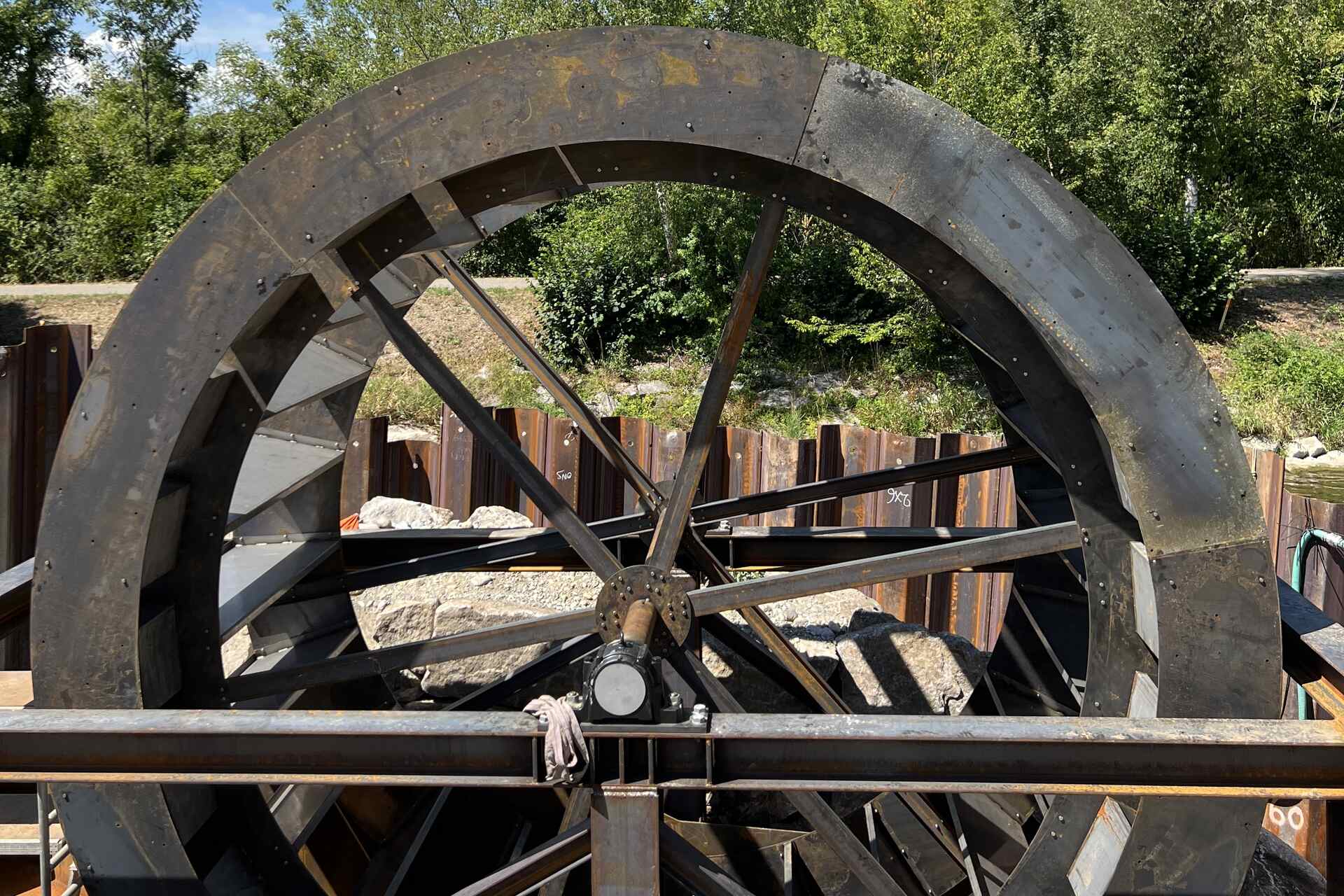
The Swiss Federal Laboratory for Materials Science and Technology contributed to the construction of a wheel with spoon blades, based on a 1:5 scale model designed and built by metal construction contractor Bernhard Krismer in Wallisellen.
“The first tests with this wheel quickly showed that the idea would work in principle”Michael recalls.
But the work was only just beginning, because there were many question marks: How deep should the steel wheel, with a diameter of about six meters, protrude into the Glatt?
Would the water power of the river, shallow at the intended location, be enough to propel it?
And to lift the necessary volume of water, which would then flow from the shovel cups into a channel leading to the meadows?
New experimental station for mountain agriculture
A left tributary of the Upper Rhine in the Unterland of the Canton of Zurich
The Glatt is a left tributary of the Upper Rhine in the Unterland of the Canton of Zurich.
The river has a length of just 38 and a half kilometers and flows out of Lake Greifen through the Glatt valley (in German, Glattal), flowing into the Rhine at Glattfelden.
While the upper reaches only gently slope, the current becomes faster in the lower reaches, forming bottom load banks.
For long stretches the Glatt was straightened and regulated: as it passes the north-eastern slopes of the city of Zurich, the course of the river is strongly influenced by the expansion of the agglomeration.
In some short stretches, the Glatt has now been renatured or at least there is a plan to do so, for example in the area of the headquarters of EAWAG (Swiss Federal Institute of Aquatic Science and Technology) in Dübendorf and in connection the planned expansion of runway 28 at Zurich Airport.
From the Greifensee to Niederglatt, the river has almost no altimetric “incline”. Towards the estuary, however, the course of the river becomes increasingly steep.
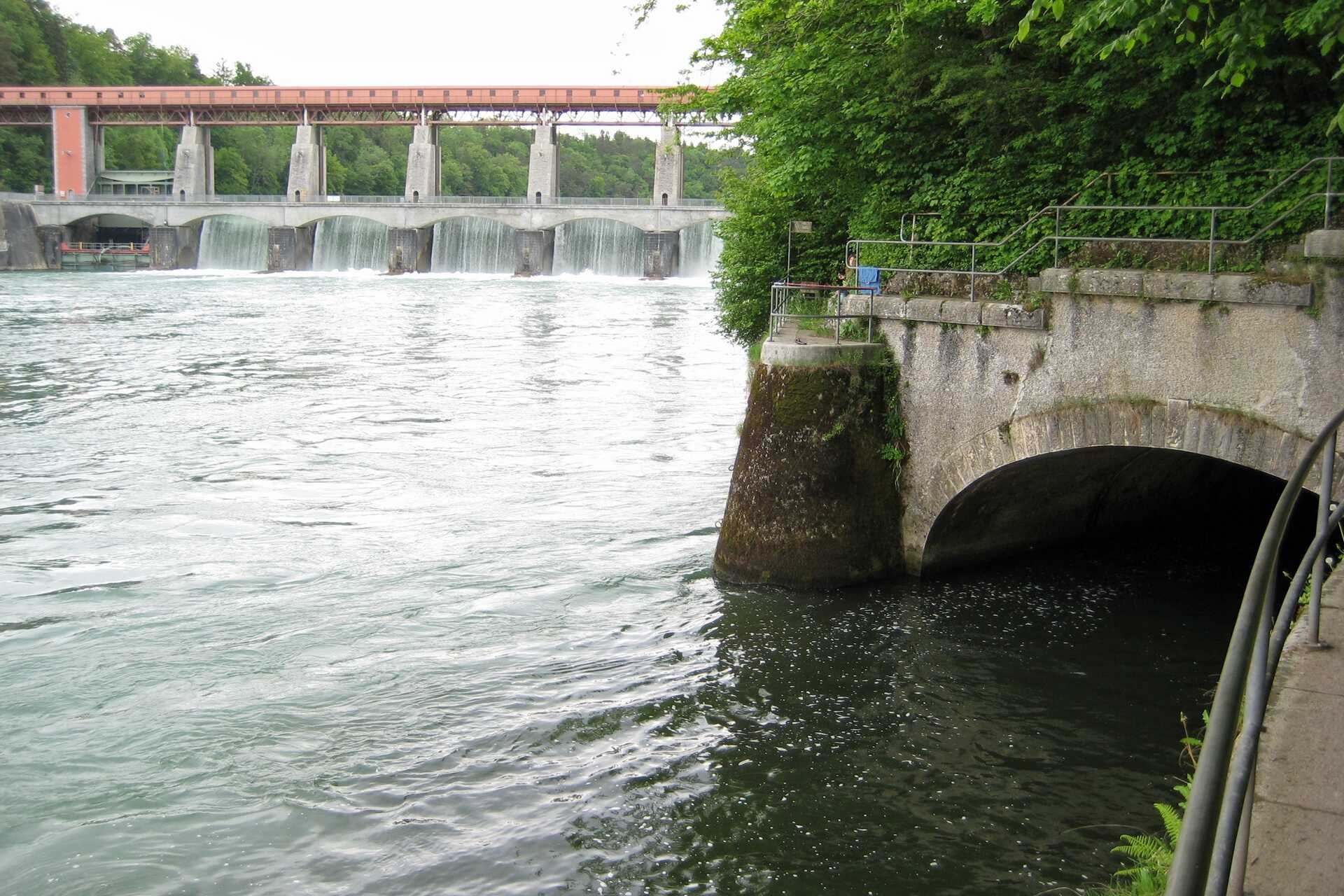
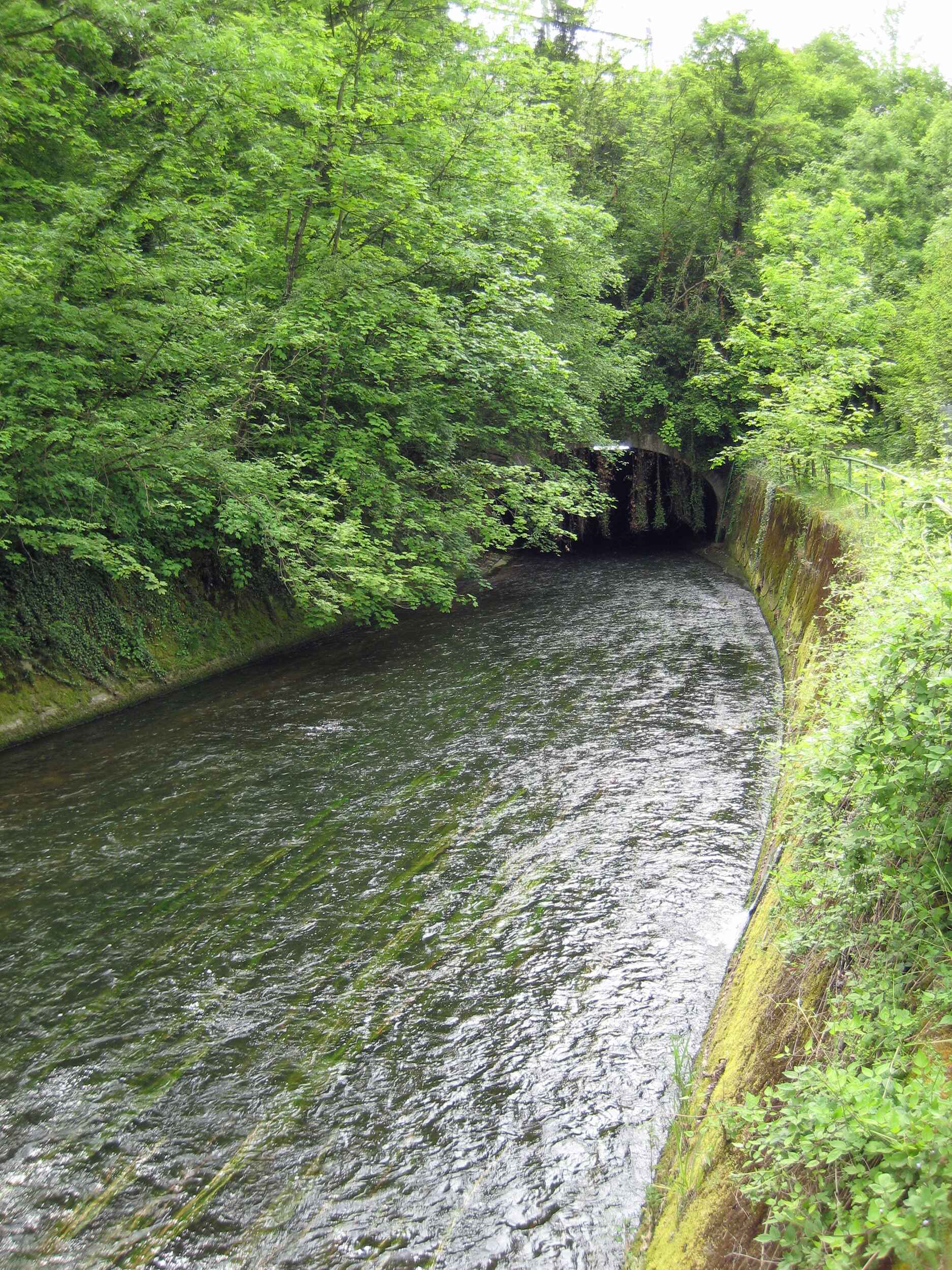
Since 1822, the Glatt near Rheinsfelden has been channeled through a 90-metre-long tunnel, just before its confluence, directly into the Rhine, to avoid the risk of flooding the city.
For the construction of the Eglisau-Glattfelden power plant, the estuary had to be moved again.
Since 1916, the river has been conducted through a 261-metre-long tunnel that flows directly into the section below the hydroelectric plant.
The lesson of Barilla agriBosco: anticipate a fairer planet
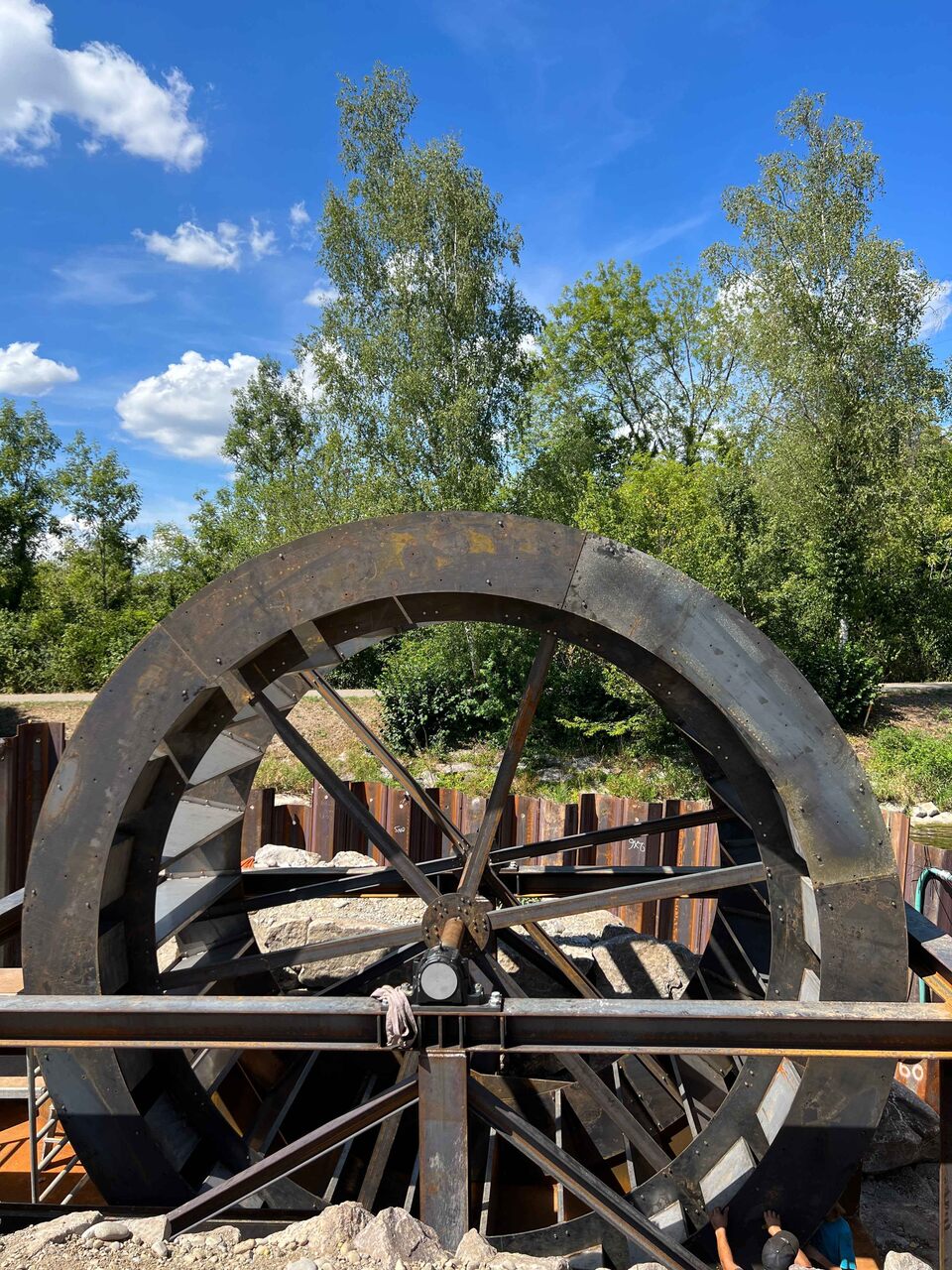
Six meters in diameter, eight tons in weight are the characteristics of the water wheel of the EMPA experiment shortly after its completion on the banks of the Glatt: to ensure robust operation, the pick and pour mechanism has no moving parts
(Photo: EMPA)
There a slope of almost a meter to increase the potential energy
Initial research showed that the hydraulic data on Glatt at the chosen location was partially contradictory.
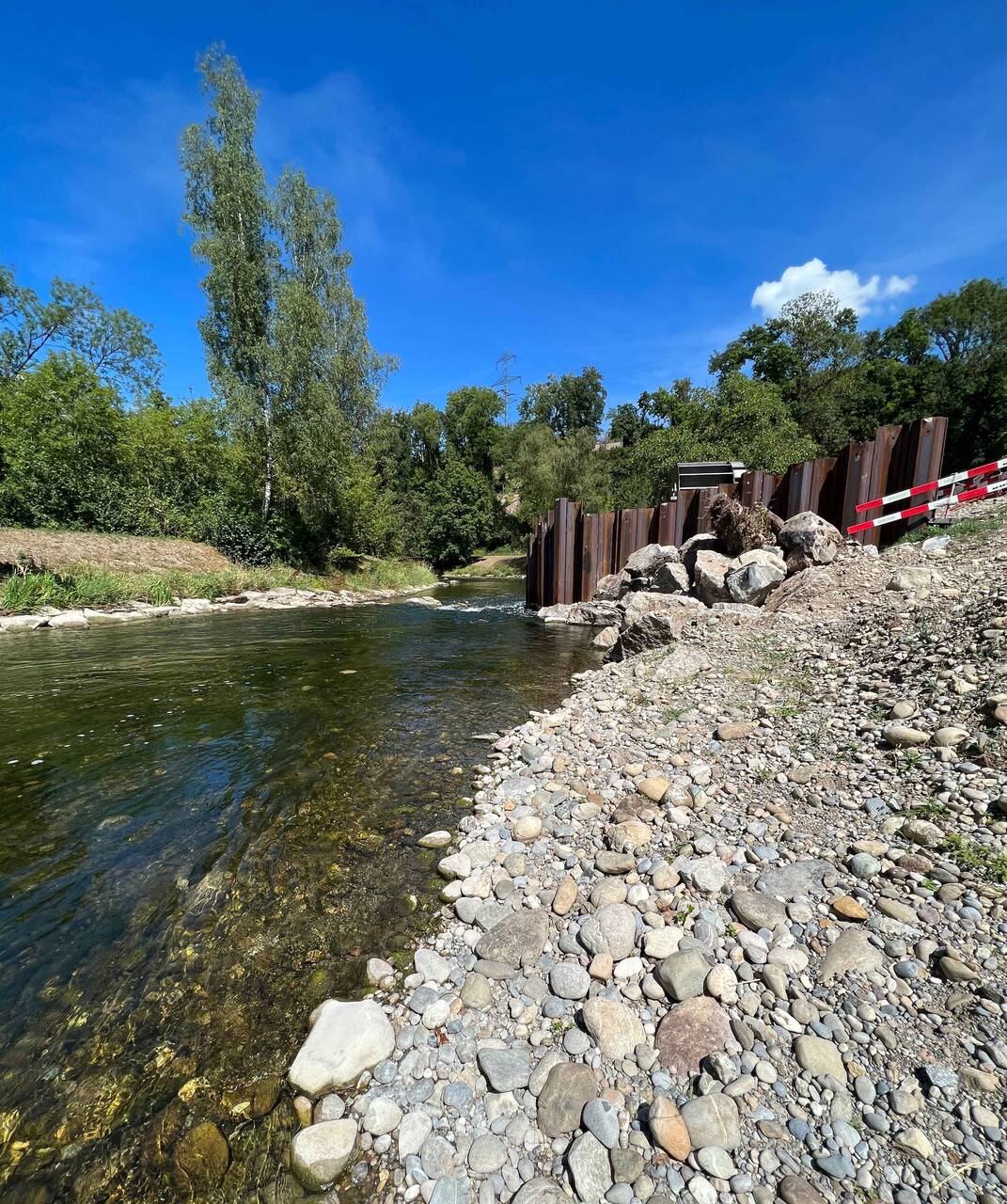
Therefore, the experts re-measured the river with its water levels at the predicted point, eventually deciding to change the stream bed thresholds.
Above the paddle wheel, the sill was raised by 30 centimeters, while below it it was lowered by a similar amount.
Two "steps", through which the Glatt flows to the Rhine, were thus combined into a larger leap or step: a slope of almost a metre, which could be used to increase the potential energy of the water to drive the wheel .
However, initial analyzes have shown that hydro-electricity may be insufficient, mainly because withdrawal from the river is limited.
Glatt's prescribed residual flow rate of 1070 cubic meters per second must be maintained at all times, and the draw-off has been limited to a maximum of 120 liters per second.
This is what preliminary tests have shown is needed for fields in the year 2019.
At temperatures above 20 degrees, however, the amount gradually decreases to a quarter, depending on the discharge rate of the Glatt into the Rhine, which is recorded around the clock.
It is in the Barilla agriBosco that sustainability has the right flavour
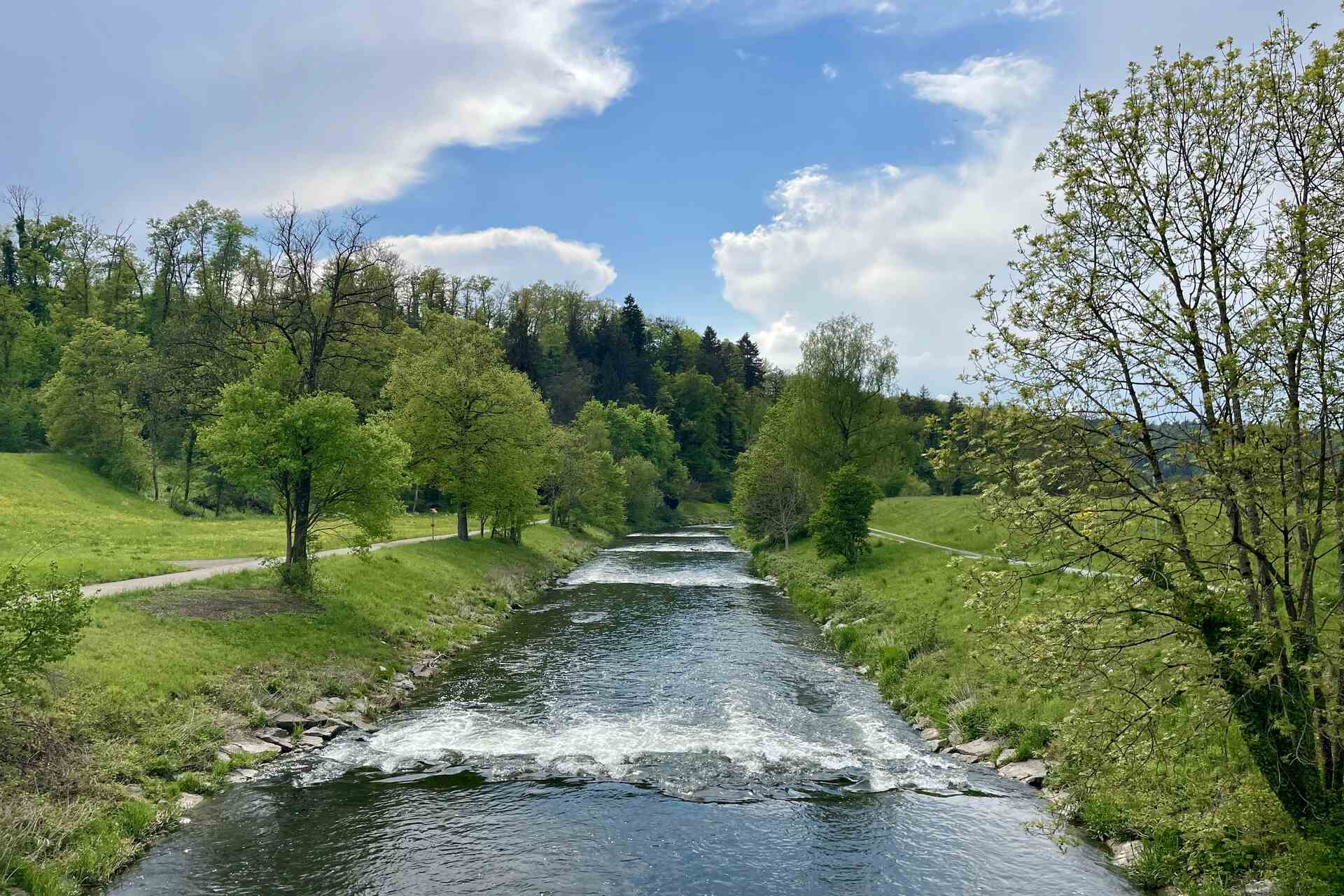
Among the concerns are climate protection and legal fishing activities
Ultimately, everyone would like to consider long-term climate protection, as well as the interests of the local fishing club, which was concerned about the water level and the catches of aquatic fauna, including the coveted trout, and who opposed the building permit.
“I have full understanding of the thing”says master metalworker Krismer, designer of the bailer, and who is, after all, a fisherman himself.
A bailer, in hydrogeology, is a hollow pipe used to recover groundwater samples from monitoring wells.
The project manager, Daniela Eichenberger, is also pleased that a reasonable solution could be found thanks to the successful negotiations with the indigenous community.
"Now is the time for implementation: in short, it's time for doing!", says the biologist, who has been responsible for the project since 2016.
In Emilia-Romagna the international university of agri-food
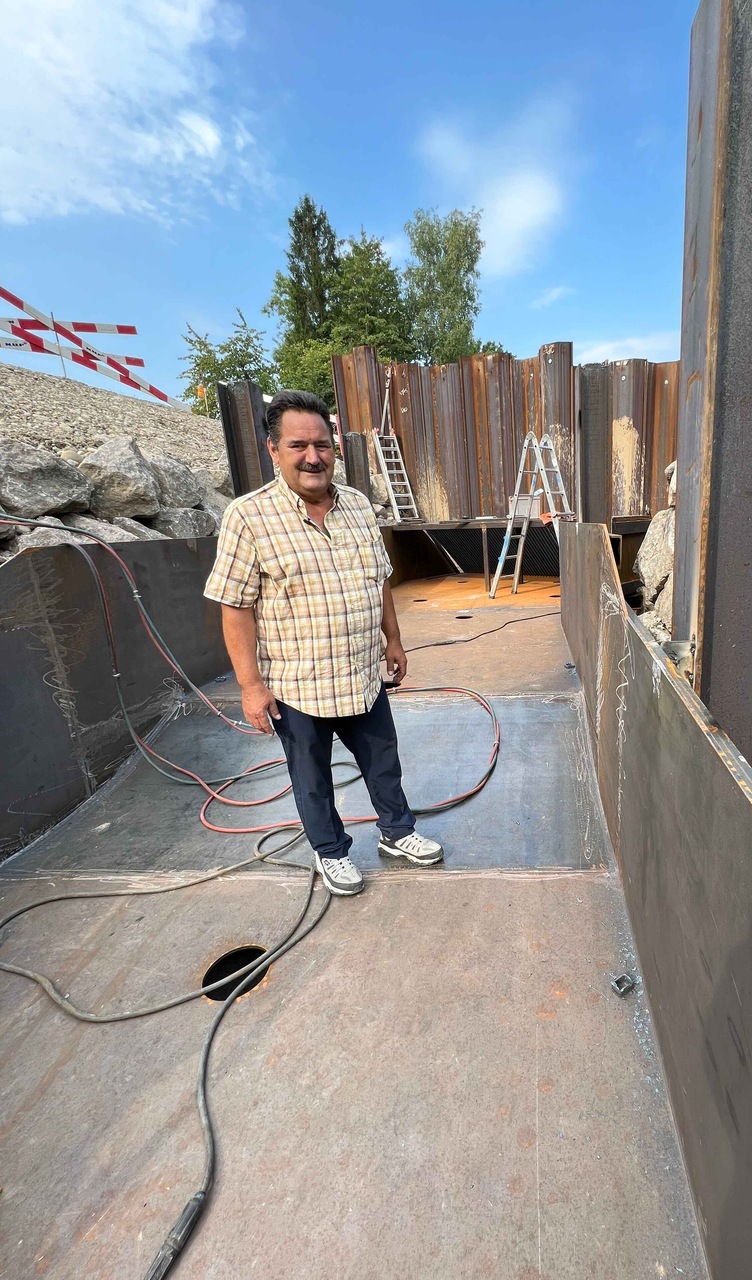
Responding to an efficiency that does not exceed 50 or 60 percent “from below”.
Ensuring the reliable drive of the eight-ton loader under these conditions proved to be a real challenge for EMPA researcher Silvain Michel.
The initial calculations had assumed an efficiency of 90 percent, an extremely favorable relationship between energy supplied and energy used.
But research in the literature has shown that an "under fire" water wheel, which is driven by water from below, usually only achieves 40 percent efficiency.
“The maximum is 50-60 percent”Michel says, “reason why the initial hypothesis was far too optimistic”.
Organic and traditional crops: Swiss four-way challenge
(Photo: EMPA)
A sort of goiter in the metal sole under the "mill" is the solution
What to do? Silvain Michel sought advice from someone in the know: Hydraulics expert and professor emeritus Michel Dubas from the Valais University of Applied Sciences in Sion has made his knowledge and many years of experience available, among other things free of charge , as the EMPA researcher points out.
After a common reflection, Professor Dubas proposed a simple but effective solution: a sort of goiter in the steel sole under the paddle wheel, i.e. a bulge aimed downwards which causes the water to accelerate again in such a way significant before pressing on the wheel blades.
With the application of this idea and with other technological details, as hydraulic experts have calculated, the pumping capacity of the wheel would almost reach the required values.
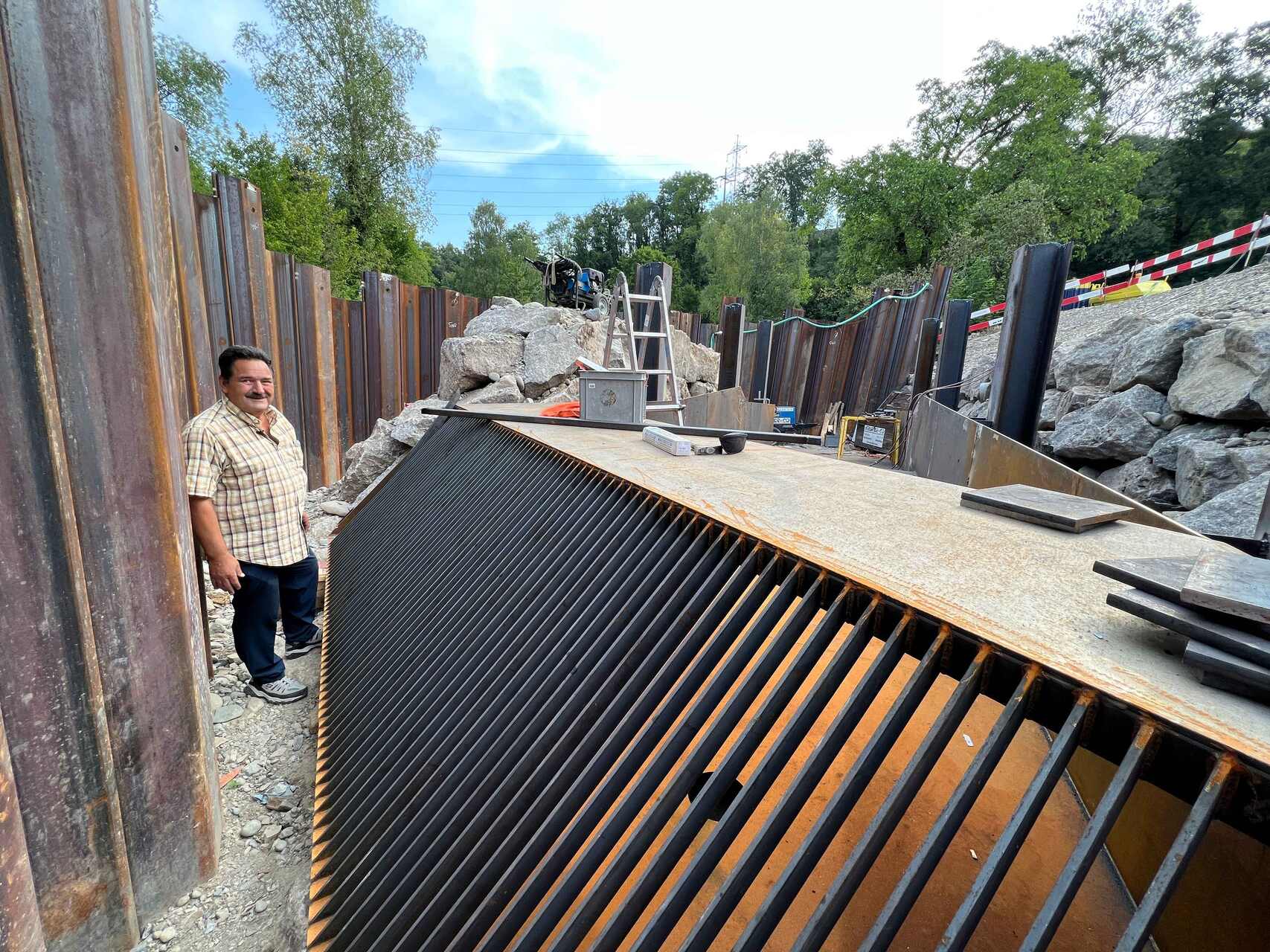
And they are convinced that the performance is sufficient despite some technical brakes on the water flow: after all, a rake in front of the wheel must keep floating material such as branches away.
Furthermore, a curtain of steel chains in the water generates noise in order to ensure that the fish stay in the Glatt and do not stray into the branch channel towards the collecting wheel.
In Switzerland created a paper battery with water switch
(Photo: EMPA)
Check the rake and the inflow gate valves so that nothing stops
Two video cameras in the water will film the activity of the wheel to understand if this strategy really works.
When the irrigation system for the fields goes into operation for the first time next year, it will not only be the local fishermen who will be keeping an eye on the scoop wheel, but also the EMPA expert and the planners, who want to make sure that the amount of water is reliably controlled and that the scoop wheel runs smoothly.
In fact, it is necessary to carry out regular maintenance, check the rake and the inflow gate valves, as well as regularly lubricate the rotating shaft of the steel wheel: the latter will be the task of a custodian of the entire hydraulic infrastructure, which will soon be hired.
A self-propelled fish farm will seek out the… best waters
A 2,4 million franc project supported by EWZ and the airport
The operation of the Hundig water meadows with paddle wheel and power line through the canals will start in 2023 after a long planning and implementation phase.
The wheel alone will cost around 300.000 Swiss francs; the total budget for the entire project amounts to 2,4 million.
The funding comes from Zurich Airport, as part of one of the ecological replacement measures it is obliged by law, and from numerous sponsors, including the lottery fund of the Kanton Zürich and the electricity company EWZ of the Zurich Town Hall, as well as to many foundations.
The sponsors of the project are the association “Wässerwiesen im Hundig” and the Department of Nature Conservation of the Landscape and Environment Office of the Canton of Zurich.
The Glatt River in Dübendorf in the Canton of Zurich


