


 SEARCH


The relationship between luxury brands and social networks is increasingly controversial. These realities can coexist, but how? Here is our reflection
Luxury brands and social media are a perfect combination Never like in these times, luxury brands are having a rather controversial relationship with social media. Think of the example of a few months ago by Bottega Veneta, which in January decided to disappear from all platforms, only to return after a month, certainly with a new communication concept, but always adapted unlike what was previously announced.
What makes the debated relationship between these virtual places and luxury companies it is undoubtedly intrinsic to the very nature of the two realities. The first is dominated by ever more sophisticated mechanisms and algorithms, which require a strong adaptation to be effective for a business. On the other hand, high ranking companies, especially when it comes to Fashion, need to create a language of their own to stand out from competitors.
This need for uniqueness and to identify new paradigms to bring out one's value proposition inevitably collides with the rigid structures of social media, each governed by very precise rules and dynamics.
Before going into some very explanatory examples of this situation, let's dwell on two events that have given rise to important reflections on the relationship between brands and social media.
The new EU rules change social media and eCommerce
See this content on Instagram
Seth Godin's emblematic interview on the typical mechanism of so-called "social"
On 15 February 2019 Seth Godin, the guru of modern marketing, was interviewed by Gianpaolo Coletti of IlSole24Ore, expressing very emblematic and in some ways prophetic concepts on the role of online communication.
“We have to get brands off the social media carousel, which goes faster and faster, but never gets anywhere. It's time to stop persuading and annoying or spamming, pretending to be welcome. We are in an accelerated historical phase which however does not allow for shortcuts and we need to focus on a long and sustainable path, a return to authenticity, which necessarily passes through experiences. Unless you're selling math theorems, you're selling emotions. After all, we are humans, not cyborgs. At least for now".
This statement by the US entrepreneur certainly made us reflect on the negative aspects of social media and in particular on the intrusive manner in which the contents, more and more standardized and less and less authentic, they come widespread. They should not be underestimated, then, trivialized terms e decontextualized, if not sometimes even abused, which have now become part of the language of these digital spaces. These dynamics have inevitably determined the need to return to experiential and authentic approaches that are now disappearing in favor of "like-catcher" posts.
From the words of Seth Godin, therefore, the idea emerged that brands should be aware about what users want to read, see, hear. Mass communication does not make this operation possible, because it leads companies to resort to trivializations and generalizations to comply with the standards imposed by these platforms.
Furthermore, in these virtual places, users are bombarded with content and stimuli, which is why their attention span is ever lower. To win their hearts, companies (and in particular the luxury ones, the object of our analysis) must create memorable experiences.
In a book, today's jobs between digital, media and social networks
The Social Dilemma, the Netflix documentary on the inconvenient secrets of web communication
Last fall, a Netflix product which aroused quite a lot a stir, especially in those who were not informed about the mechanisms of online ads. We are talking about The Social Dilemma, Jeff Orlowski's documentary (we talked about it here) which explains, through docu-fiction and interviews, how digital platforms profile users, make them employees and offer them ADS that are increasingly similar to their interests.
As mentioned above, these concepts weren't so unknown to those who work in digital (or, at least, they shouldn't have been). However, general opinion has not reacted positively to these "confessions" about algorithmic superstructures that characterize this world, results unethical.
What emerges from the words of the interviewees is above all that the mechanisms that govern social media has changed over time. The birth of these platforms, as is known, was driven by the desire to create places where people, for free, could network and build relationships across geographical borders and beyond.
The name of the same "Facebook” is inspired by a list made up of the name and photograph of the students, which some US universities distribute at the beginning of the academic year to help socialize.
However, over the years, the assumptions on which social networks are based have changed and become more and more business oriented and so they are about to reach the inevitable paid media status. Suffice it to say that, nowadays, a company that wants to reach a large number of users must necessarily resort to sponsoring content since the organic reach is constantly decreasing.
But for companies and in particular those in the luxury sector, it makes sense to continue to be subject to the moods of social platforms and their constant monetization attempts?
Let us continue this reflection by going into two concrete examples linked to the relationship between digital e Fashion Luxury Brand.
A teenager's video alarm against Internet abuse
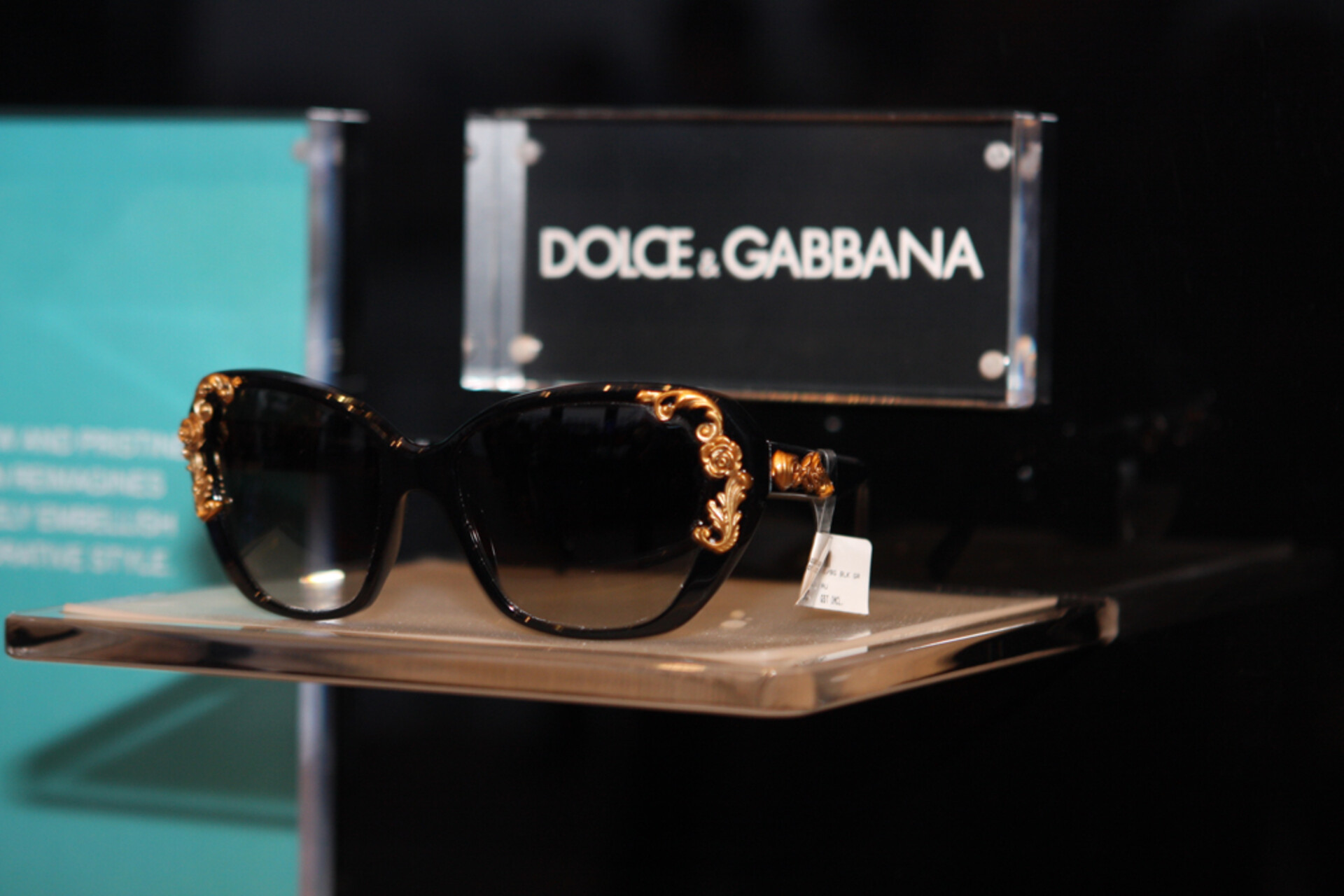
Dolce&Gabbana: the gaffe and the subsequent escape from social media that occurred in 2018
Many will surely remember the Dolce & Gabbana advertisement which depicted a stereotypical Chinese girl who showed obvious difficulty eating Italian dishes with chopsticks. Emblem of this embarrassment, which has become a real social and customary phenomenon, was the commercial in which the protagonist found herself grappling with a cannolo defined as "too big" for her.
The consequence was not alone the indignation of the Chinese people, which gave birth to a great boycott campaign, as well as to cancellation of a show which should have been held in Shanghai. The case took on even greater proportions by the time DietPrada, the famous Instagram fashion account, has published messages in which Stefano Gabbana expressed offensive and very racist opinions against the country of the dragon.
Initially the designer tried to buffer the situation by claiming to have been the victim of a hacking action, then he decided to apologize. But in the meantime, his words had already made the rounds not only throughout Asia, a continent of great interest for luxury brands, but throughout the world.
A declaration of repentance was certainly not enough to stem such a disaster!
Fedeverse: the escape that "is not seen" from common social networks
D&G's return to print media: what were the real reasons behind this decision?
In 2019, the Italian high-fashion company said it plans to use only the printed paper as a medium to present your own Spring/Summer 2019 collection.
Stefano Gabbana, to explain the reason for this decision, said: “Using traditional media even more massively than in the past: that's the idea. I don't think anyone else is doing anything like this. In an increasingly globalized world, expressing our uniqueness has become increasingly important. Explaining our identity in this way is only possible through the press: leafing through the pages of a newspaper, one by one, the point of view of each photographer is clearly recognized, at a glance. If we had made a post, or launched a digital campaign it wouldn't have been the same".
And yet: “This is the time for us to go back to magazines, and also to newspapers, to go in the opposite direction from the others. We are a luxury company, and we express our value through a unique point of view. In 2019, the same is true for magazines. While everyone is on their smartphone, buying print media might seem like a luxury. In reality, a unique point of view is obtained, prepared with care and time. For me it's time for the great comeback of magazines: power to the press!”.
However, many wondered how much the fool made by the brand in the previous months, amplified on social media, influenced this decision. The choice to entrust the launch of a new campaign only to the newspapers, in fact, seemed like a pique or in any case an attempt to resort to means on which to be able to exercise more control.
People forget, scandals pass, but the web never forgets. The slips remain in the eternal online archives and they can re-emerge even after years.
Here comes Koo, a “new Twitter” from India with fury…
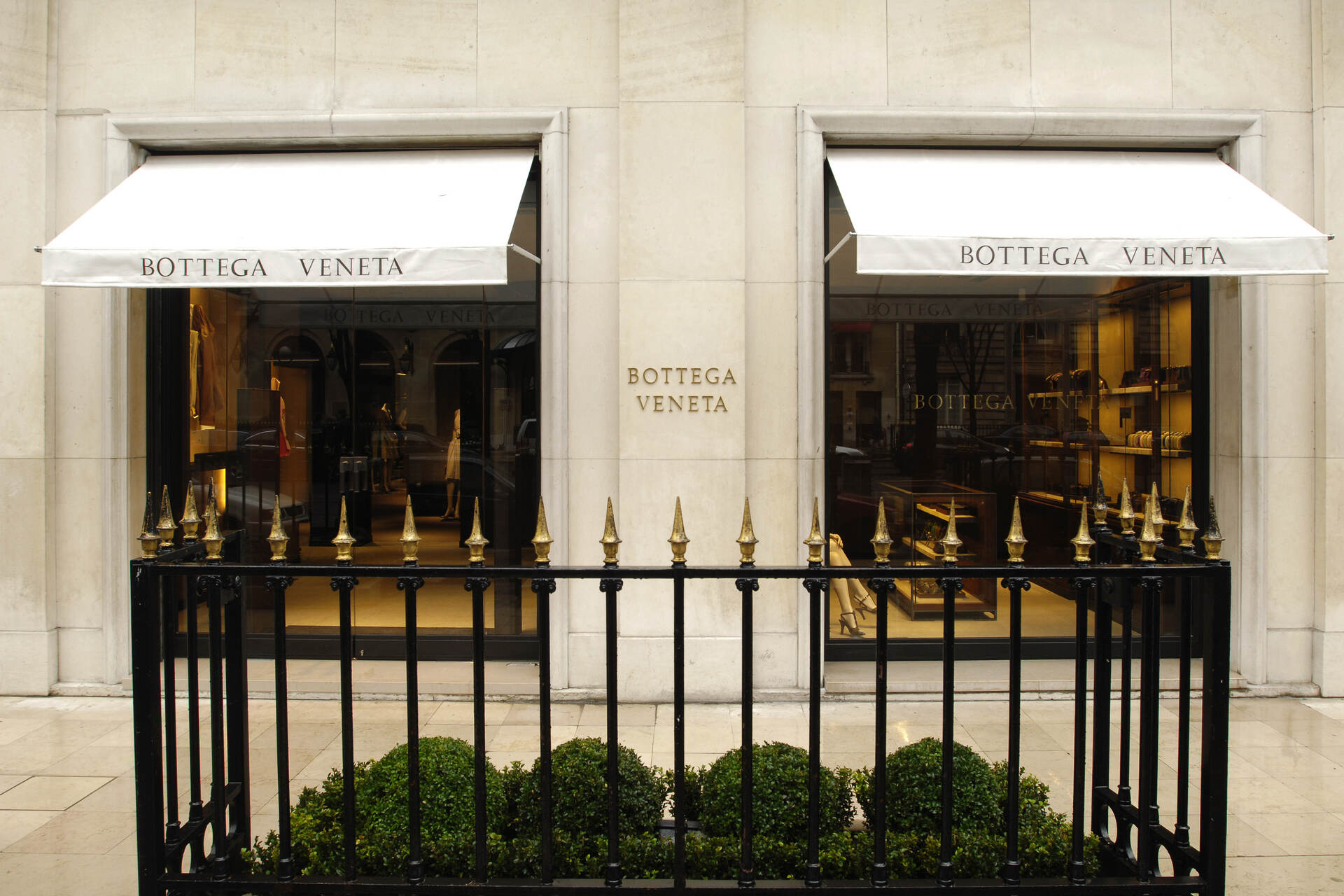
Bottega Veneta and the inauguration of the new year with the disappearance from various social media
2021 began with news that has certainly shocked the communicators of the fashion system: the choice of Bottega Veneta to abandon social networks.
A sudden action, which has left behind a myriad of question marks from insiders, enthusiasts and customers. But on the other hand, such a choice disruptive it certainly could not pass on the sly and that was certainly not the purpose.
Going to investigate the matter further, it actually turns out that Daniel Lee, creative director of Bottega Veneta, has never looked kindly on social networks. In an interview for Cultured Magazine he had declared, in fact: “Sometimes I look at Instagram and Social Media, but I think too much can be quite dangerous and detrimental to the creative process. Everyone looking at the same thing isn't healthy or productive. Individuality does not ferment”.
But there's more: if we think of Bottega Veneta, what distinguishes the brand from others in the sector is undoubtedly the lack of patterns or even just a clearly visible logo on its bags. These, in fact, are known for their now iconic and distinctive weave. The less is more, therefore, has always been a founding element of the company, so the decision not to use social networks in this sense was extremely consistent.
And we know that the silence it often does much more noise of a structured campaign, spread across a variety of different media.
At the "Lifestyle Innovation Day" the most modern and competitive Ticino
But has the well-known company from Vicenza really disappeared from social media and social networks?
The truth, analyzing the data that emerged after Bottega Veneta's choice to cancel the official profiles on its social networks, is that the brand is still very present online as a result of the analyses.
Currently the hashtag #Bottega Veneta on Instagram encloses over 2 million contents, not to mention all the minor profiles and magazines that talk about it: a real digital microcosm!
With its decision, the Vicenza-based fashion house just wanted to stay”behind the scenes”, aware of the strength that the fan base and user-generated content they own in create buzz around its activities and products.
The company's about-face and return to social media
After about a month, the brand returned to the platforms it had previously abandoned and the explanation after so much silence came directly from François-Henri Pinault, CEO of the Kering group to which Bottega Veneta belongs.
He stated: “Bottega's communication strategy is not to disappear from social networks, it is rather to use them in a different way. Bottega Veneta has decided, in line with its positioning, to rely even more on its fans and ambassadors by providing them with the material they need to talk about the brand through various social networks, letting them speak for the brand instead of only”, continued the CEO. “I must say that after a month and a half it is very convincing in terms of visibility for Bottega Veneta, we are constantly monitoring it”.
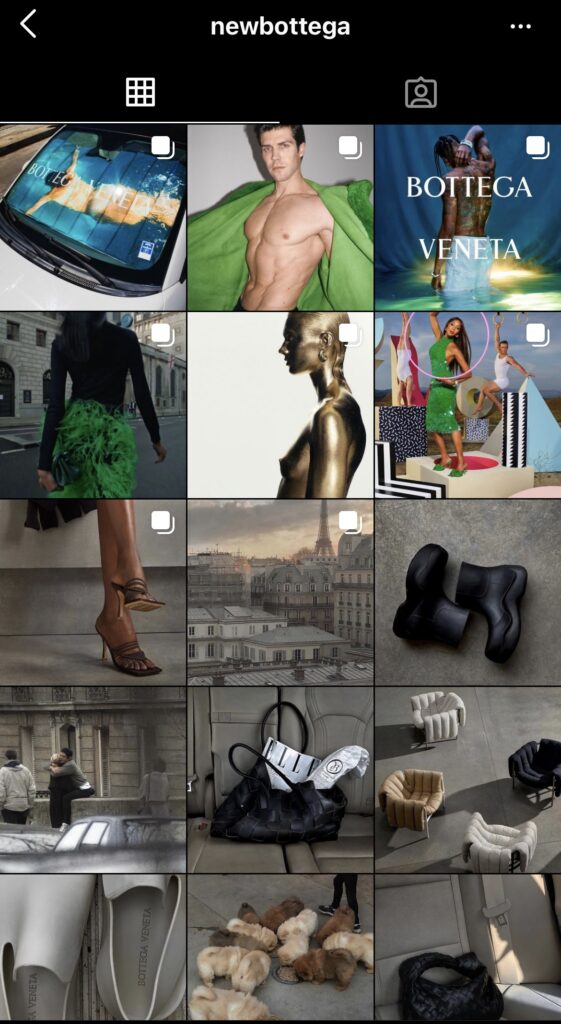
And indeed, the difference compared to the previous contents is evident: the Scatti they are much more spontaneous, amateur and in the photos (which are very minimal and mostly with the products in the foreground) it almost always appears the tag to a user who created them.
So no longer extremely glossy images, as the canons of the fashion industry have always imposed, but realistic and tone lifestyle.
On the other hand, if we think about it, fashion should be just that: wearing clothes and accessories capable of expressing ourselves in our daily lives or on special occasions. But always adapting them to our personality.
How appropriate is it to expose our children on social networks?
So how should luxury brands behave towards social networks?
From this long analysis of the relationship between social media and Fashion Luxury brands, some salient points emerge which we believe will certainly be the foundations of the future evolution of this combination:
- Le strict social media rules, especially algorithms, inevitably lead to the conformity. The world of luxury cannot afford to flatten out and be populated by brands that are all the same and communicate in a similar way.
The brands of this reality have very strong personalities, iconic and unique styles that deserve to emerge. - Social media ensures an incredible reach of content, but inevitably collides with socio-cultural factors which are to be kept in considerazione. This must be contemplated above all if you want to land or strengthen your presence in markets, such as the Asian one, with different approaches and folklores.
Crisis management is an aspect that all companies, small or large, must be able to manage in the best possible way and the case of D&G certainly teaches that words have weight. And in the case of online they remain and risk undermining the image of a historic brand for a long time (if not forever).
And from the declarations of the two founders of the famous Italian maison made to Il Corriere last year, it seems that this awareness was born. Dolce, in particular, said: “I learned not to express myself in the wrong place and at the wrong time”.
However, we will only understand that the lesson has really been learned and that it is not just a matter of circumstantial words by observing the next moves of the maison. - Le people they need to feel human again, not numbers and algorithms. They need to feel emotions, to identify with a brand, to feel part of one Community .
The algorithm of social stupidity is not the result of social networks
Luxury brands must remain on "social media", but get involved with authenticity and respect
What is most evident from the considerations made above is that brands don't have to abandon social media, because by now they are an integral part of the search experience, but also of the purchase (just think of the growing diffusion of social selling) of users.
However, they must remain on these platforms by changing their approach, having the courage to strengthen their identity, sometimes even going against the algorithms. Each content must be designed to reach high quality standards ed emotionalbut all in a genuine way. And this is possible if we are willing to give up that glossy attitude which perhaps once was a real factor of attraction, but which today has been replaced in user preferences by spontaneity.
In the "Luxury lifestyle hotels" an innovative dimension of luxury

Model Zuzana Földesová wears Dolce & Gabbana clothing


