SEARCH



Elon Musk's Space-X exploits not only rejuvenate and privatize the conquest of Mars and the Moon, but make the dreams of the 60s possible
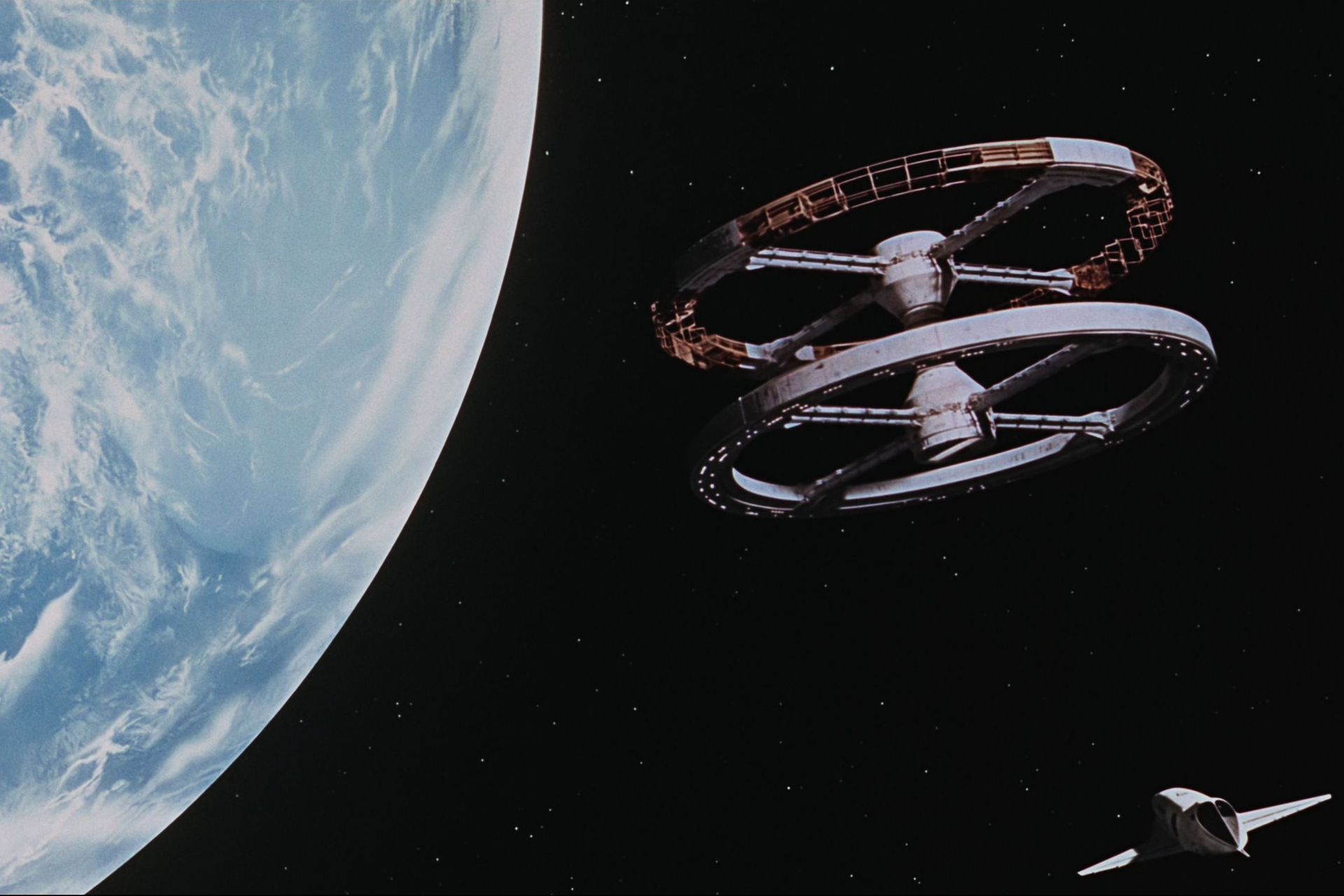
What is striking these days is the sharpening of intergenerational controversies with one main topic: climate. But this is not the first generation from which they have, so to speak, “stolen the future”. When we were boys (or girls) we “boomers” of the 60s, we were offered a future in the cosmos.
In 2001 we would have had orbital planes, a rotating space station, a base on the Moon. We would have traveled in space for business or tourism. All this deflated like a balloon with the end of the race to our satellite and the return to low-orbit missions by both contenders: the Americans were no longer afraid, the Soviets had lost the race and concentrated their efforts elsewhere.
And the war of the Vietnam cost much more than a mission to Mars (but critics of space research never remember the military expenses, which were several orders of magnitude higher: who knows why...). Between the 1980s and the 2000s we witnessed in terror the merciless end of the Shuttle program, with two terrifying and equally predictable accidents, indicating how NASA they had lost sight of the objective.
Those "dark realities" full of (new) mysteries about the cosmos
And NASA resorted to the aging Soyuz (Russian) for a launcher
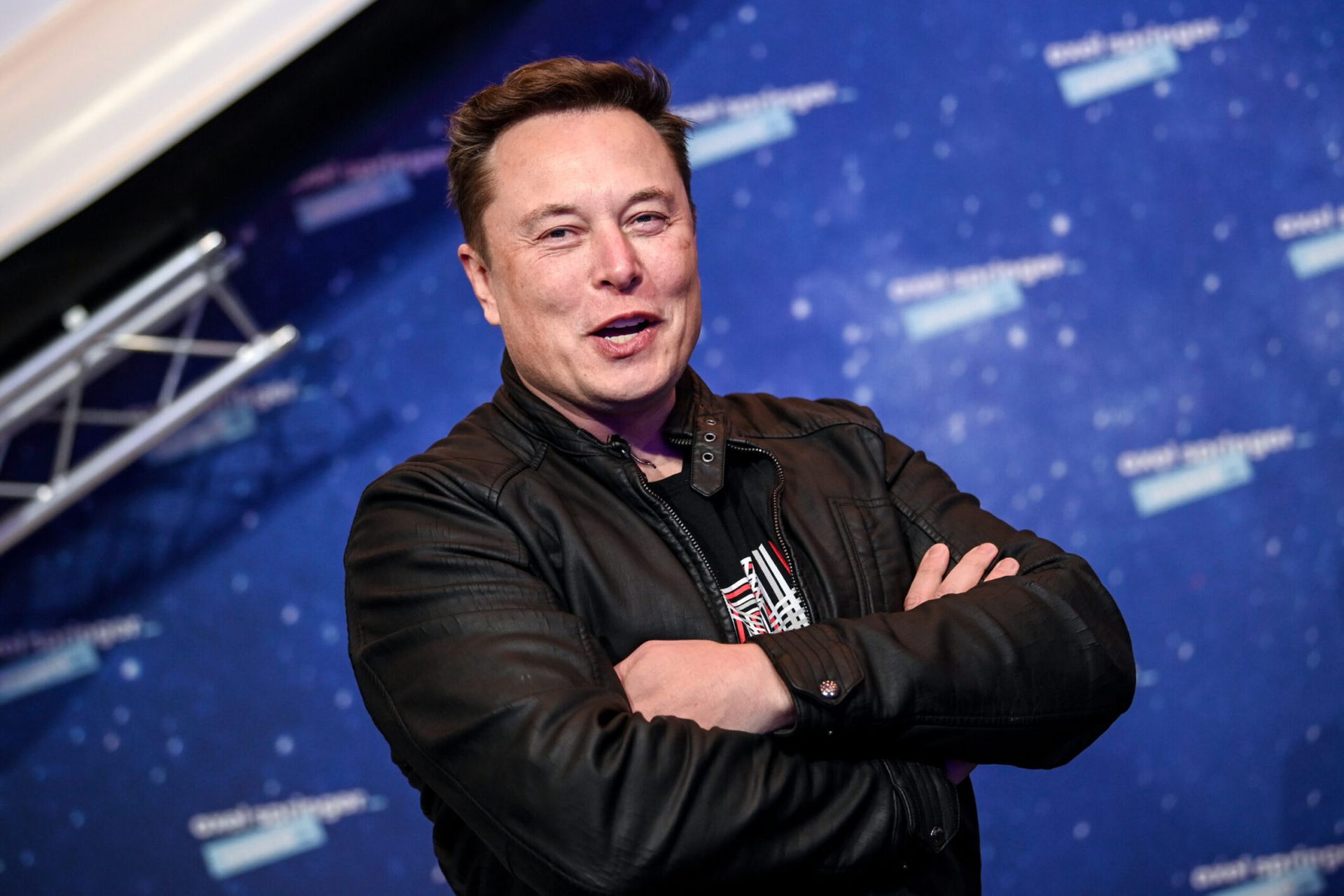
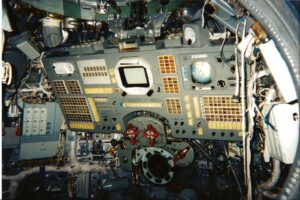
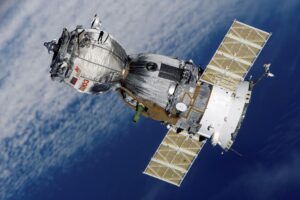
Two sad decades followed, at least for those who have a bit of passion for the subject, in which the ISS (International Space Station) was built, which served to keep research alive and train new astronauts. But NASA no longer had a launcher for the crews, it had to pay a hefty ticket to Russia for each mission and have its astronauts travel on a capsule, the Soyuz, which, although robust and reliable, dated back to a project from sixty years ago.
Then he came along: the visionary, the eclectic and no, not at all overrated, Elon Musk
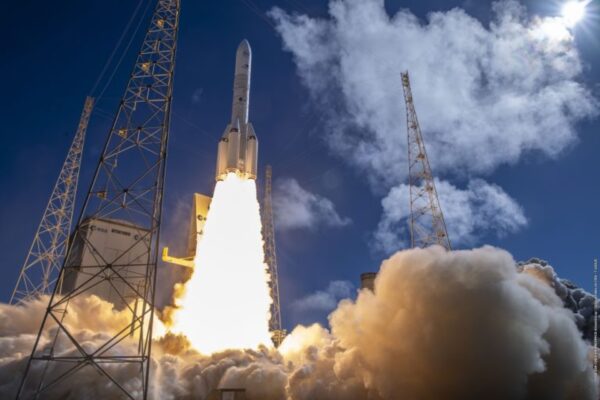
I won't list what he did in other fields, a Wikipedia page is enough for that. Let's focus instead on what he managed to do for space research with the space-X. Despite all the experts denying its technological possibility in the short term, he had the Falcon, low-orbit launchers capable of autonomously landing the first stage after launch. Like in the science fiction films of the 50s, or even better.
Super Heavy Booster moving to orbital launch mount pic.twitter.com/axaDnXNm84
- Elon Musk (@elonmusk) August 3, 2021
The Space-X Race
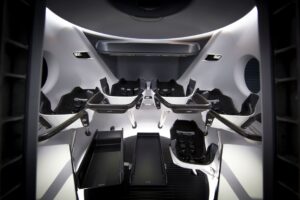
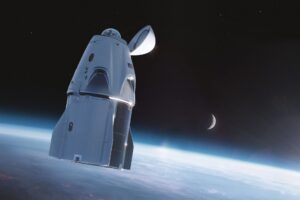
It made these launchers suitable for transporting crews (overcoming all the new, very high, safety criteria) thus allowing NASA and its allies to free themselves from dependence on Russia for launches to the ISS. A new space capsule was born for the transport of both goods and people, the Dragon, conceived and designed, finally, with today's technologies.
He created the Heavy version of the Falcon launcher, equipped with two additional boosters (support rockets) also capable of landing autonomously. Falcon Heavy It is a “medium” launcher capable of carrying payloads well beyond low orbit (such as the very tasty demo made with a Tesla Roadster launched towards Mars, still in orbit between the two planets).
Yes in Bologna to the strategic forum for the aerospace supply chain
A vector 120 meters high (!) and with a diameter of 9 for the future
Space-X is building an even more sci-fi spaceship, the Starship, already approved by NASA to carry humans to the Moon. Currently in the testing phase, it will be the most powerful launch system ever created by man, totally reusable, and will be able to carry crews of 100 people to Mars depending on the configuration.
To give you a sense of proportion:
The Falcon 9 is a launch vehicle that is 55 metres high and 3,66 metres in diameter;
The Falcon Heavy is a 70-meter-high launcher with a diameter of 3,66 meters;
The Starship will be a 120-meter-high launcher with a diameter of 9 meters. Made of steel (!)… The spaceship itself, or the second stage, is 50 meters high.
Podcast, forty visionary years of Elon Musk from the Web to Mars
The space economy is a new frontier at hand
All these technologies are aimed at making space travel increasingly cheaper and safer, even within the reach of non-professionals.
Regardless of the (exceptional) results obtained with Space-X, Elon Musk also has the merit of having "awakened" a market that was still struggling to take off, the space economy. This economy requires great vision, as it can only be developed with large investments, both monetary and temporal, exactly the opposite of the "everything and now" that deludes many self-styled entrepreneurs.
A visionary capacity that until now was exclusive to the large space agencies, limited however by politics: significant in this regard is the splendid series “For All Mankind” available on AppleTV+, which imagines an alternative history in which the USSR would have beaten the USA in the race to the Moon, causing an acceleration of the space race such as to lead to the first fixed outposts on our satellite in the 70s of the last century and the first mission to the Red Planet in the 90s.
Science fiction? Up to a point.
Conspiracies that have aged badly
Lunar landing denier conspiracy theorists often use as an argument the technological level of the time, which would not have allowed a real journey up to 400.000 km from our planet. Forgetting that when well motivated, humanity can actually perform miracles, taking risks that today would be considered unacceptable.
Some people today turn up their noses at this “privatization” of space, perhaps forgetting that the true space age will only dawn when space becomes not only economic, but also essential for the future. And so it is, despite those who persist in looking at their shoes.
NASA and ESA central even at the time of private companies
It should also be added that privatization is and will remain partial and agencies such as NASA and ESA will always maintain a leading role.
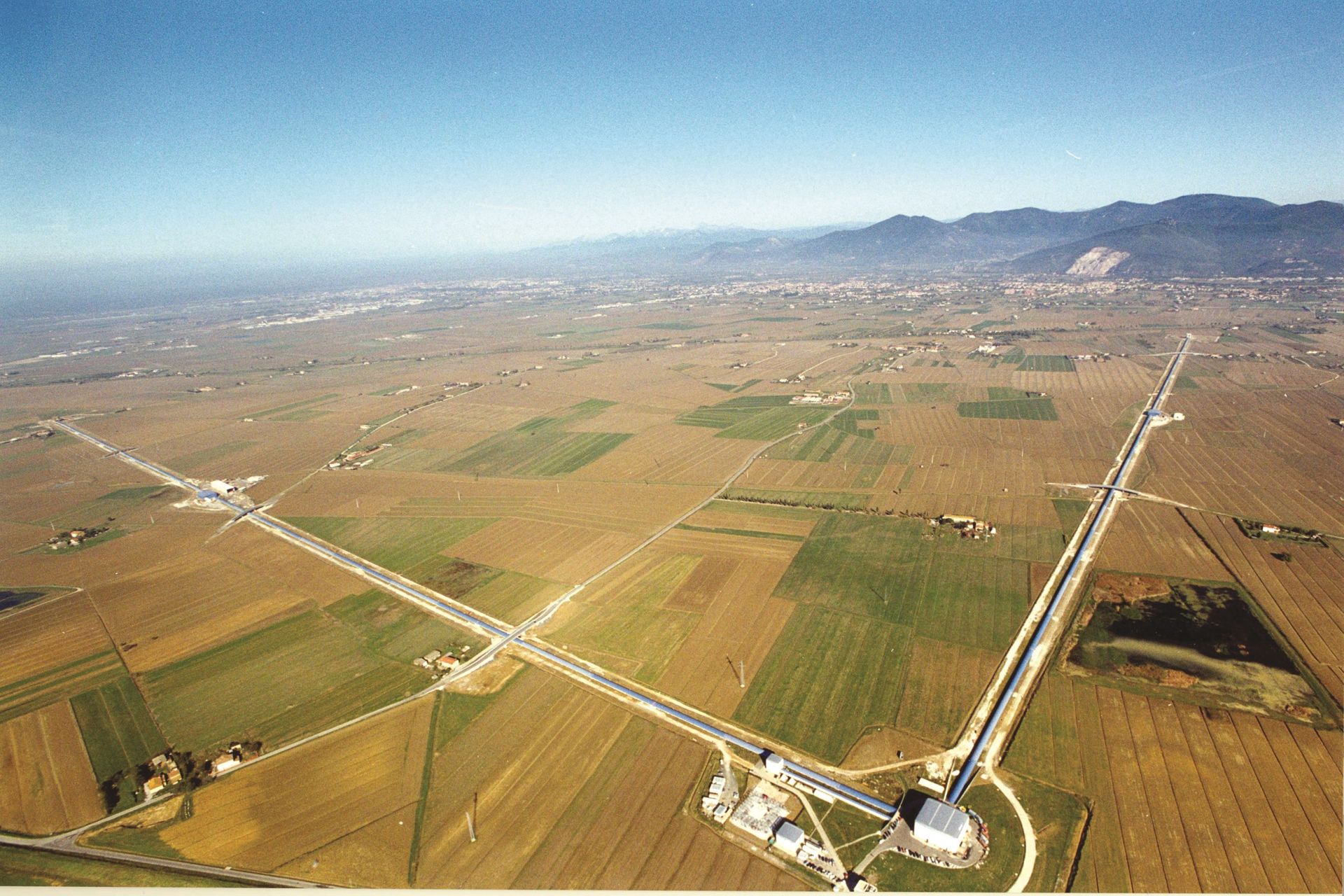
The space economy, like that linked to long-duration scientific experiments (for example the LHC, the 27-kilometer particle accelerator in Geneva, the future 100-km FCC, gravitational wave interferometers such as the Italian Virgo, the ISS itself, the ITER project for controlled nuclear fusion) is a large-scale and long-duration economy, capable of moving enormous capital for long- and very long-term projects.
And it is an economy of hope, in a certain sense: if with uncontrolled demographic growth we risk making our own planet less habitable for us, in the medium to long term we can hope to expand our living spaces throughout the Solar System (obviously we are talking about secular perspectives), both through terra-formation projects and through the construction of huge modules orbiting the Earth, or the Moon.
Without forgetting another fundamental aspect: almost all the most advanced technologies we use derive from space research, military research and basic research: therefore we will not have to wait decades or hundreds of years for the positive effects, the fruits of which we are already enjoying today.
The future is already here: always to be understood, never to be wasted…
Glossary
Launcher: in astronautics, the vector or launcher is a missile, i.e. a vehicle propelled by a particular type of engine called rocket or end-jet. This type of missile is the means used to send a certain payload into space which can consist of astronauts, satellites, interplanetary probes, supply modules for orbiting space bases.
Low orbit: a Low Earth Orbit (LEO) is an orbit around the Earth at an altitude between the atmosphere and the van Allen belts, i.e. between 300 and 1.000 km.
First stage: a launcher consists of several "stages" (2-4), each propelled by one or more rockets to provide thrust only for part of the overall journey.
Capsule: a spacecraft, in astronautics, is a vehicle capable of traveling in space. The generic term "spacecraft" applies to both unmanned and manned vehicles. Among the various types of manned spacecraft we have the capsule, such as the Mercury, the Gemini, the Apollo (with which we went to the Moon), the Russian Soyuz, the Chinese Shenzhou.
Interferometer: in physics, a device based on the use of light rays or lasers or accelerated particles, for the study of electromagnetic or gravitational waves.
Those light pulses that alter… the properties of solids