


 SEARCH
















Today machine and deep learning are helping countries and communities to face epidemics, pandemics and natural disasters, offering real solutions
The potential ofArtificial intelligence they are constantly evolving.
In recent years, the transformations and innovations in the technological field have made it possible to overcome the most important challenges of society, and we are probably only at the beginning.
Today theIA it helps countries and communities to face epidemics, pandemics, natural disasters and offers suitable tools to generate solutions.
Seven different ways in which Artificial Intelligence helps society have been identified. Here's what they are.
Google Maps adds sustainable routes to do by car
Glasses for machine translation: it's Google's challenge

With Artificial Intelligence predict floods and help people stay safe
Through theArtificial intelligence early warning systems can be activated to help people take shelter in the event of floods.
Last year the United Nations released a report which said that half of the world lacks adequate early warning systems for disasters such as floods and fires.
Yet research shows that the number of people affected by climate-related crises and the damage they cause is steadily increasing.
For these reasons it is important to have life-saving technologies in place, to help people stay safe and governments to prepare adequately.
Google's flood forecasting program covers dozens of countries: show information about predictions in Search and Maps and send alerts to mobile devices to inform people in danger.
Additionally, Google's FloodHub offers detailed flood maps so people know exactly what to expect.
Thus Google will help users to favor quality sources
Exceptional multi-year partnership between McLaren and Google

The Californian search engine detects and predicts the boundaries of a fire in real time
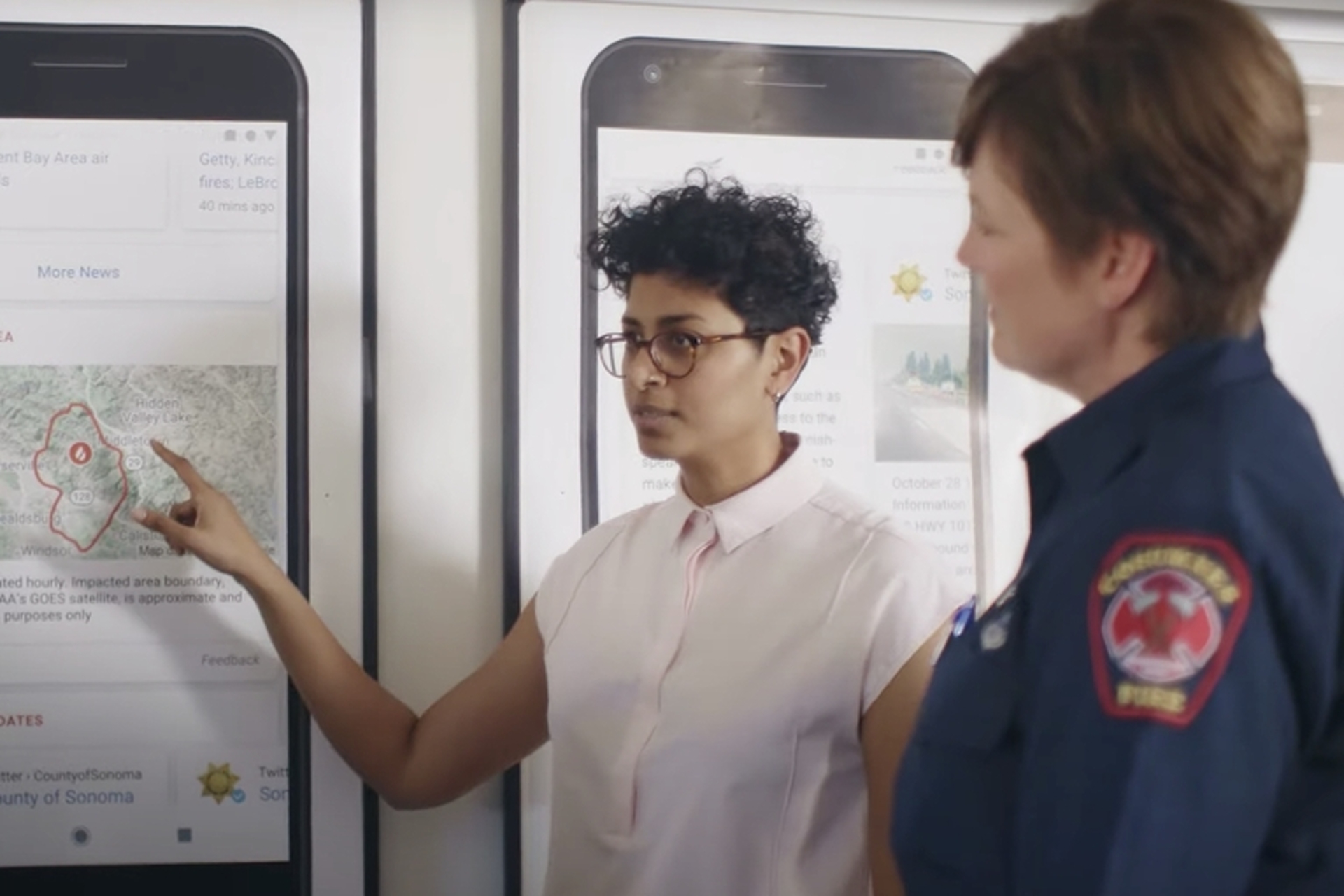
Using satellite images, Google experts are able to create models of Artificial intelligence capable of detecting the boundaries of fires in real time and showing their location in Search and Maps.
Last year these models were applied to more than 30 fires in the United States and Canada, helping to inform local residents and firefighters. Now it has also arrived in Mexico and in some areas of Australia.
The new Google Campus Europaallee has opened in Zurich
Google's AI to regulate nuclear fusion plasma
Monitoring of prenatal health as well as control of pest infestations in crops
Maternal mortality rates globally are still high, with an estimated 295.000 women dying during, after pregnancy and childbirth in 2017, most from causes that could have been treated or prevented with adequate health care.
Ultrasounds, for example, have become a routine part of antenatal care for many, but are still difficult to access in low-resource settings, in part due to a lack of properly trained health professionals.
Google partners with Northwestern Medicine to develop and test models of Artificial intelligence enabling low-trained ultrasound operators in low-resource settings to accurately identify potential problems and risks, such as fetal positioning.
As for pest infestations in cotton and food crops, they can devastate farmers and their crops.
The masterminds at Google are working with InstaDeep and the Food and Agriculture Organization of the United Nations to better identify locust outbreaks in Africa and make it possible to implement control measures.
In India, a campaign has been carried out in support of Wadhwani AI in India to create an App "powered" byArtificial intelligence, which helps identify and treat pest infestations, resulting in a 20 percent reduction in pesticide spraying and a 26 percent increase in profit margins for farmers.
Photogallery, the entire vernissage of the Google Campus Europaallee
What to do if Google ranks the wrong page on your site?
Address demographic changes and humanitarian response by constructing new buildings
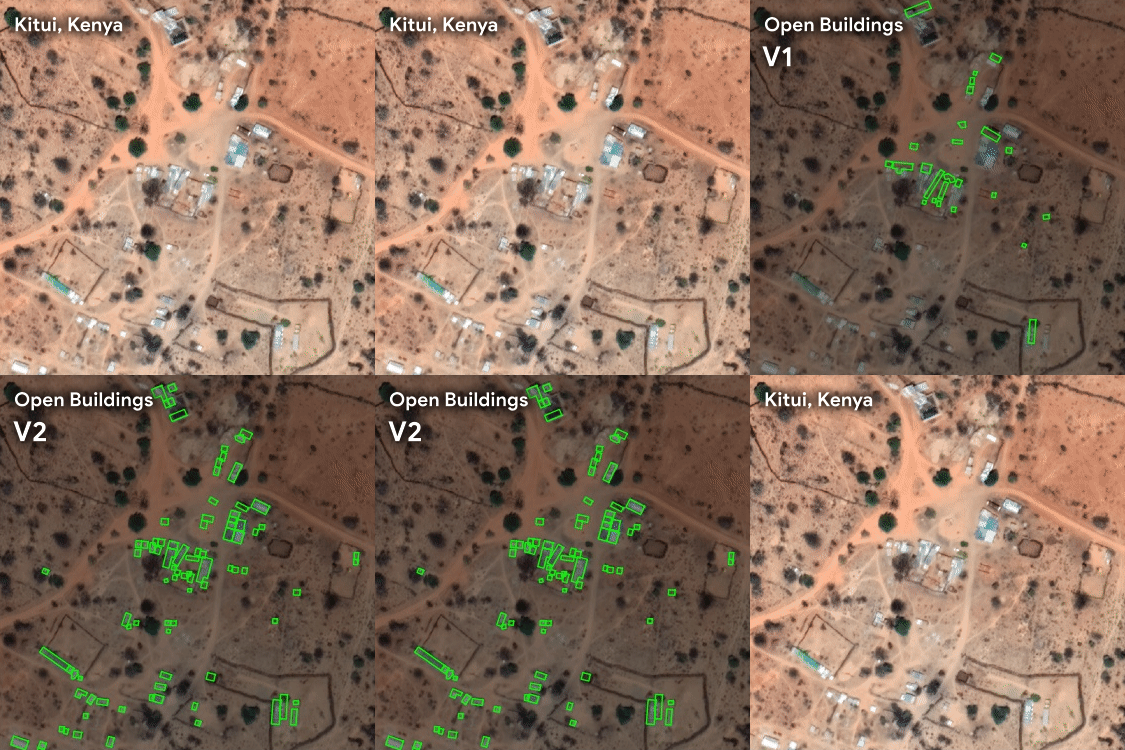
Open Buildings is an open access dataset project using theArtificial intelligence to interpret satellite images, in order to identify the position and geometry of buildings.
This information is useful for a number of important applications, from population estimation, urban planning and humanitarian response, to environmental and climate sciences.
Available in Africa, Bangladesh, Indonesia, Laos, Nepal, Philippines, Singapore, Sri Lanka, Thailand and Vietnam, the project enables governments and humanitarian organizations to better understand the needs of residents, both in daily life and in crisis situations.
LaMDA, Google and the virtues of a… “pocket professor”
Google's valuable tips for perfect URLs
Thus identifying genetic variations and supporting people to connect with each other
Thanks to a partnership with PacBio, researchers are using Google's deep learning technology, DeepConsensus, to quickly and accurately identify genetic variants that lead to disease.
This system will help scientists discover serious genetic conditions, such as an elevated risk of breast cancer or pulmonary arterial hypertension.
Finally, millions of people have difficulty making themselves understood when they speak.
Project Relate, a research-based and AI-powered Android app, makes it easier for non-local speakers to communicate with others.
He can transcribe his speech into text, use a computer voice to repeat what has been said, or communicate directly with the other person's Google Assistant to complete a variety of tasks, from playing a song to turning on the lights.
Bay View is open: Google's first electric campus is born
SEO & Google: all about the importance of "structured data"

FloodHub is the Google App that displays flood forecasts around the world
Relate is the Google App for making people communicate with "non-standard" languages
A key visual of Google's artificial intelligence
(Illustration: Google)


