


 SEARCH


ESA, exploring space to improve life on Earth
The European Space Agency (ESA) represents Europe's desire to look far ahead, combining passion, innovation and responsibility towards humanity. Founded in 1975, ESA brings together the contributions and expertise of 23 nations, leading ambitious missions and developing advanced technologies that positively impact the daily lives of millions of people. From environmental protection to satellite navigation, from missions to the Moon to the exploration of Mars, ESA courageously faces the space and environmental challenges of our time. This common journey in space is not only a story of cosmic adventures, but a concrete promise of growth, sustainability and innovation for the future of Europe.
ESA History: Cooperating for Progress
Founded in 1975, ESA is the realisation of a European dream: to combine national expertise and resources for common goals, overcoming the limitations of individual countries. Born from the merger of ELDO (European Launcher Development Organisation) and ESRO (European Space Research Organisation), ESA has quickly established itself as a leading body in international space exploration, developing pioneering technologies and ambitious missions, such as the Ariane and Vega launchers, missions to the Moon and the exploration of Mars and Mercury.
A European organisation for the future of space
ESA is structured through a network of specialized centres distributed throughout Europe:
- ESTEC (Netherlands), a technological and scientific heart that designs, develops and tests space vehicles and cutting-edge technologies.
- ESOC in Darmstadt, Germany, operations center that manages space missions and the global network of ground stations.
- EAC in Cologne, dedicated to the training of astronauts and the development of space medicine.
- ESAC in Madrid, the hub of astrophysical research and the processing of scientific data from space.
- ESRIN in Frascati, Italy, centre for Earth observation and data management of the Copernicus programme.
- ECSAT in Harwell, UK, specialising in satellite telecommunications, climate change and industrial applications.
- Lo European Spaceport of Kourou, French Guiana, strategic for Europe's independent access to space.
Missions and technologies: innovation and sustainability
ESA is active on many fronts, using scientific excellence to support sustainability and technological progress. Missions such as Sentinel and Copernicus continuously monitor the Earth's climate, providing vital data to address climate change. The Galileo programme provides advanced satellite navigation services, improving transportation, safety and communications around the world. In space, the Hera mission investigates technologies to deflect potentially dangerous asteroids, protecting humanity from space threats.
Space and Sustainability: Observing the Earth to Protect It
ESA invests in Earth observation with the Copernicus programme, led by the ESRIN centre in Frascati. This satellite network continuously monitors our planet, providing crucial data on the oceans, atmosphere, glaciers and forests. This information, free and accessible, strongly supports sustainable development, helps in emergency management and enables political and economic decisions based on reliable and up-to-date science.
Astronaut training: Europe's vanguard in space
ESA astronauts are Europe's vanguard in space. Trained at the European Astronaut Centre (EAC) in Cologne, they undergo rigorous training sessions that include simulations in realistic space environments, survival exercises and intensive technical preparation. Famous astronauts such as Samantha Cristoforetti and Luca Parmitano are a testament to Europe's excellence in space research and innovation, promoting science and education with passion and expertise.
International and global collaborations
International collaboration is a key aspect of ESA's work. The Agency works closely with global partners, such as NASA, Roscosmos and JAXA, sharing resources and expertise for complex missions. This international openness allows ESA to participate in world-class scientific projects, such as the International Space Station (ISS), where ESA astronauts conduct advanced research in microgravity.
ESA and socioeconomic impact
Investing in space means investing in economic growth and skilled employment. Technologies developed for the space sector find direct applications in everyday life, stimulate new technological companies and create highly specialized jobs. Every euro invested in ESA returns multiplied in tangible economic and social benefits for European citizens.
ESA and the challenge of the future
ESA's future is characterised by increasingly ambitious projects, such as lunar exploration with the Artemis programme in collaboration with NASA, missions to Mars, and new technologies for the sustainable management of space, including the removal of orbital debris and protection from space hazards. Looking beyond the Earth's horizon is a daily mission for ESA, but also a permanent challenge to anticipate and solve the global issues that await us.
ESA is not just exploration and science: it is a global community committed to building a better, safer and more sustainable future for all, thanks to the extraordinary potential that only space can offer. It is an exciting journey that concerns us all, today and tomorrow.
SPACE ENGINEERING TECHNOLOGY


Presentations at Industry Space Days
Presentations at Industry Space Days Download presentations from ESA's Industry Space Days 2026 on 16-17...
5
Oct
Oct


Photos at Industry Space Days 2026
Photos at ESA's Industry Space Days Browse and download photos of you and your company...
28
Sep
Sep

MIRROR robot reflects future of in-orbit assembly
Image: Like a climber, selecting and adjusting its grip on the next hold and slowly...
25
Sep
Sep

New tests for rendezvous and docking interoperability
Currently, space missions are one-shot affairs: satellites are sent to orbit to do their mission...
24
Sep
Sep

Record participation in ESA's Industry Space Days 2026
On 16–17 September, the European Space Agency (ESA) hosted a record 3100 visitors from Europe's...
24
Sep
Sep
- 1
- 2
SPACE NEWS

Welcome home, Sophie Adenot
Video: 00:02:54 After 237 days and over 3,700 orbits around Earth aboard the International Space...
12
Oct
Oct

ESA astronaut Sophie Adenot returns from her first mission to the International Space Station
ESA astronaut Sophie Adenot has arrived back in Europe, landing in Cologne, Germany, following her...
10
Oct
Oct

Week in images: 05-09 October 2026
Week in images: 05-09 October 2026 Discover our week through the lens
9
Oct
Oct

Earth from Space: Namibia's biggest salt pan
Image: This image from Copernicus Sentinel-2, acquired on 5 April 2026, shows the Etosha National...
9
Oct
Oct

Splashdown confirmed for Sophie Adenot
ESA astronaut Sophie Adenot returned to Earth with Crew-12 after her nearly eight-month εpsilon mission...
8
Oct
Oct

Sentinel-3C returns its first views of Earth
Just two weeks after it was launched, the Copernicus Sentinel-3C satellite returned its first images...
8
Oct
Oct

Solar Orbiter tracks origin of mysterious magnetic switchbacks
The European Space Agency-led Solar Orbiter spacecraft has flown through an S-shaped kink known as...
8
Oct
Oct

The Incredible Adventures of the Hera mission – The space detectives arrive
Video: 00:04:19 Meet Hera, our very own asteroid detective. Together with two CubeSats – Milani the...
7
Oct
Oct
- 1
- 2
SPACE SCIENCE
Solar Orbiter tracks origin of mysterious magnetic switchbacks
The European Space Agency-led Solar Orbiter spacecraft has flown through an S-shaped kink known as...
8
Oct
Oct

Mars' oddest cloud may be even odder than we thought
Scientists using the European Space Agency's Mars Express, in combination with a state-of-the-art meteorological model of...
7
Oct
Oct
Webb captures emotion from nebula's stellar jets
Image: Webb captures emotion from nebula's stellar jets
6
Oct
Oct

Science begins for Smile
On 23 September, the European-Chinese Smile mission was declared ready to start revealing how Earth...
30
Sep
Sep
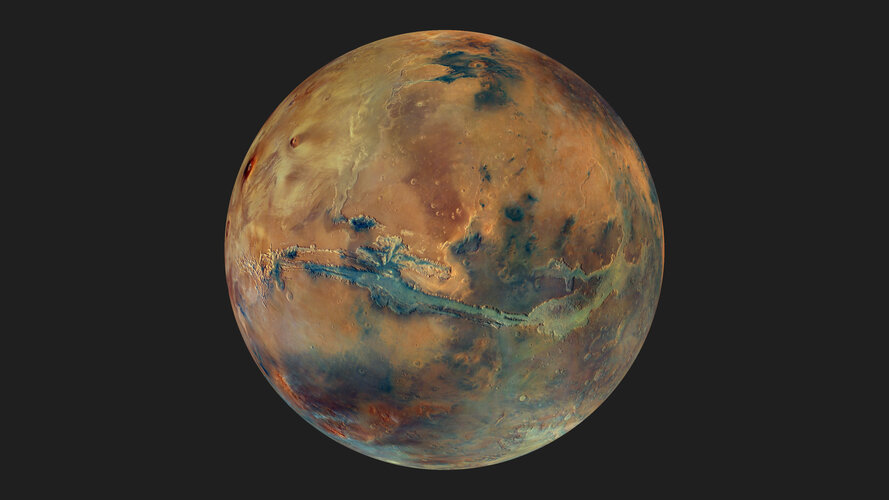
Happy New Year on Mars
30 September 2026 marks the start of a new year on Mars. At exactly 10:16 CEST/08:16...
30
Sep
Sep

Galaxies in a cosmic house of mirrors
Image: This NASA/ESA/CSA James Webb Space Telescope Picture of the Month features galaxies in great...
29
Sep
Sep

Successful Earth flyby improves Juice's course to Jupiter
The European Space Agency's Jupiter Icy Moons Explorer (Juice) skimmed the very outer edge of...
28
Sep
Sep

A galaxy spinning out of sync
Image: Though the spiral galaxy in this new image by the NASA/ESA Hubble Space Telescope seems serene, it...
18
Sep
Sep
- 1
- 2
ESA FOR SWITZERLAND
ESA-Astronautin Sophie Adenot zurück von ihrer ersten Mission zur Internationalen Raumstation
Press Release N° 62–2026 ESA-Astronautin Sophie Adenot is seen in Europe and in Köln...
10
Oct
Oct

Bremsen! The ESA-Asteroid mission Hera geht vom Gas
Here for two years you start Hera, the Mission of the Europäischen Weltraumorganisation (ESA) zur planetaren Verteidigung,...
7
Oct
Oct
Einladung an die Medien: Zwischentagung der ESA auf Ministerebene
Press Release N° 60–2026 Medienvertreterinnen und -vertreter sind eingeladen, an der Zwischentagung auf Ministerebene 2026...
5
Oct
Oct
Experience the Middle Ages: ESA-Astronautin Sophie Adenot continues its mission to the ISS in Europe
Press Release N° 59–2026 Die Medien sind eingeladen, ihr Interest an der Teilnahme an der...
25
Sep
Sep

Drei Raumfahrtunternehmen erhalten ESA-Auszeichnungen für herausragende Leistungen und Innovation
On 16 September the Europäische Weltraumorganisation (ESA) im Rahmen der „Industry Space Days 2026“...
17
Sep
Sep
FLEX and Sentinel-3C gestartet
Press Release N° 50–2026 Der FLEX-Erdbeobachtungssatellit der Europäischen Weltraumorganisation und der Copernicus-Satellit Sentinel-3C wurden gemeinsam...
15
Sep
Sep


Ein Team aus Teams: Proben für einen einzigartigen Start in der ESA-Flugkontrollzentrale
Am 15. September started two Raumfahrzeuge gemeinsam an Bord derselben Trägerrakete vom Europäischen Weltraumbahnhof in...
14
Sep
Sep
- 1
- 2
