


 SEARCH


A one-off electric A290 Rallye and a capsule collection showcase the shared materials and languages of fashion and engineering.
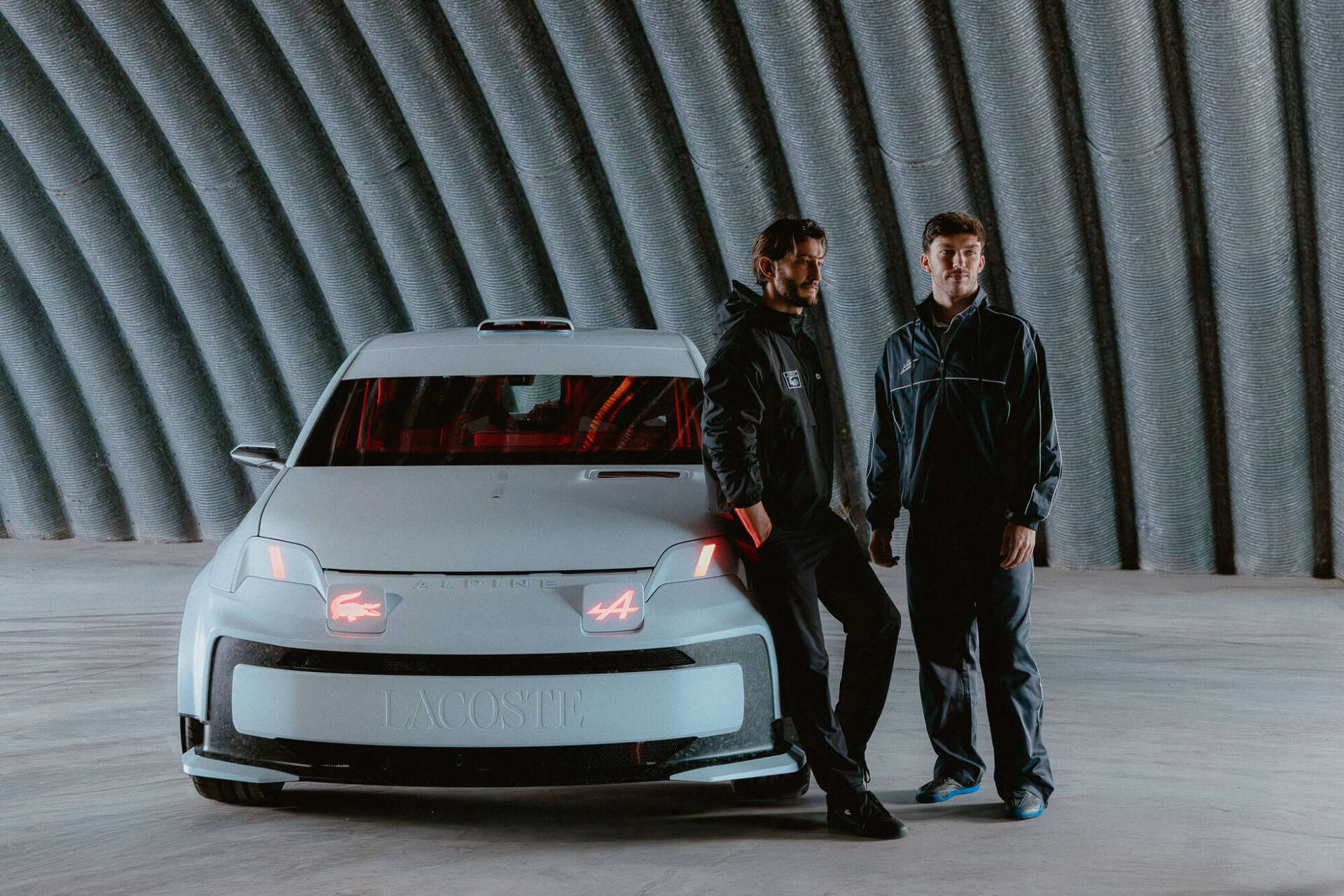
It's not just a car with a new graphic design, nor a fashion collection built around the name of a car manufacturer. The collaboration between Lacoste e Alpine, presented on June 30, 2026, brings together two design cultures born in sport and developed around similar principles: weight reduction, precision, functionality, and elegance. The result includes the one-of-a-kind model “Beware of the Crocodile – Alpine Lacoste A290 Rallye”, a capsule line and the short film “Le Test”, starring P e Pierre Gasly.
The most significant choice concerns the mechanical base. The two brands did not start from a normal road car, but from the Alpine A290 Rallye, an electric model developed for competitions reserved for sports customers. The vehicle thus retains the setup of an authentic racing car, on which the designers have built an aesthetic identity inspired by the Lacoste crocodile. This decision distinguishes the project from many co-branding operations, in which the collaboration is limited to colors, logos, and finishes.
The initiative was born in France and directly recalls the figures of the founders René Lacoste e Jean RedeleThe former changed the relationship between clothing and sports, introducing lighter and more functional solutions for tennis. The latter built Alpine's identity through compact and agile automobiles, in which reduced mass contributed to performance at least as much as power. The historical reference is therefore not merely narrative: it serves to identify common technical ground between two companies operating in very different sectors.
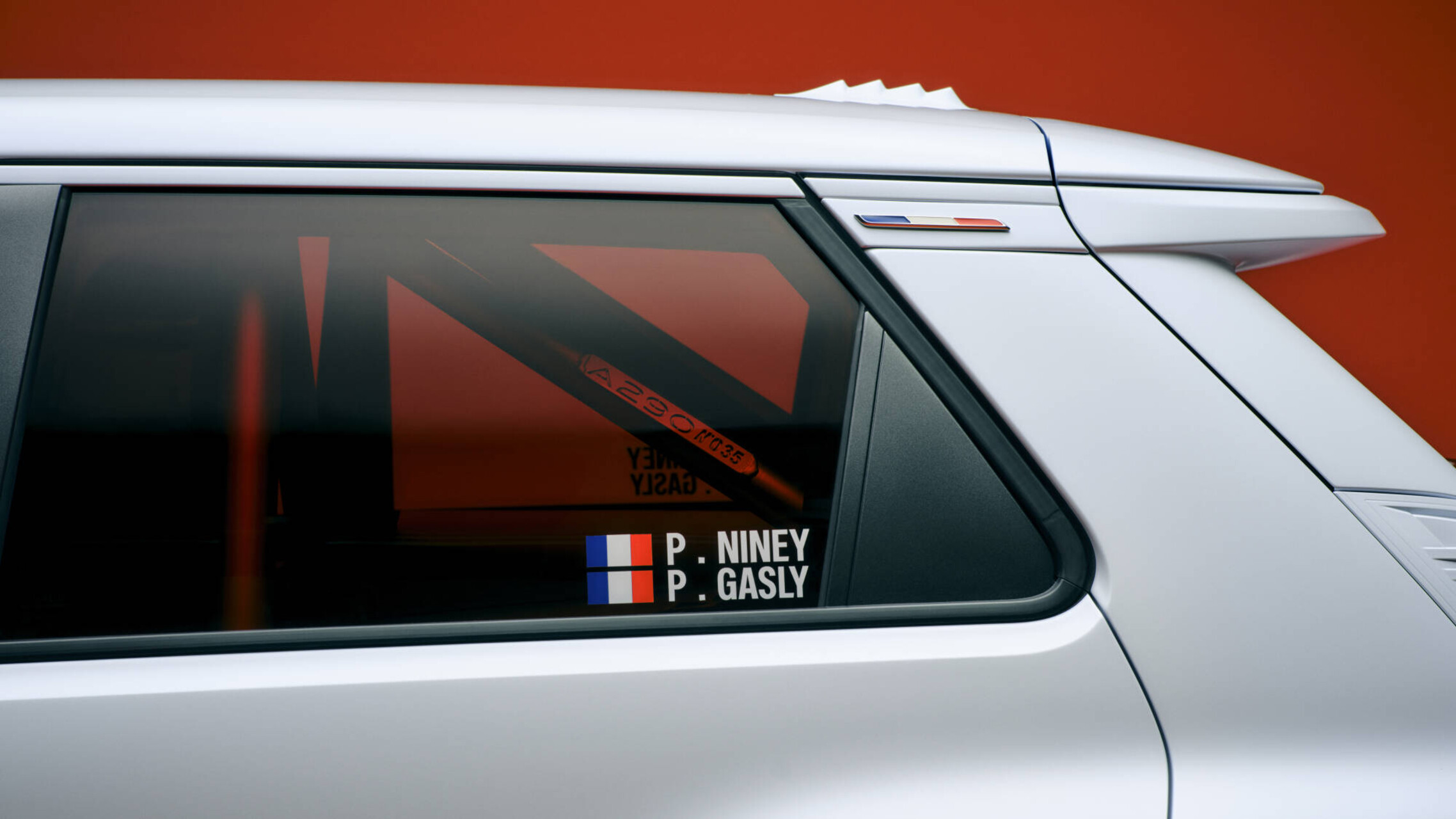
The collaboration is also told in “Le Test”, a film produced by Ninety Films, a company co-founded by Pierre Niney. The actor, Lacoste ambassador, appears alongside Pierre Gasly, driver of the BWT Alpine Formula One Team and also associated with the clothing brand. The two play themselves in a sequence built around the car. The short film introduces irony and playfulness to the communication, but above all serves a connecting function: it places the world of entertainment, that of Formula One, and the visual identity of the project in the same narrative.
A racing car as the basis for creative work
La A290 Rally It is the most extreme and performance-oriented version of the A290. Alpine developed it as an all-electric car intended for customer racing, i.e., competitions in which private drivers and teams purchase cars prepared by the manufacturer. The French manufacturer presented the model in 2025 as its first electric vehicle designed specifically for this category. This choice provides the collaboration with Lacoste with a technical basis already proven in racing, rather than a purely demonstrative prototype.
The unique specimen preserves a optimized frame to obtain rigidity and precision, specific suspensions for rally use and wider track widths, which improve stability and grip. The architecture also includes a stronger braking system and aerodynamic interventions with specific functions, from cooling to load management at high speeds.
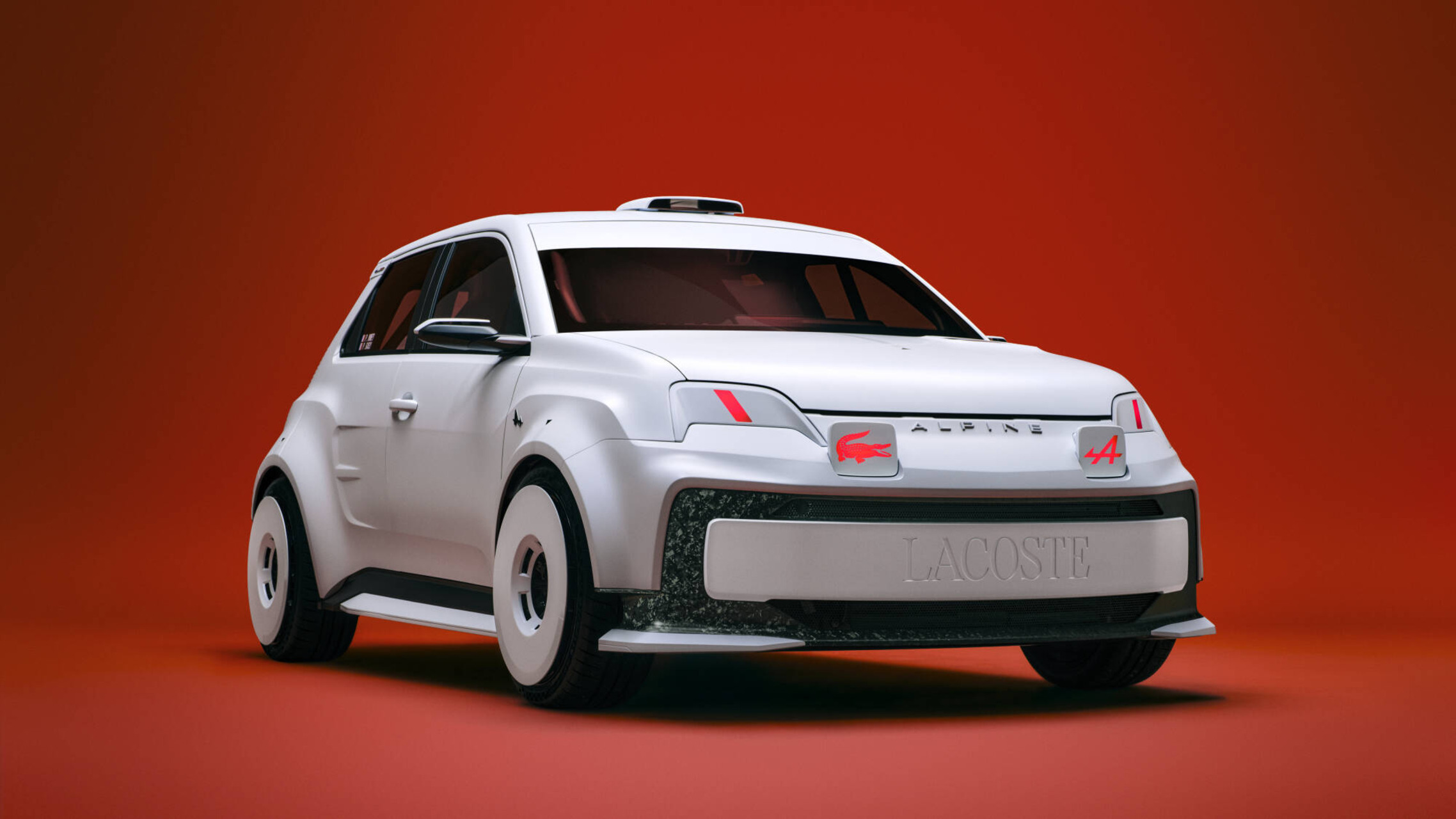
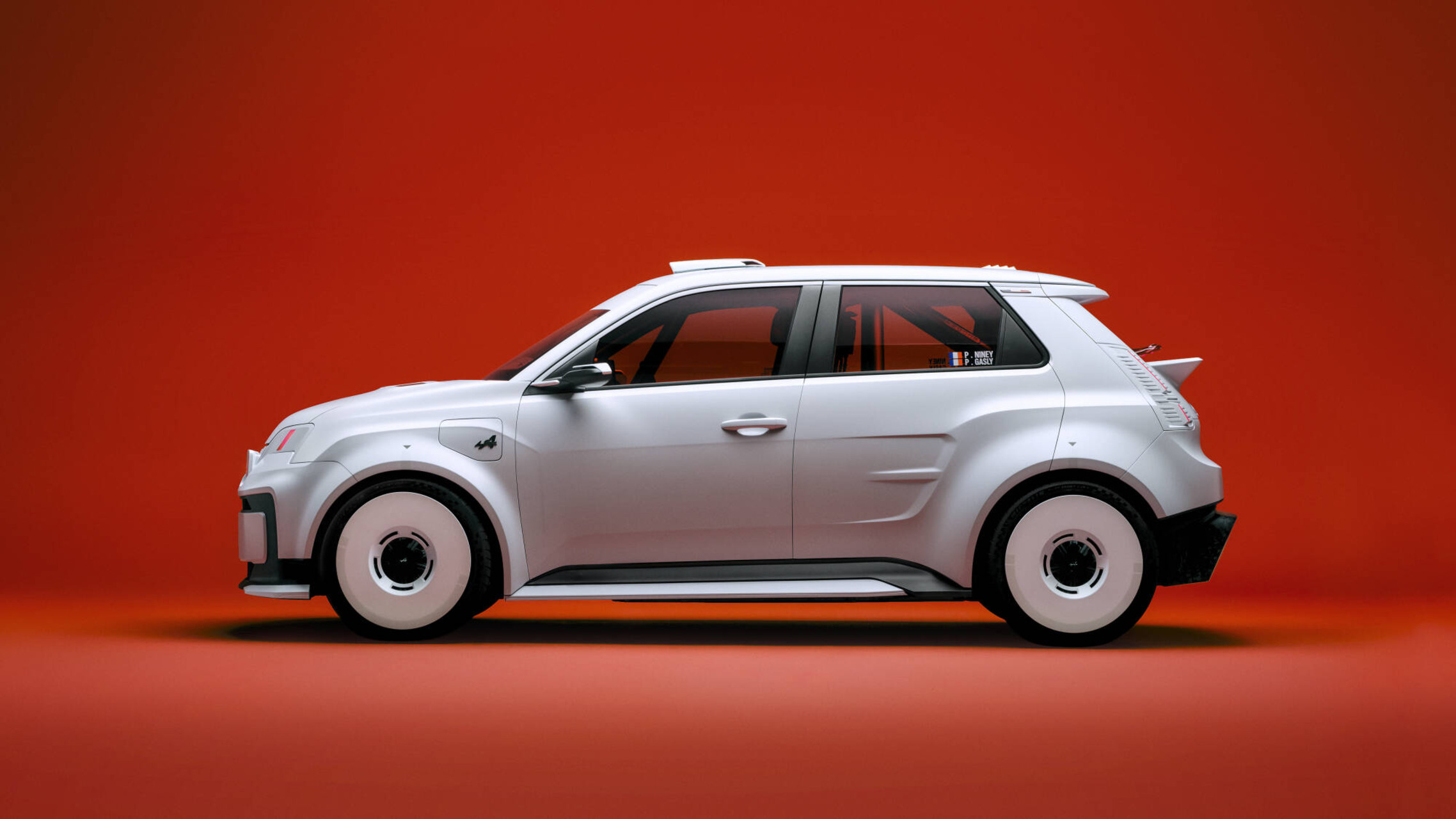
On the exterior, these principles take on an immediately legible form. The protruding fenders accompany the widening of the track, while the large diffuser, the roof air intake and the rear wing hark back to the vocabulary of racing cars. Some surfaces in exposed carbon fibre they highlight the search for rigidity and lightness, without hiding the structural nature of the material.
The electric motor adopts specific management to offer an immediate response to the accelerator. In rallying, where exiting slow corners and the ability to quickly modulate torque are crucial, instantaneous power delivery is a technical feature that must be carefully controlled. The electronic adjustments have been set, based on the available equipment, to maintain consistent performance even in the most demanding conditions.
The A290 Rallye itself is already included in a structured racing programme. In 2026, the Alpine single-make trophy includes six rounds of the French championship and a prize fund exceeding 236.000 €, as well as an official program for the winning team. This data helps explain why the manufacturer describes the model as a true racing car and not an electric show car.
Lacoste's transformation therefore involves a machine placed within an actual sporting activity. For the automotive industry, the operation demonstrates how an image project can be developed without separating itself from the technical structure of the product. For the fashion industry, however, it represents a challenge with safety, ergonomics, and durability requirements that are far more stringent than those of a typical collection.
The crocodile becomes a system of materials and functions
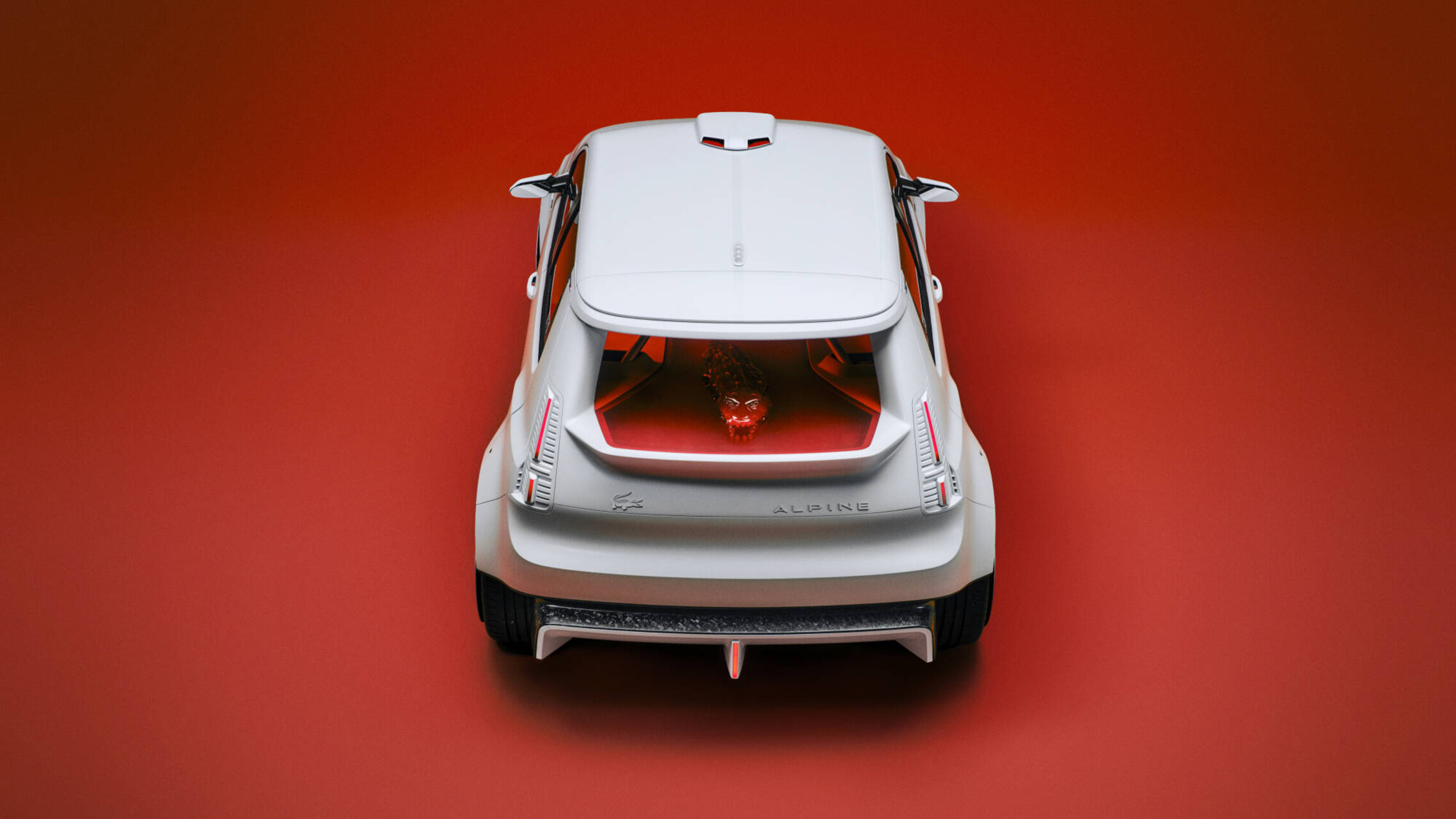
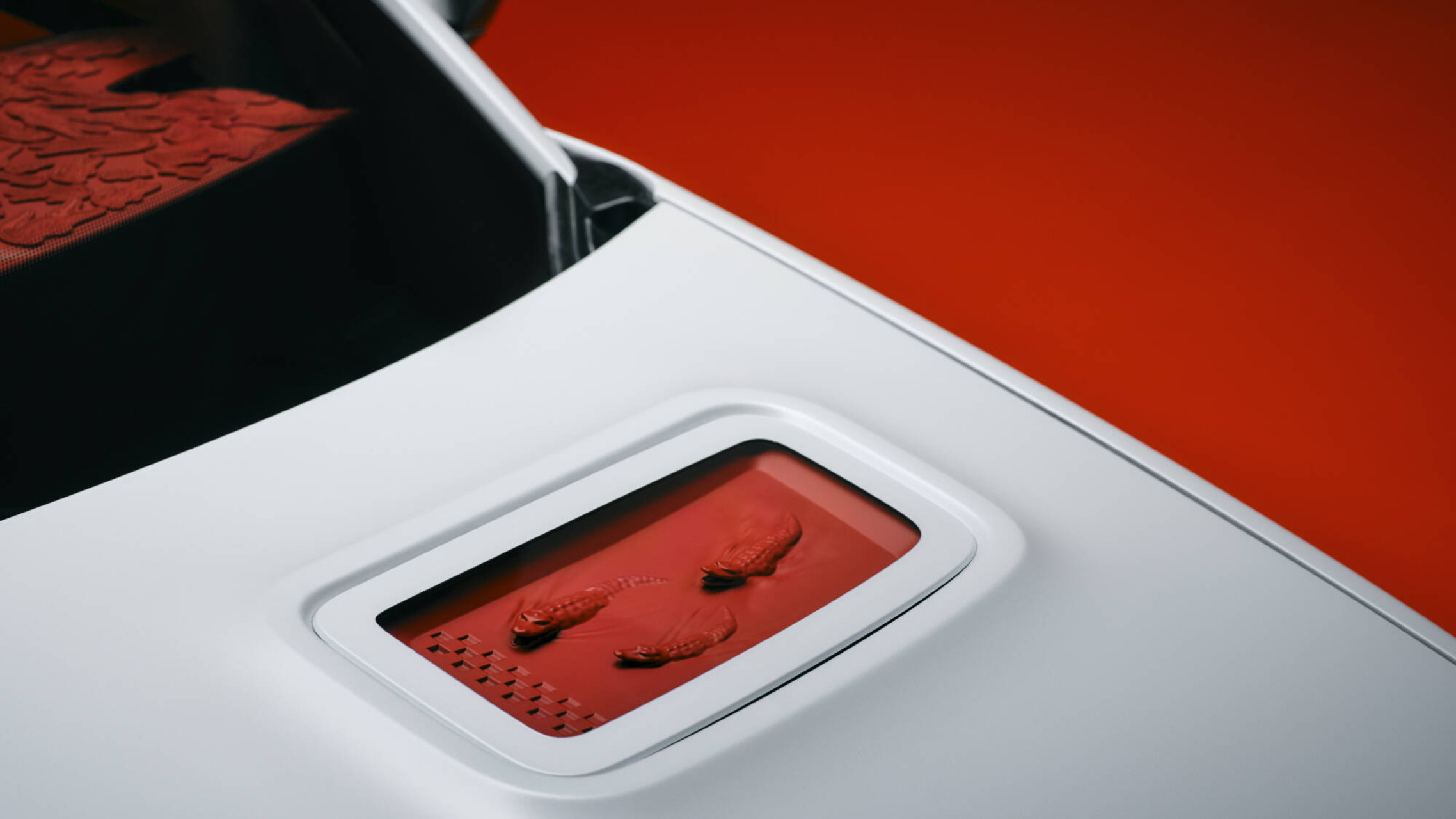
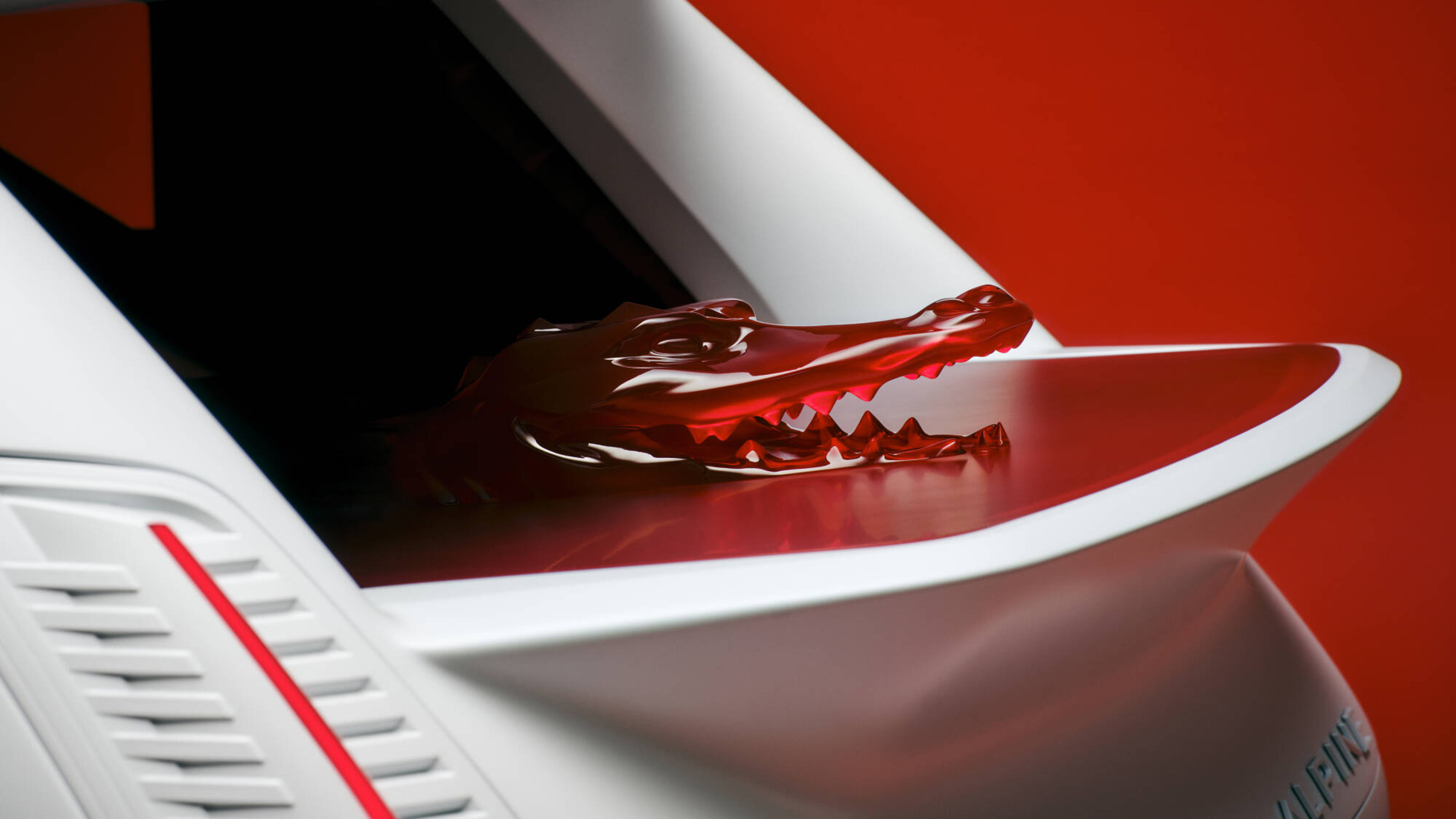
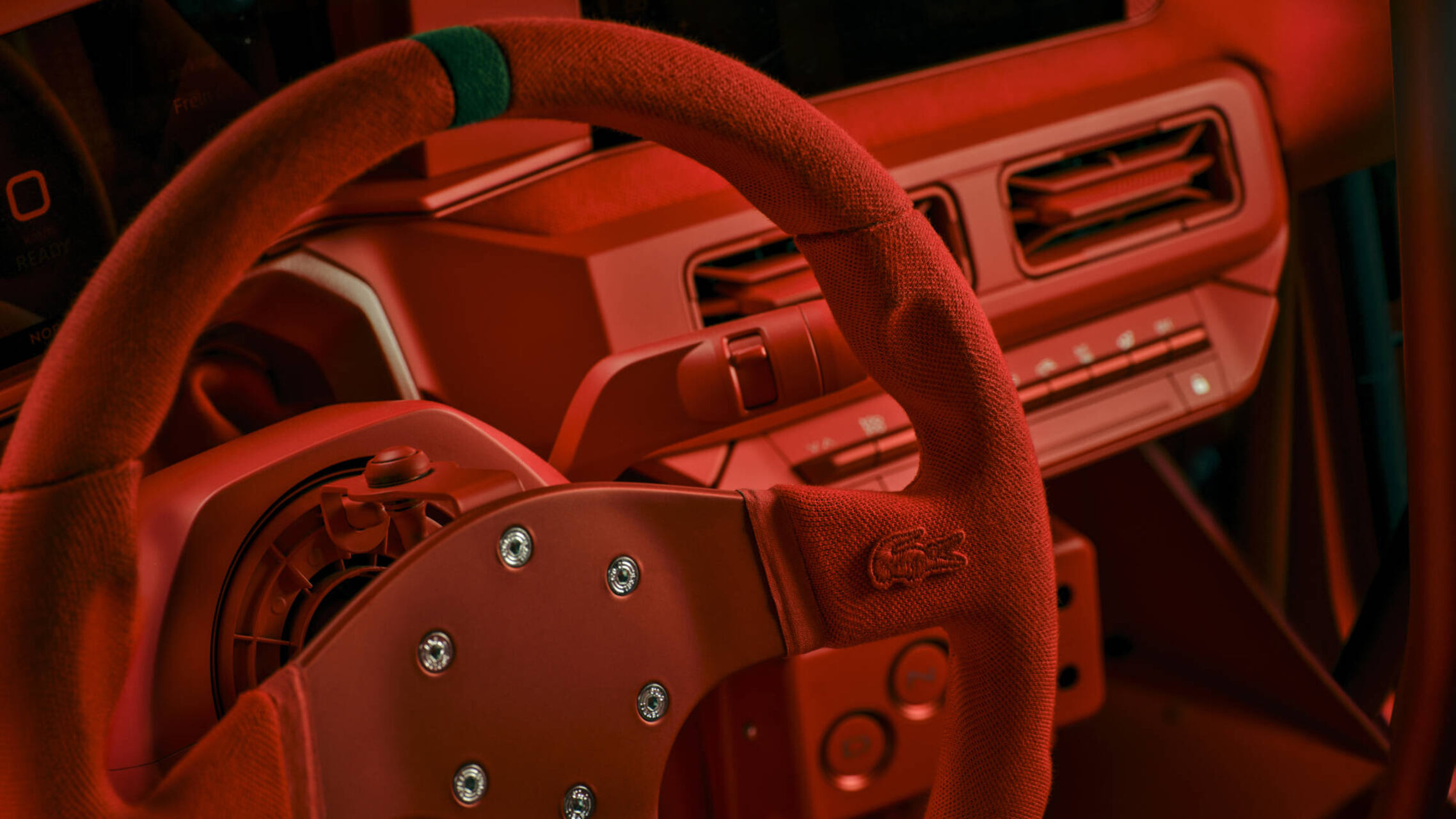
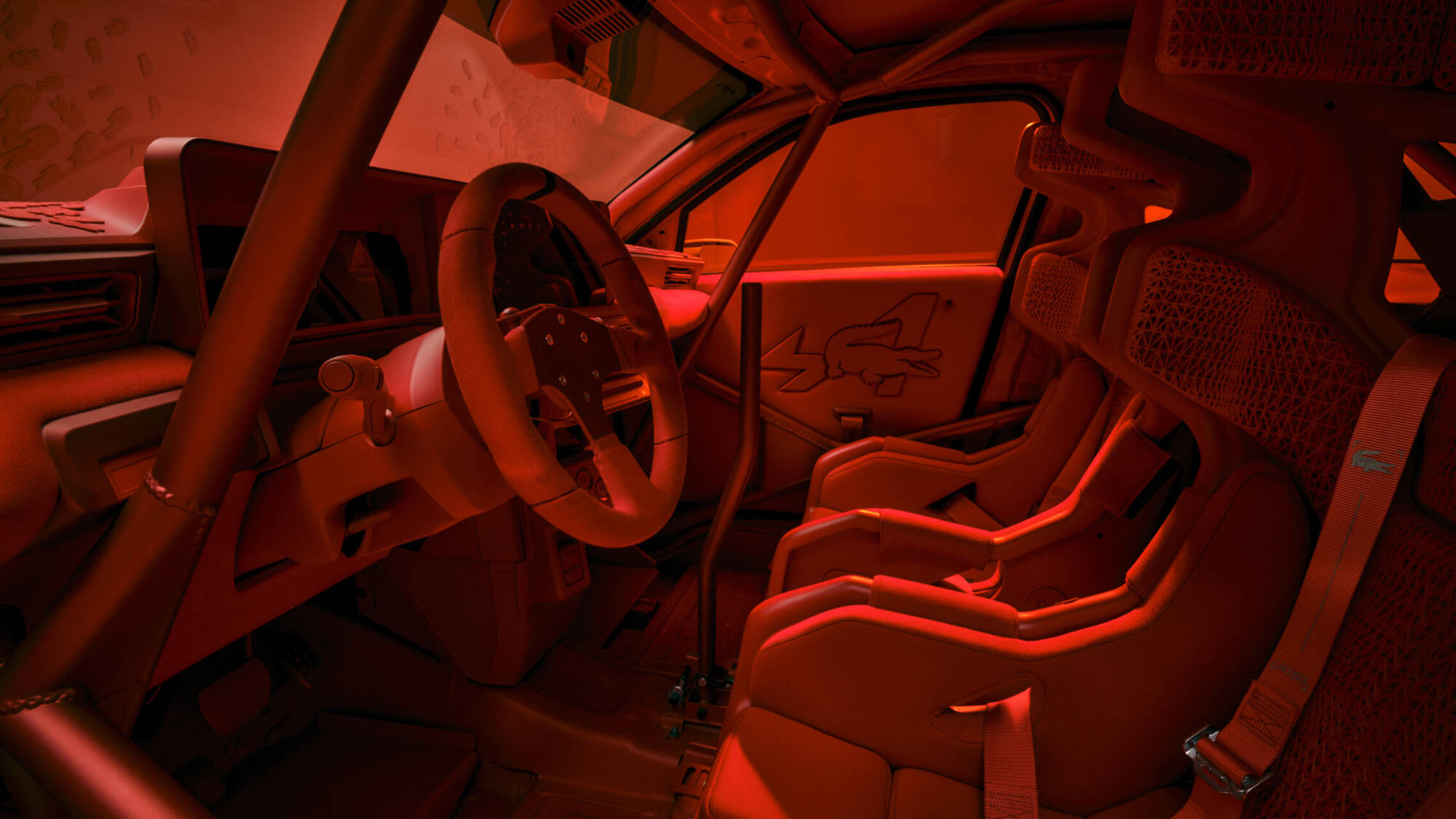
The visual starting point is the red of the crocodile's tongue, a Lacoste signature. The color isn't just used as a decorative detail, but also organizes the entire interior. The exterior, meanwhile, is dominated by a white with bluish tones, inspired by the snow, ice, and frost of Alpine landscapes. The particles in the paintwork create a slightly textured surface, with an effect that evokes a mineral environment rather than a traditional racing livery.
The front light signatures have been modified to evoke the crocodile's gaze, while graphic elements distributed across the bodywork make the joint work of the two teams recognizable. The vehicle contains a total of 290 references to the reptile, a number chosen in relation to the model name. It's a playful element, but also an exercise in visual coherence: the symbol is fragmented and integrated into the product rather than simply repeated as a brand name.
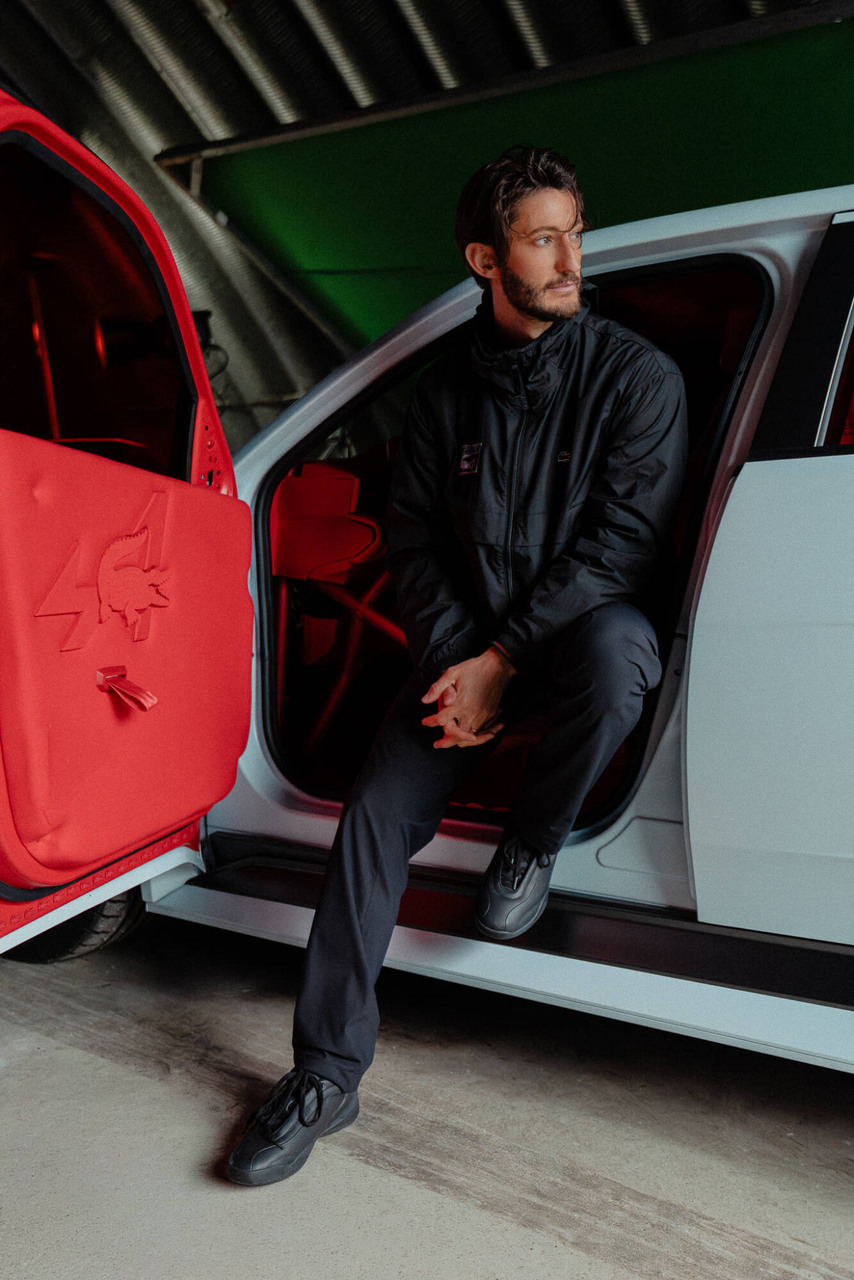
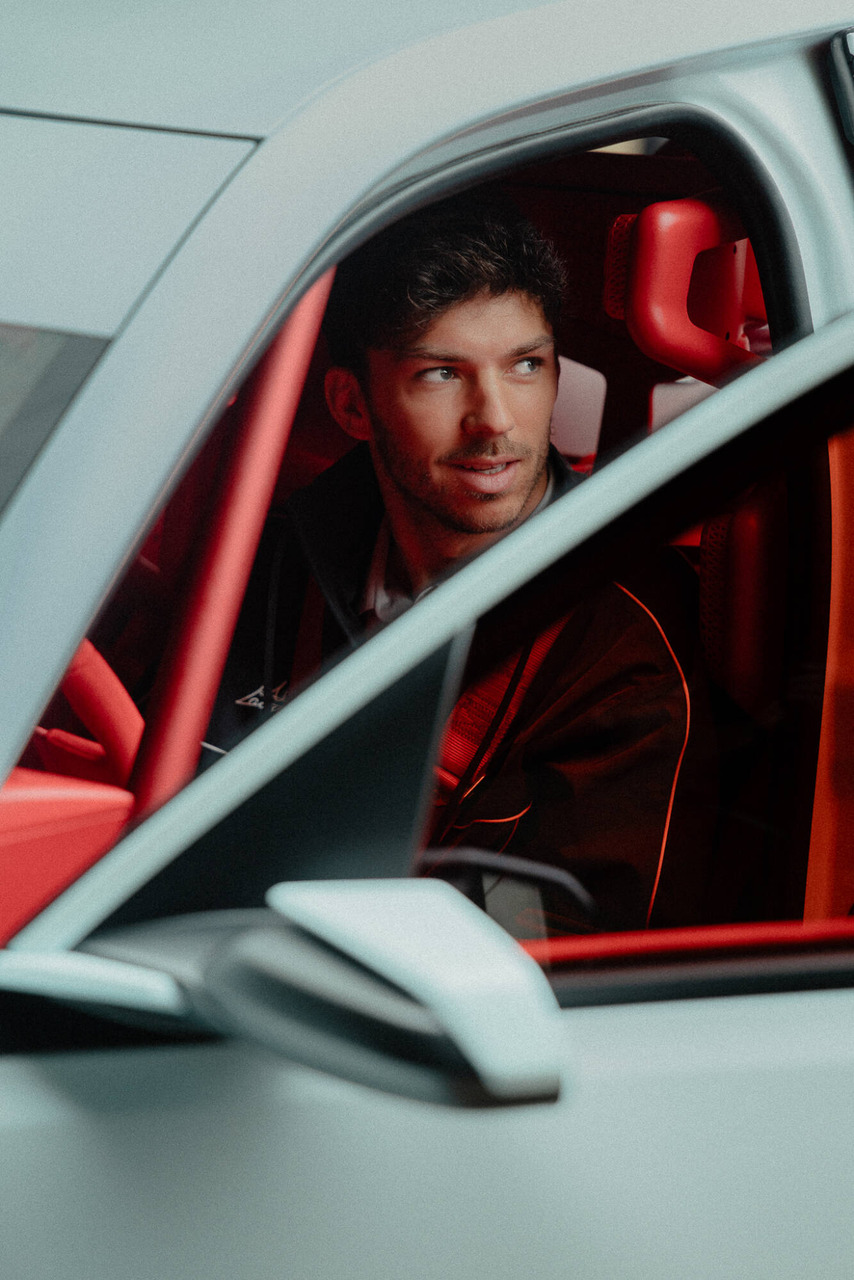
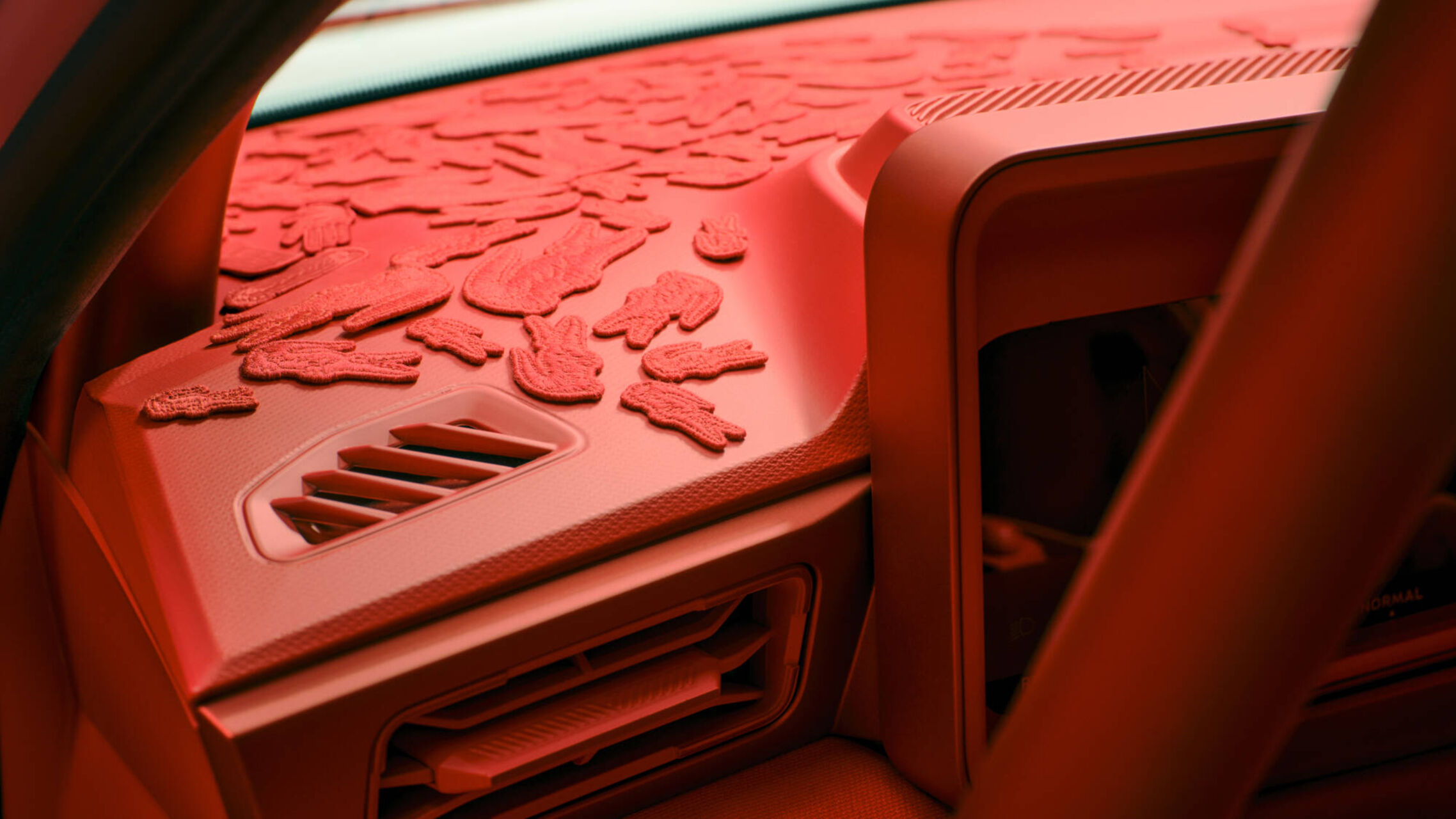
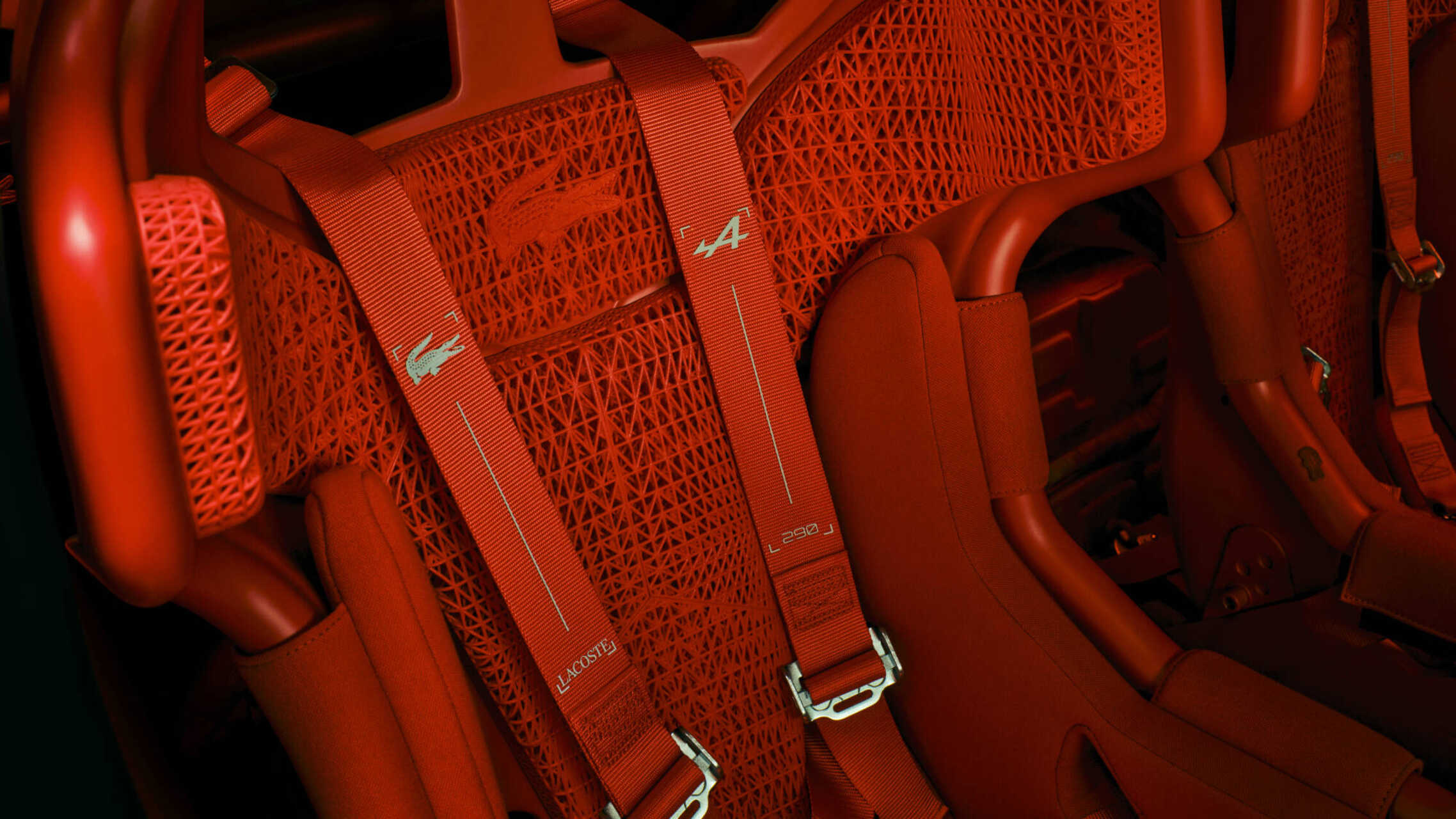
The interior changes tone. The monochromatic red creates an immersive environment that, according to the designers' concept, simulates entering a crocodile's mouth. In the rear, a lurking animal appears, depicted as if chasing the stopwatch. The image introduces a narrative component to a space normally dominated by roll bars, seats, wiring, and functional surfaces.
The most interesting contribution to the research and development However, it concerns the materials. The traditional piqué fabric by Lacoste covers the seats and door panels, transferring into the car a pattern associated with the brand's polo shirts. The embroidery is made by Potencier, a manufacturer that also produces the famous crocodiles applied to Lacoste garments. The joint Alpine x Lacoste logo is instead obtained in bas-relief.
Rally seats include components produced by 3d printing da ERPROAdditive manufacturing allows for the creation of lattice structures in which solids and voids are distributed according to loads, comfort, and ventilation. For the same function, this geometry can reduce the amount of material used compared to a solid component, while maintaining the necessary support in the areas subjected to greater stress.
In motorsports, any reduction in mass impacts acceleration, braking, dynamic performance, and energy consumption. In an electric car, weight takes on even greater importance, as it must be considered alongside the battery's mass. The lattice structures are therefore not simply incorporated to showcase a contemporary production technique: they reflect the rationale for functional optimization that both racing vehicles and sportswear share.
The structural elements of the passenger compartment also receive a treatment of red anodizingThe process modifies the metal's surface layer, increasing its protection and allowing for coloring without the need for a traditional coating. In this case, too, the aesthetic derives from a process with a technical function, consistent with the idea of functional elegance evoked by the two brands.
From the automobile to the capsule collection between fashion and industrial culture
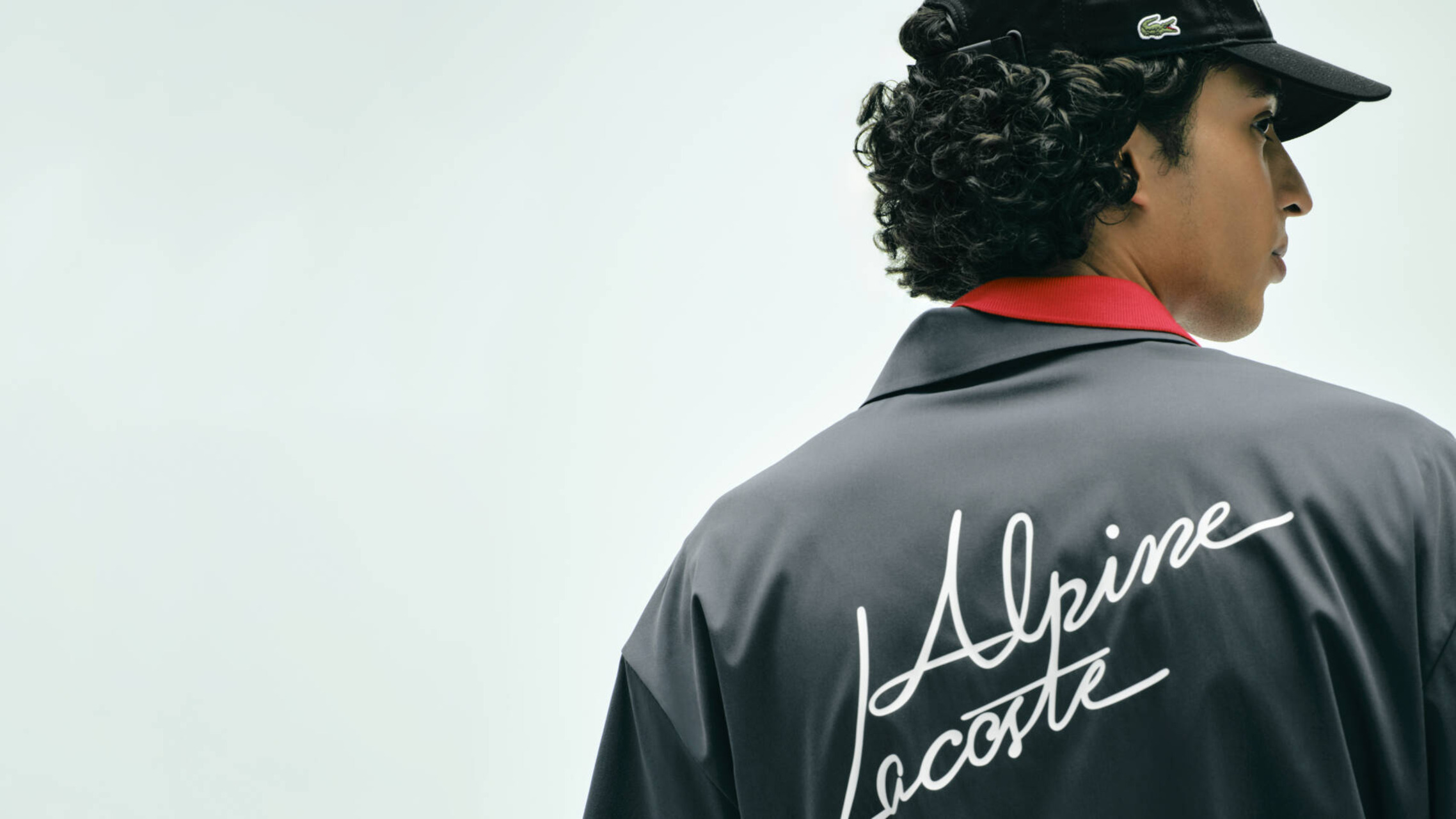
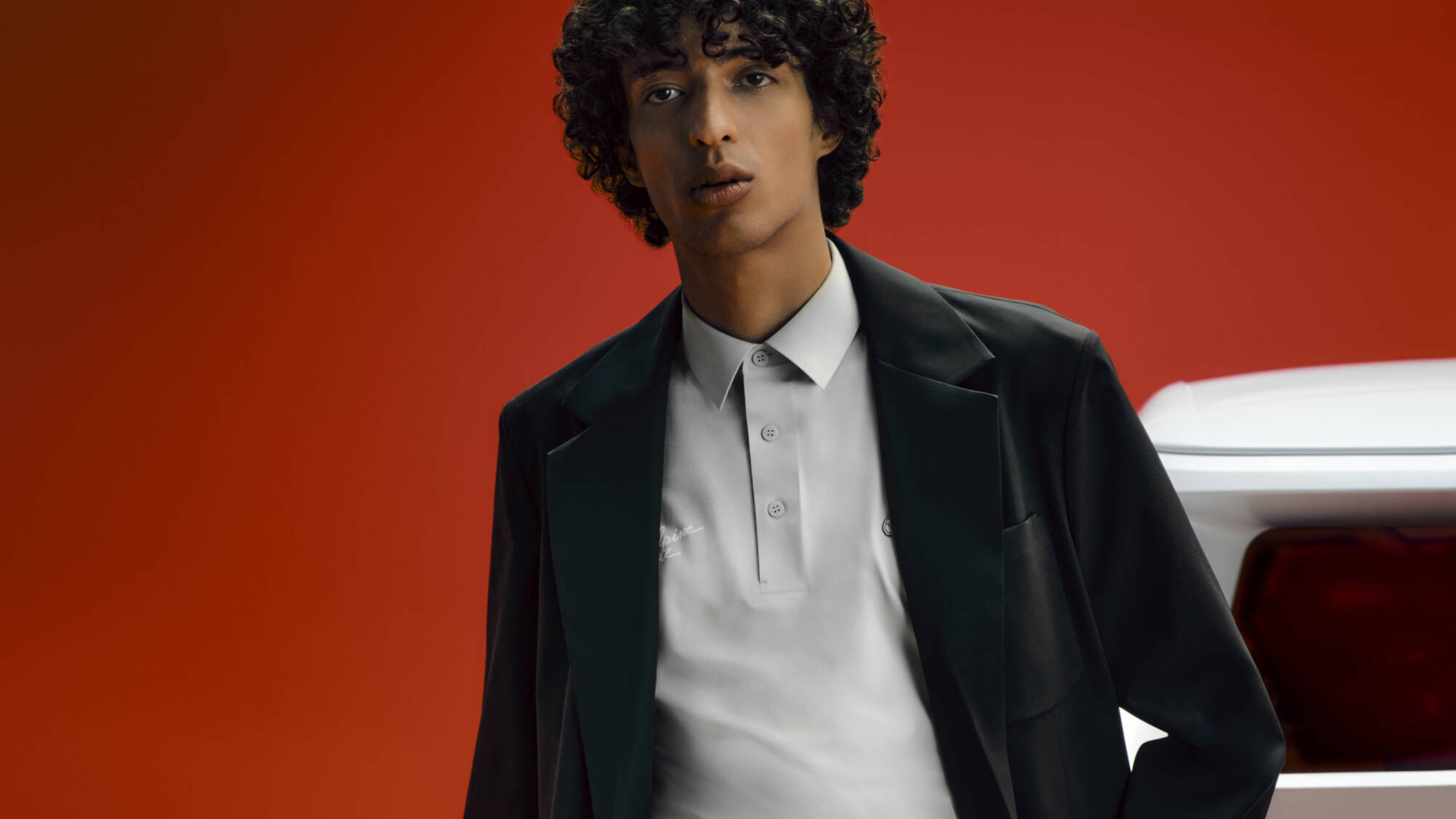
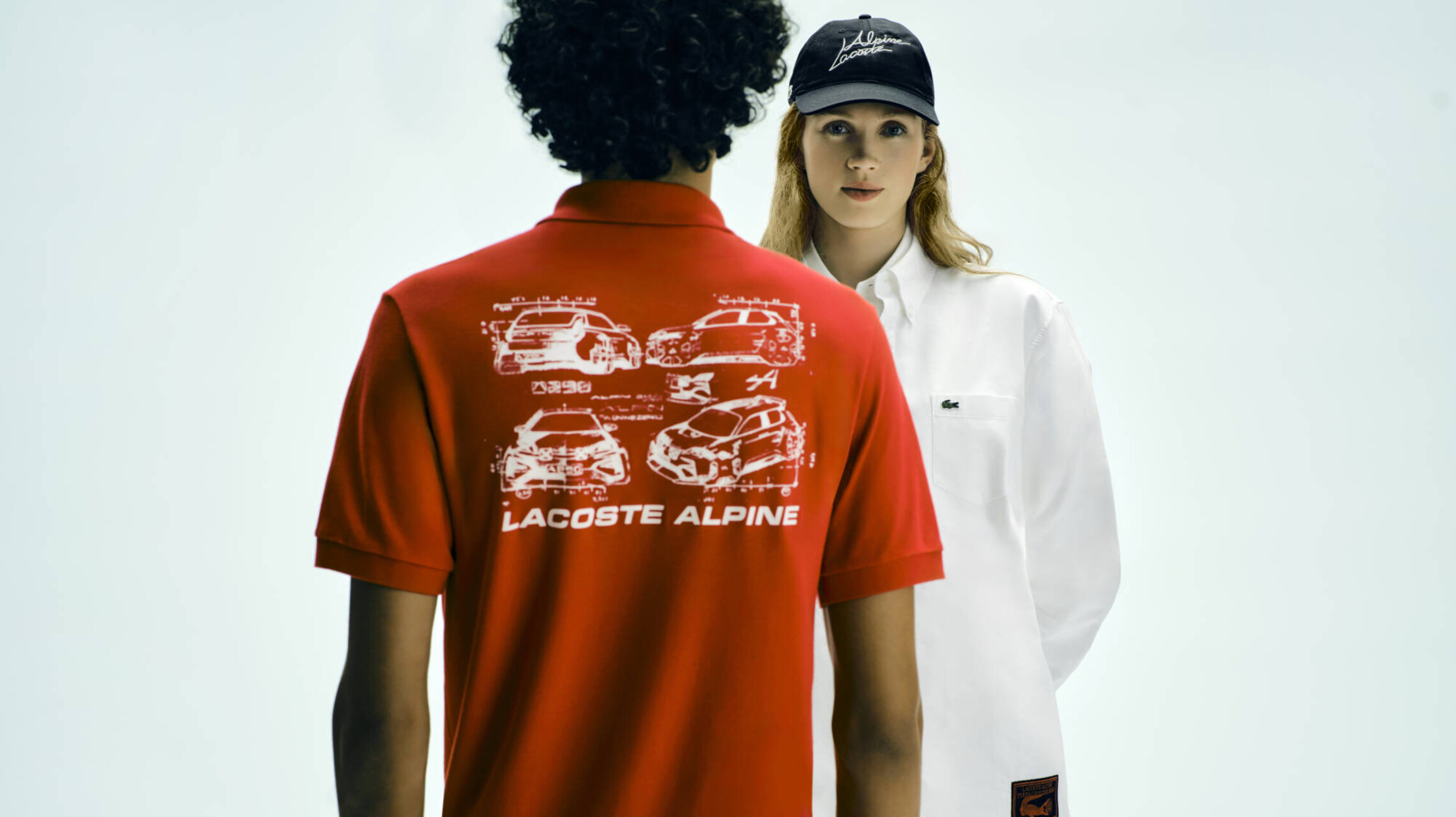
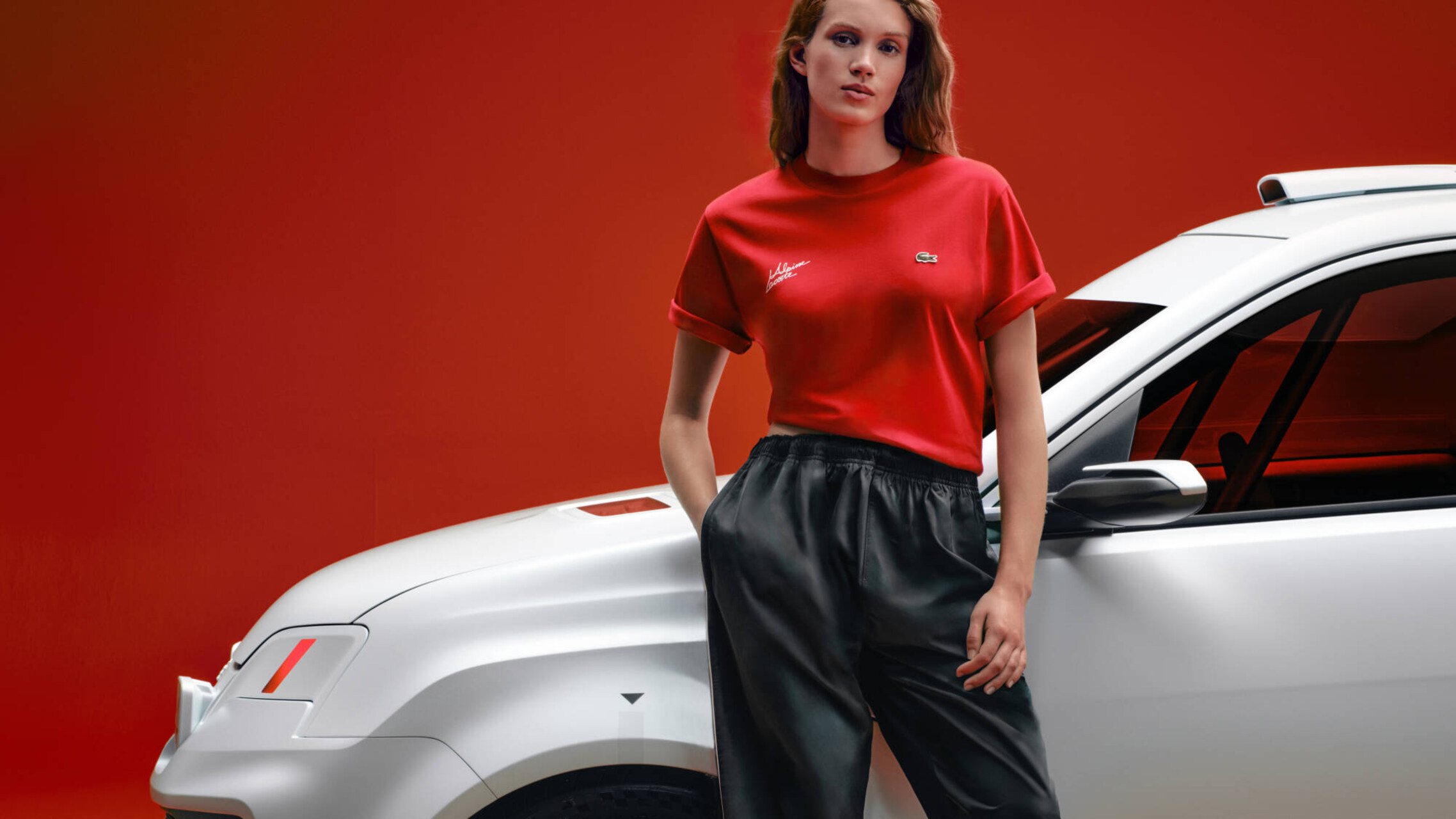
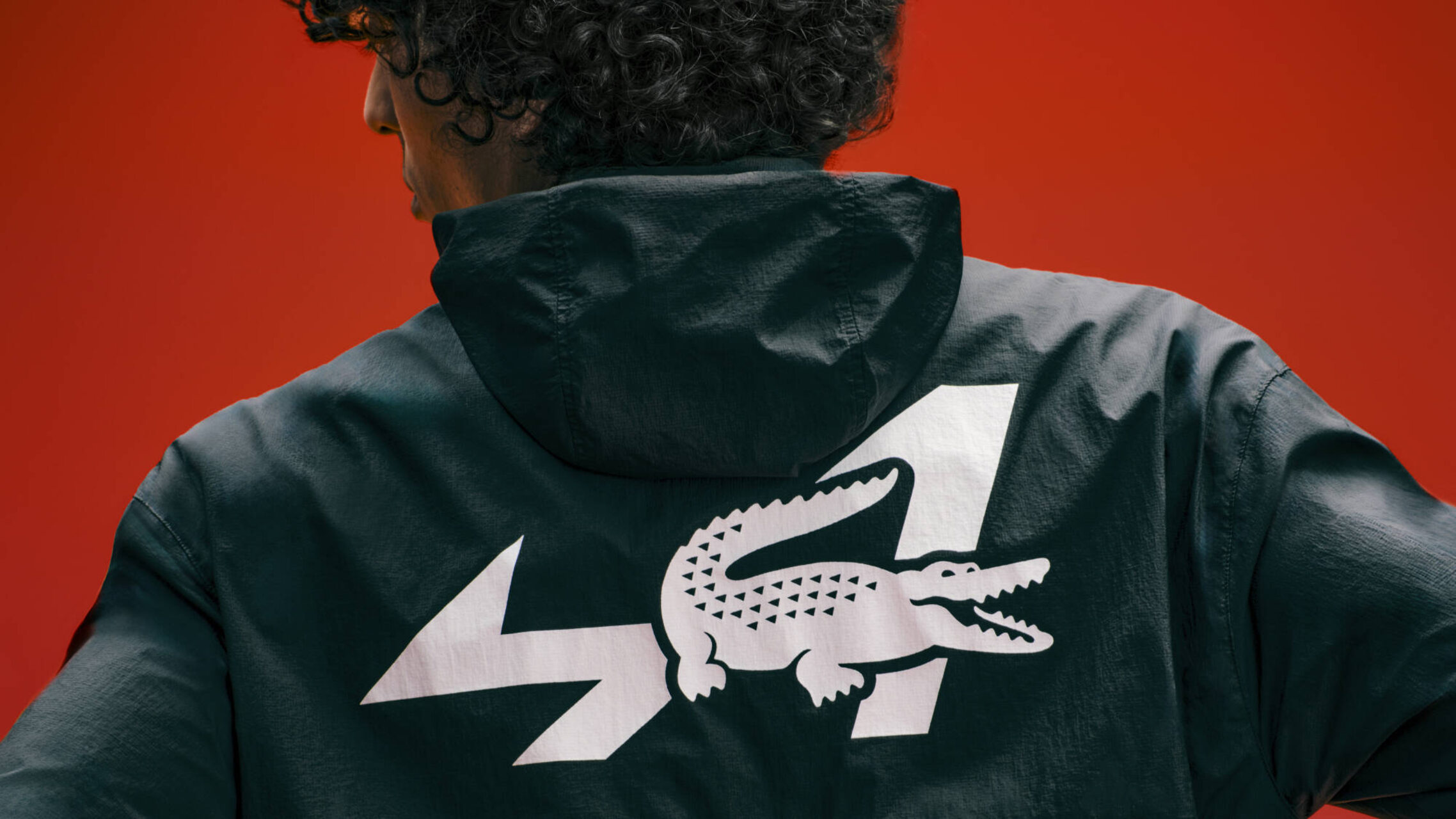
The second component of the project is a capsule collection consisting of polo shirts, t-shirts, lightweight technical garments, accessories, and co-branded products. The line transfers the graphic and color references developed for the car into apparel, connecting tennis, motorsports, and the broader automotive market. lifestyle sports.
This extension is relevant from a business model perspective. The one-of-a-kind piece isn't intended to generate industrial volumes, but rather focuses attention and narrative power. The collection, instead, makes some of the project's codes accessible through reproducible and marketable products. Automobiles and clothing thus perform complementary functions: the former acts as a technical demonstrator and identity marker, while the latter transfers the language of collaboration to a broader market.
Partnerships between fashion and automotive are not new, but in this case, the integration directly involves design and engineering teams. The difference is substantial. Applying a brand to an already defined product requires primarily commercial coordination; developing materials, finishes, and components consistent with a rally car, on the other hand, requires a combination of expertise, production constraints, and homologation criteria.
The project can also be seen as an exercise in corporate heritage management. Lacoste and Alpine draw on their archives without reproducing them literally. Piqué, crocodile, the lightness of Jean Rédélé's cars, and Alpine imagery are transformed into elements of a contemporary product. The legacy thus serves as a design repertoire, not simply a nostalgic exercise.
The declaration focuses on this relationship between history and development. Eric Vallat, CEO of Lacoste:
"Lacoste and Alpine share a culture of innovation, fostered since their origins by pioneers convinced that performance is born as much from ingenuity as from mastery of detail. By combining our heritages, our know-how, and our creative vision, we have imagined a project that celebrates French ingenuity through a shared vision of performance and elegance."
The statement identifies the connection between the two organizations in their mastery of detail. In Lacoste's case, this expertise encompasses fabrics, fit, embroidery, and the serial production of sportswear. For Alpine, it encompasses aerodynamics, vehicle dynamics, electronic management, and the construction of racing cars. The collaboration does not eliminate differences, but seeks to make them compatible within a single product.
Performance and aesthetics beyond the simple application of logos
The automotive perspective emerges in the statement of Antony villain, Vice President Design Alpine, who explicitly links the car to the figures of the two founders and to the relationship between form and function:
The Alpine A290 Rally Lacoste embodies the encounter between two French brands sharing a taste for movement, precision, and boldness. In the spirit of Jean Rédélé and René Lacoste, two enthusiasts who have become benchmarks in their respective fields, Alpine and Lacoste celebrate performance that transcends speed. This collaboration combines the technicality of competition, the lightness of design, and the elegance of timeless style. A car designed for the track, but with a truly aesthetic edge.
The statement about performance "not limited to speed" is useful for interpreting the project. In a rally vehicle, quality depends not only on maximum power, but also on the balance between mass, engine response, braking, grip, reliability, and the driver's ability to control the car. Similarly, in sportswear, functional value arises from the interaction between material, freedom of movement, comfort, and durability.
La lightness It thus becomes the most concrete concept shared by the two brands. For Alpine, it's an engineering parameter that directly impacts dynamics and energy efficiency. For Lacoste, it concerns fit and the ability to accompany athletic movement without hindering it. The project makes this convergence visible through carbon, fabrics, mesh components, and the reduction of unnecessary elements.
However, it remains a communication effort built around a unique model. There are no plans for mass production of the vehicle, nor any direct impact on future road models. It would therefore be inappropriate to attribute undocumented industrial consequences to this collaboration. Its value lies primarily in its ability to test joint design methods and transfer code between sectors with different production rules.
Official information about the collaboration is available on the websites of Lacoste e Alpine, which describe the unique specimen, the collection and the work carried out by the respective teams.
For businesses, this case demonstrates that interdisciplinary collaboration is more credible when it draws on the partners' actual expertise. The crocodile, piqué weave, and tennis culture gain meaning when they're integrated into materials and functions; similarly, the mechanics of the A290 Rallye aren't hidden behind fashion, but remain the backbone of the initiative.
Lacoste and Alpine thus use co-branding as an experimental environment, maintaining their respective specializations recognizable. The car concentrates engineering, additive manufacturing, and visual language; the capsule converts some of these elements into products for the market; the film coordinates the public narrative. The result is a limited project, but useful for observing how design, manufacturing and communication can be developed together without reducing the collaboration to an overlap of brands.
Pierre Niney and Pierre Gasly for the collaboration between Lacoste and Alpine
Here are three insights that might interest you:
Gucci and Alpine: When Luxury Becomes a Platform in Formula 1
Opel enters Formula E and relaunches the GSE acronym
The sports car of the future according to Hispano Suiza and the IED


