SEARCH


An investigation into nearly 300 seizures reveals the scale of the illegal seahorse trade: tens of millions of specimens are smuggled every year
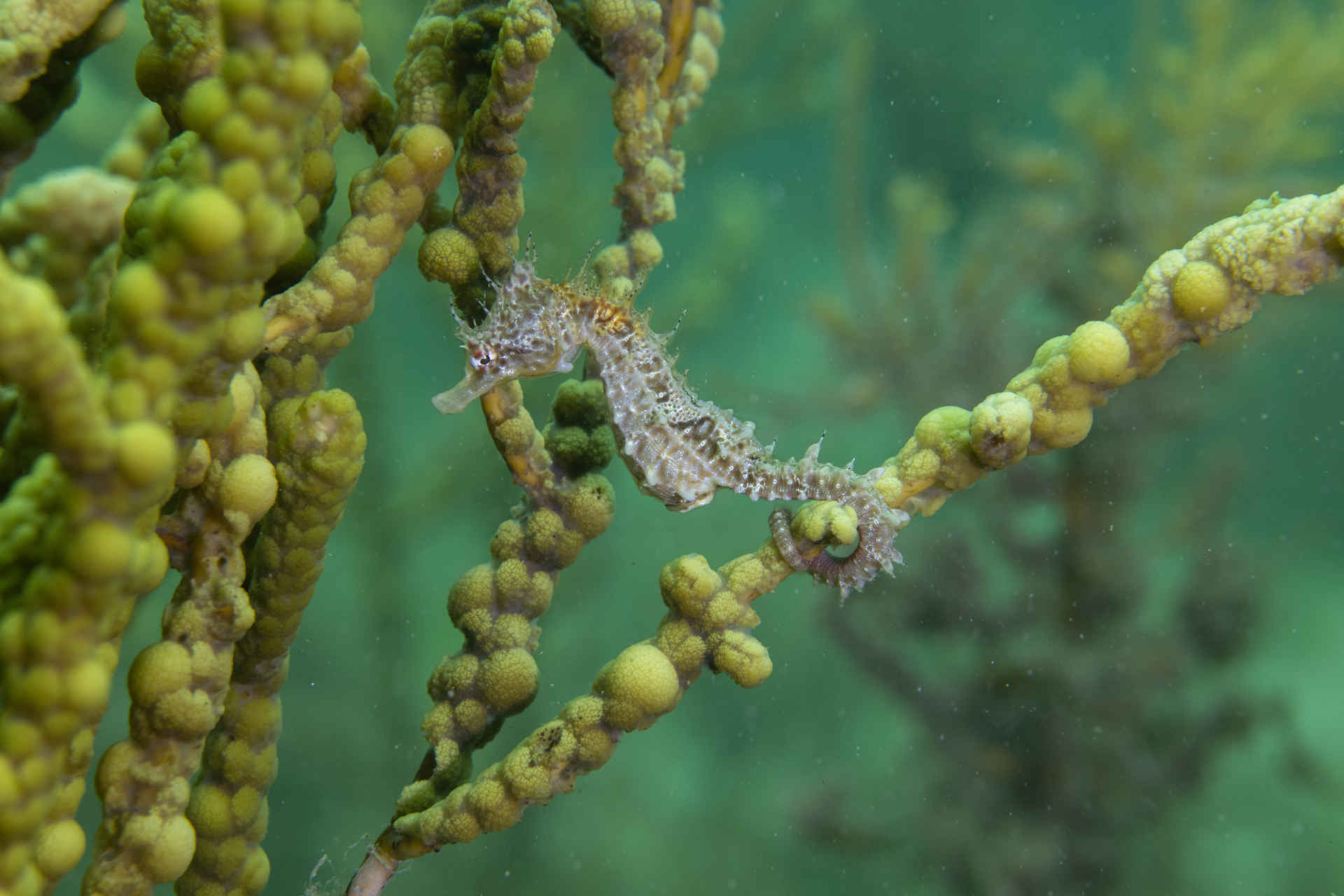
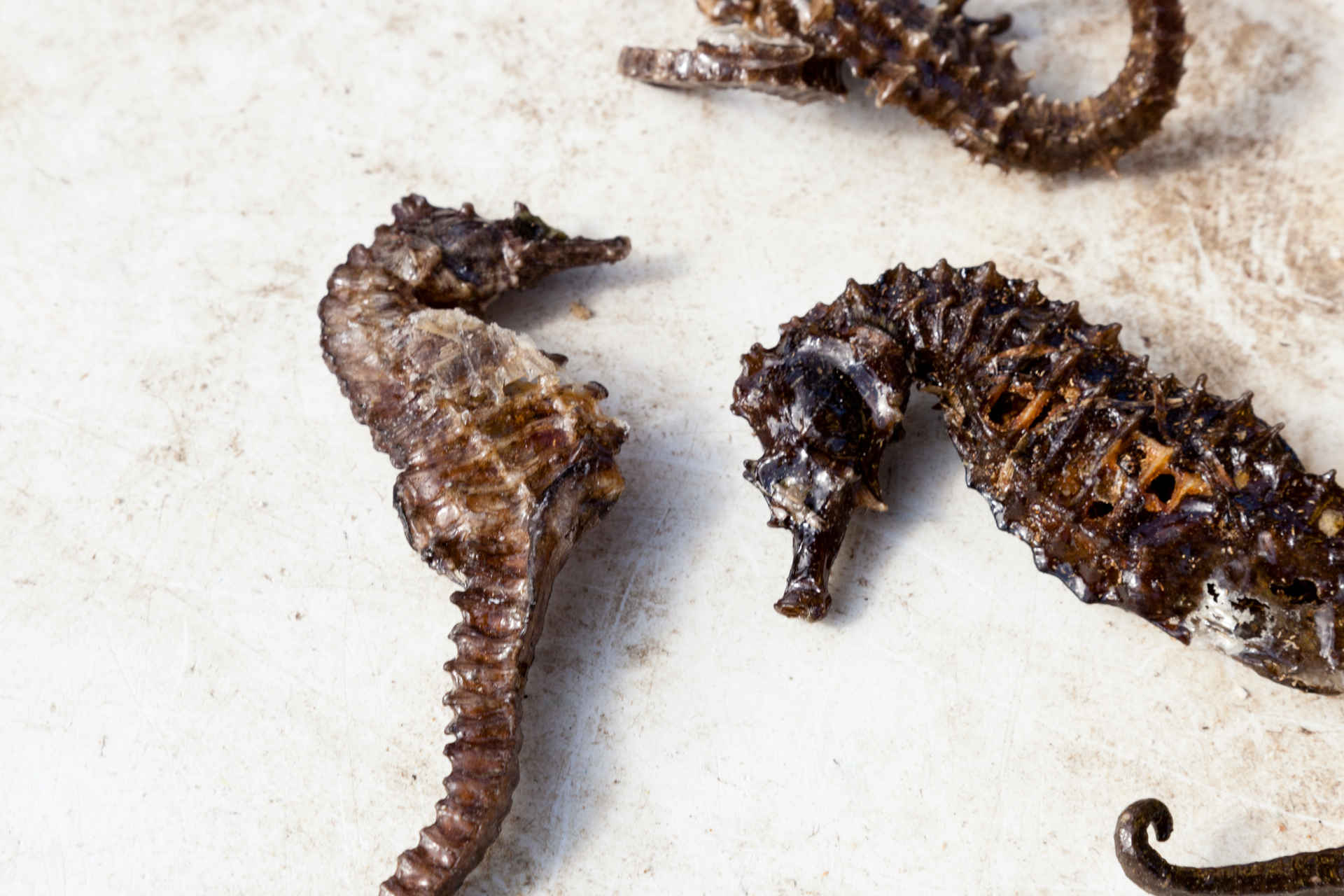
Five million seahorses, almost all dried, for an estimated value of 21 million dollars. This is what Canadian researchers discovered by analyzing seizure records from 2010 to 2021. According to scientists, this could be just the tip of the iceberg: the smuggling of seahorses, which involves at least 62 countries, could be a much more widespread phenomenon. A phenomenon about which we still know too little, and which could undermine efforts to conserve these marine animals.
Seahorse Smuggling: The Study
The work of researchers at the University of British Columbia's Project Seahorse in Canada and marine conservation organisation OceansAsia has revealed the alarming extent of the illegal seahorse trafficking – a phenomenon which, despite the strict international regulations that protect the species of the genus hippocampus, was found to be very extensive and very poorly documented.
The study, published in the journal Conservation Biology, has analyzed almost 300 cases of kidnapping reported in online records from 2010 to 2021, for a total of five million illegally traded seahorses. The value of this deadly and silent traffic is around 21 million dollars (The estimated value of a single specimen is about 5 dollars). Researchers have identified incidents of smuggling in 62 Countries and traced the trade routes affected by the phenomenon, which could be much more serious than suspected.
As the authors of the study point out, all seahorse species are listed in Appendix II of the Convention on International Trade in Endangered Species of Wild Fauna and Flora (CITES), an agreement signed by 185 countries around the world. This means that animals can be traded internationally, but only in the presence of a permit certifying that the activity does not harm the wild populations and that seahorses are caught legally. But proving that you possess these requirements is not very simple, and so the illegal trade continues, risking to nullify the conservation efforts globally.
Illegal Trafficking: What We See Is Just the Tip of the Iceberg
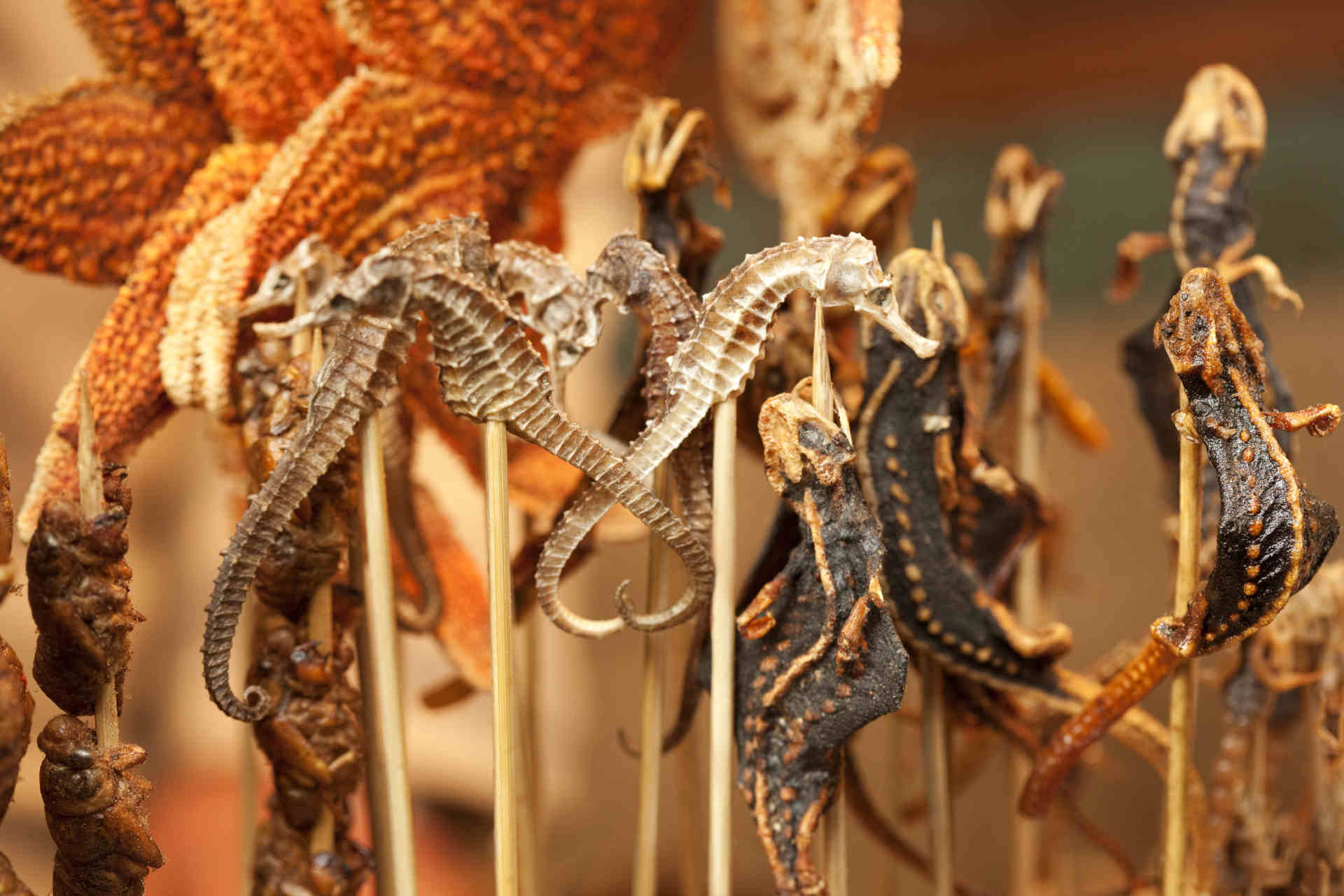
Almost all of the seized seahorses were dried, and almost all have been detected at airports, very often inside passengers' luggage – although the largest volume of seizures comes from maritime cargo.
Most of the seahorse seizures, the research says, occurred in Transit or destination countries, which highlights the attention of some countries in the application of the law but, at the same time, also indicates the urgent need to intervene on the phenomenon at the source – stopping the smuggling before it even starts. Very often, in fact, it has been possible to trace the origin of the specimens only by identifying their species, information reported in just 6 percent of the seizures.
How do you explain Sarah foster, first author of the study,
“We need to stop the illegal wildlife trade as close as possible to where the animals live, while ensuring that permitted exports are sustainable, as required by CITES.”
As the research states, most of the reported seizures come from customs and other control agencies: 88 Guests were arrested following the seizure, but only seven percent of the reports analyzed contained information on the administrative sanctions applied, which makes it unclear how often seizures end with legal consequences at the expense of those responsible.
Furthermore, the 297 documents analyzed are based exclusively on online records and voluntary disclosures, including government notices and news reports, suggesting that the true extent of illegal trade of seahorses is probably much larger:
“It means that what we are seeing is just the tip of the iceberg,”
explains Dr. Foster. Marine seizure data are very scarce, partly because enforcement efforts are often focused on charismatic animals like tigers and elephants.
Fighting Traffickers to Conserve Marine Life
Researchers have found that seahorses are often traded alongside other poached products, such as elephant ivory and pangolin scales, proving that marine animals are now a fully fledged illegal wildlife trafficking, classified by Interpol as the fourth largest transnational crime in the world after arms and drug smuggling and human trafficking.
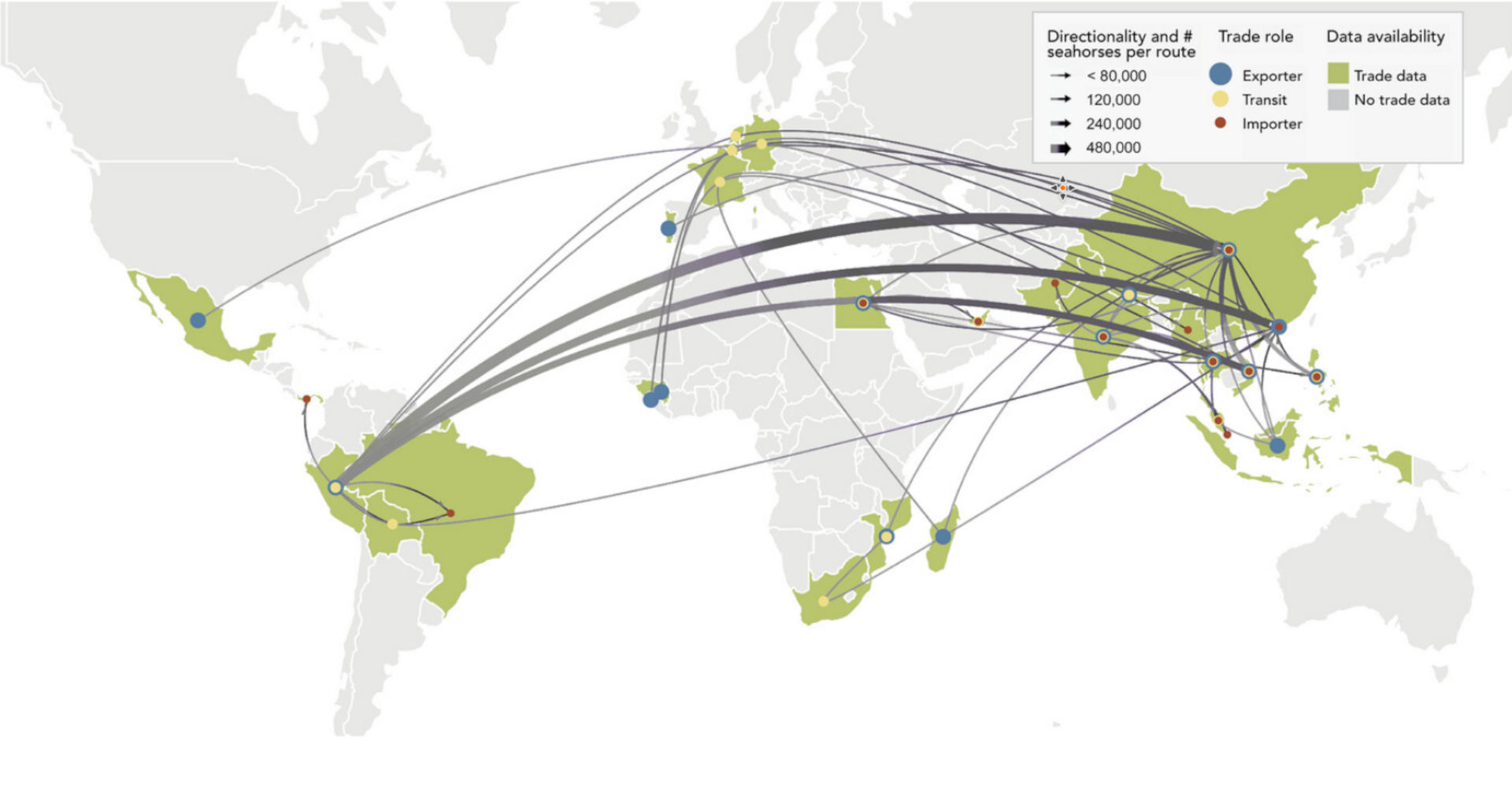
The team also analyzed the trade routes, revealing a lively and rapidly evolving traffic. As he explains Syd Ascione, research biologist of Project Seahorse, among the authors of the study:
“Our analysis of seizures reveals new trade routes for seahorses, involving Europe and Latin America. Although China e Hong Kong remain the main destinations, the routes appear to be diversifying, and so should the efforts to enforce the rules”.
As researchers point out, out of 46 known species of seahorses at least 16 are at risk of extinction. The emergence of such a widespread phenomenon, the extent of which we have only just begun to understand, is a serious alarm for marine conservation.
“We need to make sustainable and legal trade profitable enough to make people comply with the laws, and ensure there are also sufficient deterrents to stop illegal activity,”
explains Foster.
“All countries must act with strong deterrents – good investigative work, strong enforcement and meaningful sanctions – to end the illegal seahorse trade. At the same time, we must continue to use innovative research and investigation methods to uncover hidden networks and outsmart traffickers,”
concludes the doctor Teale Phelps Bondaroff, Director of Research at OceanAsia.
Here are three insights that might interest you:
European Swordfish Market Fuels Illegal Fishing
Sustainable Fishing: $2,2 Million for 85 Projects
In the Azores the largest marine protected area in Europe