


 SEARCH


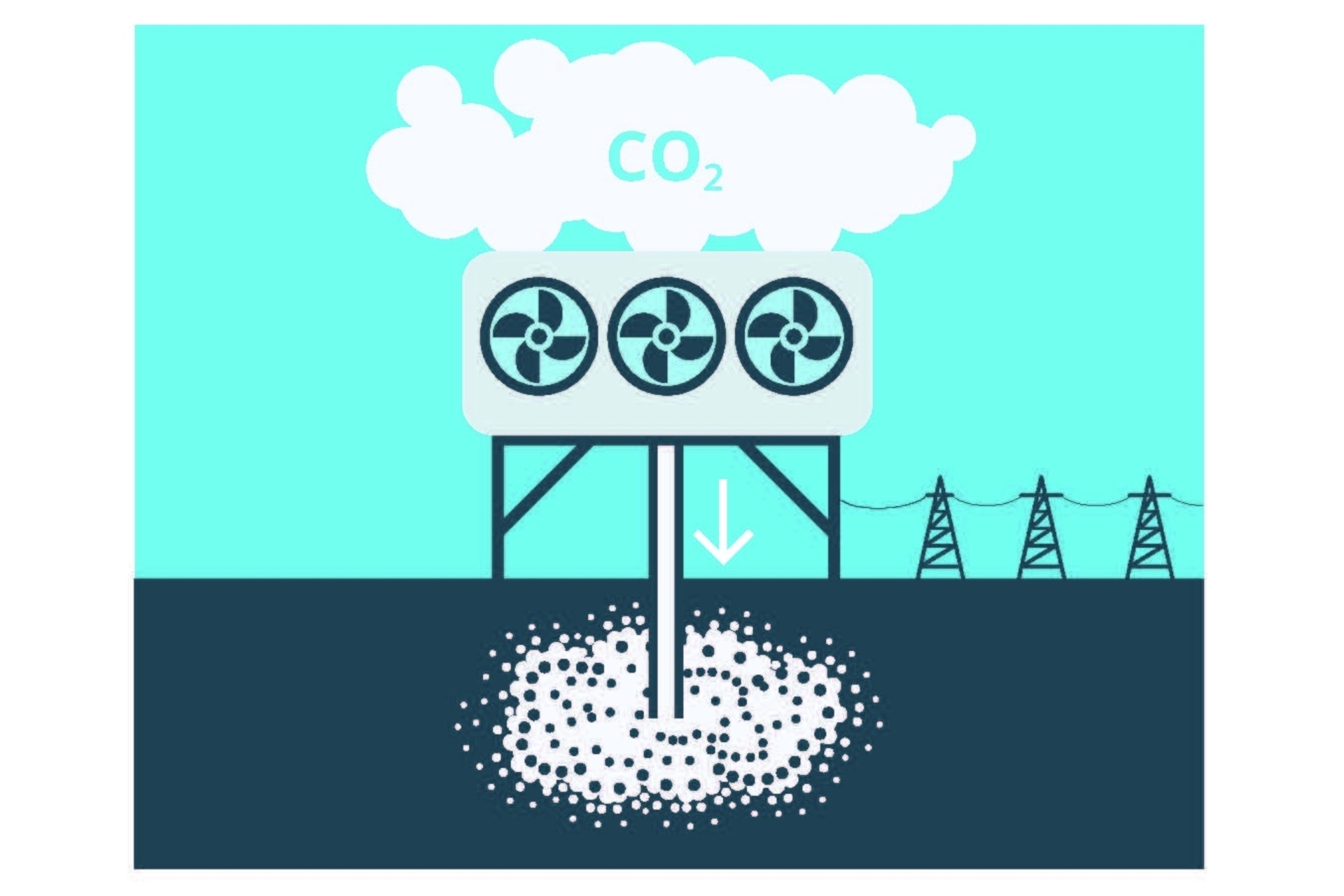
If Switzerland is to achieve its goal of net zero greenhouse gas emissions by 2050, it will have to rely on the use of technologies negative emission (NET), i.e. processes that remove CO2 from the atmosphere and store it in the long term.
While NETs can, in principle, contribute to the achievement of the climate goals, at the moment not everything is yet perfectly clear in terms of strategy.
This is because some of these processes have not yet been tested in practice, are technically complex, expensive or cannot be used on a large scale at the moment.
Furthermore, many people know little about both the possibilities and the limits of the network.
The TA-SWISS report “Taken from the Air How to capture and store CO2” (in German)
What will be the cost of a CO2-neutral Switzerland?

A study by researchers from the Öko-Institut and EMPA on behalf of TA-SWISS
On behalf of TA SWISS, researchers from the Öko-Institut and theEMPA they then evaluated five NETs relevant to Switzerland, with the involvement of other experts.
The results demonstrated that a single process is not enough; all .NETs are required.
Furthermore, the reduction of emissions CO2 must remain central.
After all, it is cheaper to avoid emissions than to remove carbon dioxide from the air afterwards.
The TA-Swiss study aims to inform politicians and the public about the opportunities, limitations and risks of various methods of CO2 removal and storage.
Aspects such as the feasibility, theclimate effectiveness, costs, resource consumption andimpact on the environment and on the population.


Negative Emission Technologies (NET) that can make a difference in the future
It is possible to briefly list the five Negative Emission Technologies or Negative Emission Technologies (NETs) called to help in zeroing carbon dioxide:
the storage of CO2 in the form of biomass in forests and the use of wood;
the storage in the form of humus in the soil and the use of vegetable carbon;
CO2 capture and storage during biomass combustion (BECCS);
air extraction and storage (DACCS);
accelerated aging of concrete and demolition rocks (carbonation).
Each of the five networks was evaluated on the basis of the current state of knowledge and with the help of expert interviews.
Possible opportunities, risks, synergy effects and conflicts have been identified and considered from a systems perspective.
Based on this, options for action and general and specific recommendations related to health have been identified technology, on which we reflected together with selected stakeholders.
Circuits from renewable raw materials for "green" electronics

A complement to the priority reduction of greenhouse gas emissions, provided that…
The main general recommendations of the study also deserve to be fully described.
In order for the network's contribution to the “net zero” goal to be implemented in a compatible way since environmental point of view and society, policy makers and society should address the issue at an early stage.
In particular, this requires that the public be involved in defining the conditions of use of NET networks through fact-based and understandable information.
A comprehensive strategy is needed for using limited resources, such as renewable energy, water, biomass and land, and for financing the development and implementation of networks.
More research is needed to determine the potential of the different technologies.
It must be possible to record the amount of CO2 removed from the atmosphere over the long term in a transparent and simple way to provide a reliable assessment framework and avoid counting the same CO2 multiple times.
The minimum CO2 fixation period from which a NET technology or project is recognized in terms of climate strategy should be reflected.
Le NET technologies can only be used to achieve net zero as a complement to the priority reduction of greenhouse gas emissions.
In Blockchain carbon dioxide capture and reuse

We need separate targets for reducing emissions and for CO2 removal
Therefore, it is important that separate targets apply for CO2 emission reduction and CO2 removal.
Switzerland currently has a pioneering role in the development of NETs.
This competitive advantage should be further strengthened with the promotion of projects research and development and demonstration.

Switzerland wants to reach the target and takes action to achieve net zero greenhouse gas emissions by 2050


