SEARCH


In Spartanburg, the new humanoid sorts parts for assembly, working with autonomous transport, 3D simulations and data checks.
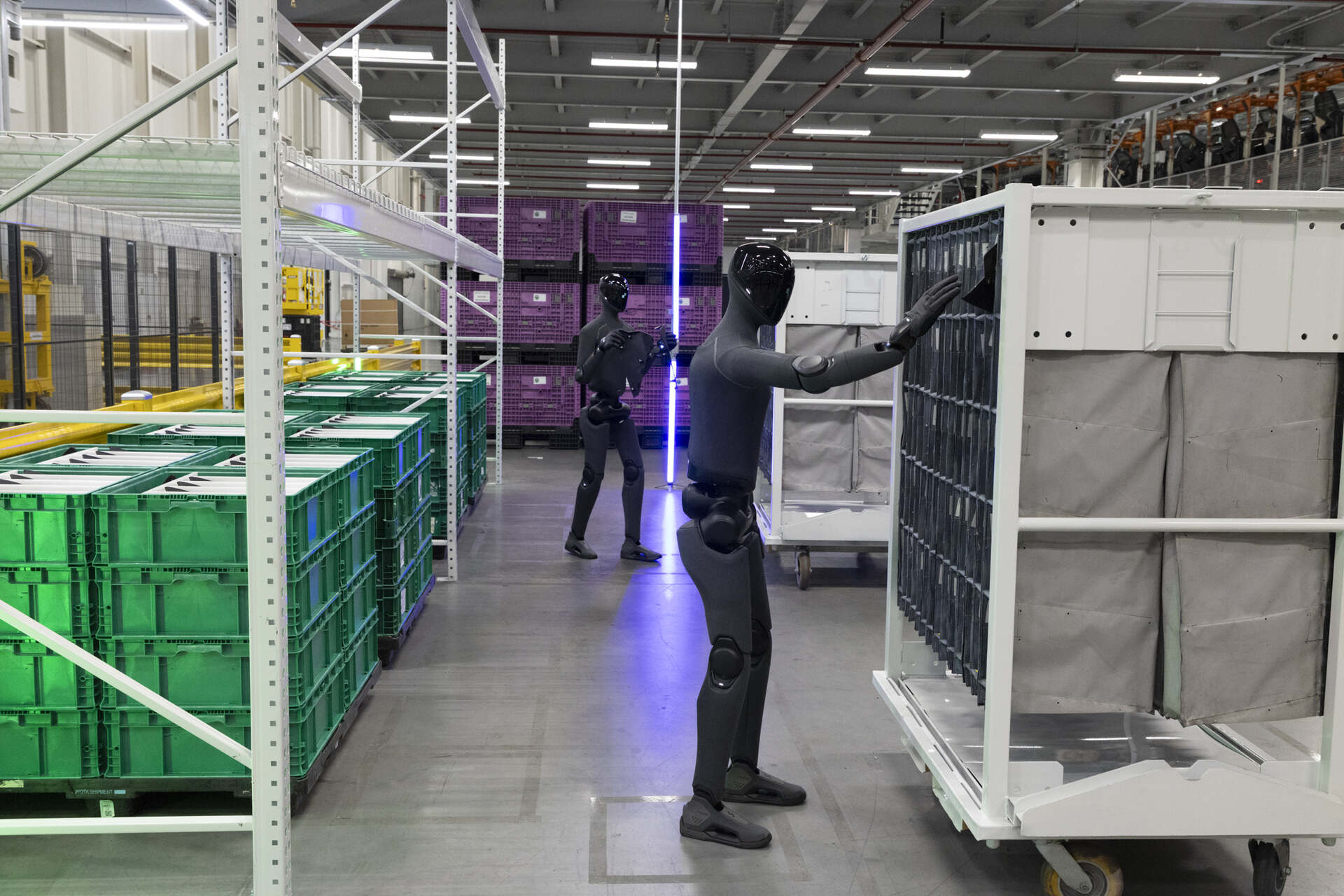
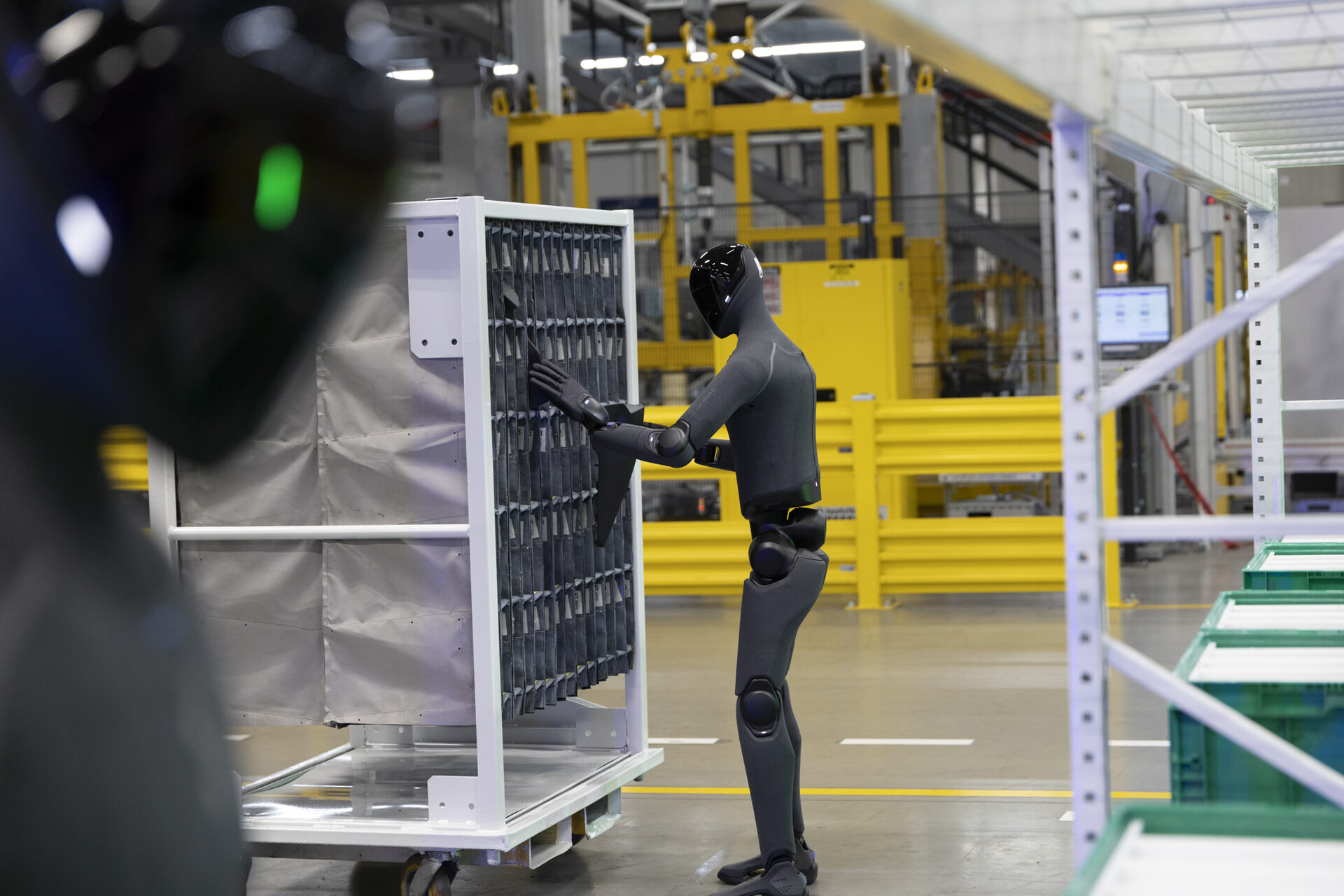
Humanoid robotics is entering a less spectacular and more decisive phase: that of integration into daily factory workflows. June 25, 2026 BMW Group announced the start-up, in the plant of Spartanburg, of a new project with (Figure 03, the robot developed by the Californian company AI figuresThe task is not an isolated demonstration, but a recurring function in automotive logistics: picking components delivered in bulk, recognizing them, and sorting them into a cart according to the sequence required by the assembly line.
This is an important step because it shifts attention from a single repetitive operation to an environment in which the position, orientation, and accessibility of parts are constantly changing. In this context, the so-called Physical AI combines artificial intelligence systems with machines capable of perceiving space, making operational decisions, and correcting movement during execution. For BMW, the project is part of a broader policy of artificial intelligence and big data applied to production, while for Figure it represents an industrial test bed for a generalist robot.
The choice of United States and Plant Spartanburg is no coincidence. Here BMW had already employed the previous one in 2025 (Figure 02 in the body shop, where it inserted sheet metal parts into welding equipment. According to the manufacturer's official data, in ten months the humanoid supported the production of over 30.000 BMW X3, moving more than 90.000 components, covering approximately 1,2 million passes and accumulating approximately 1.250 operating hoursThe test thus produced a measurable baseline of reliability, security, IT interfaces, and coexistence with existing automation.
From the body shop to just-in-sequence preparation
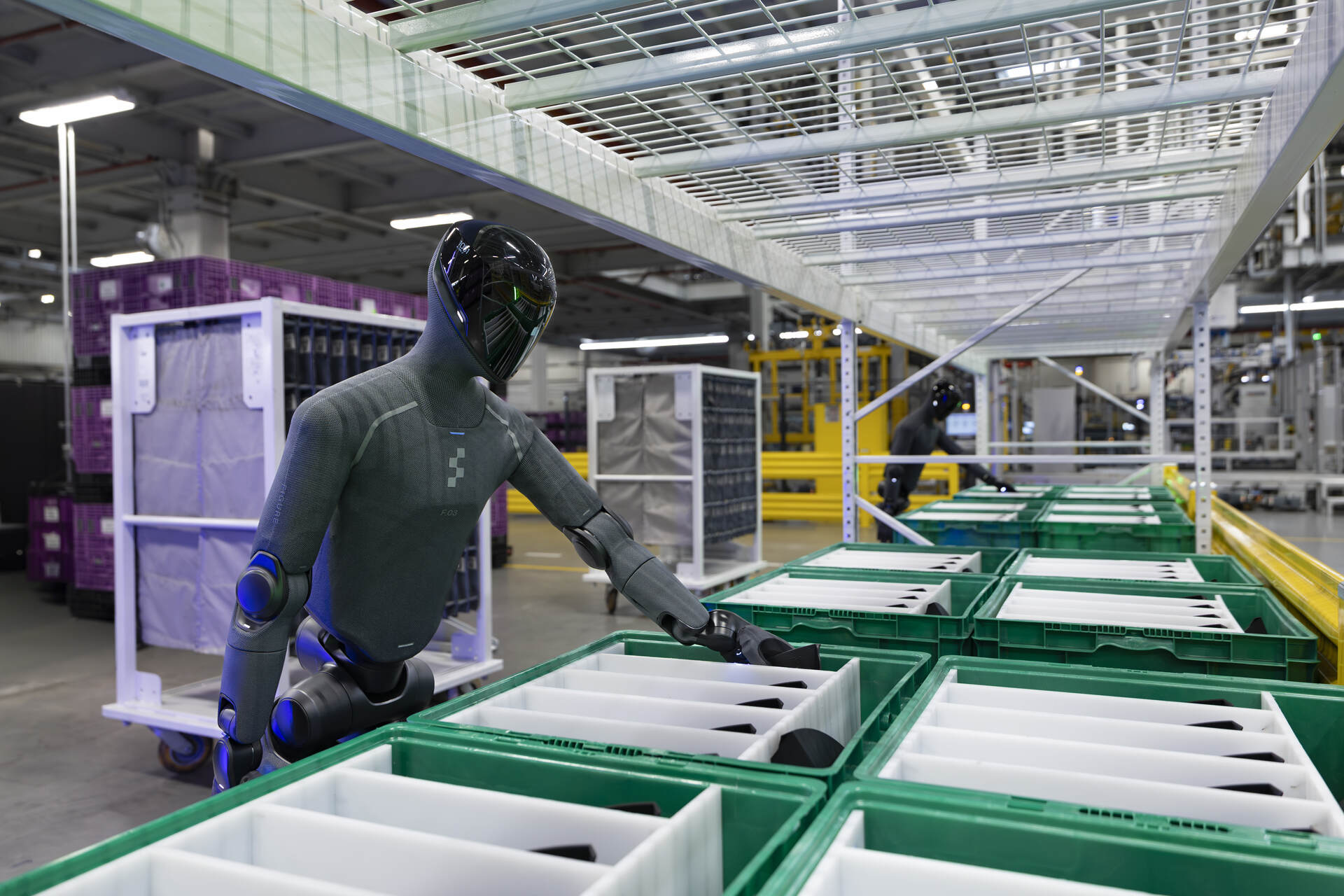
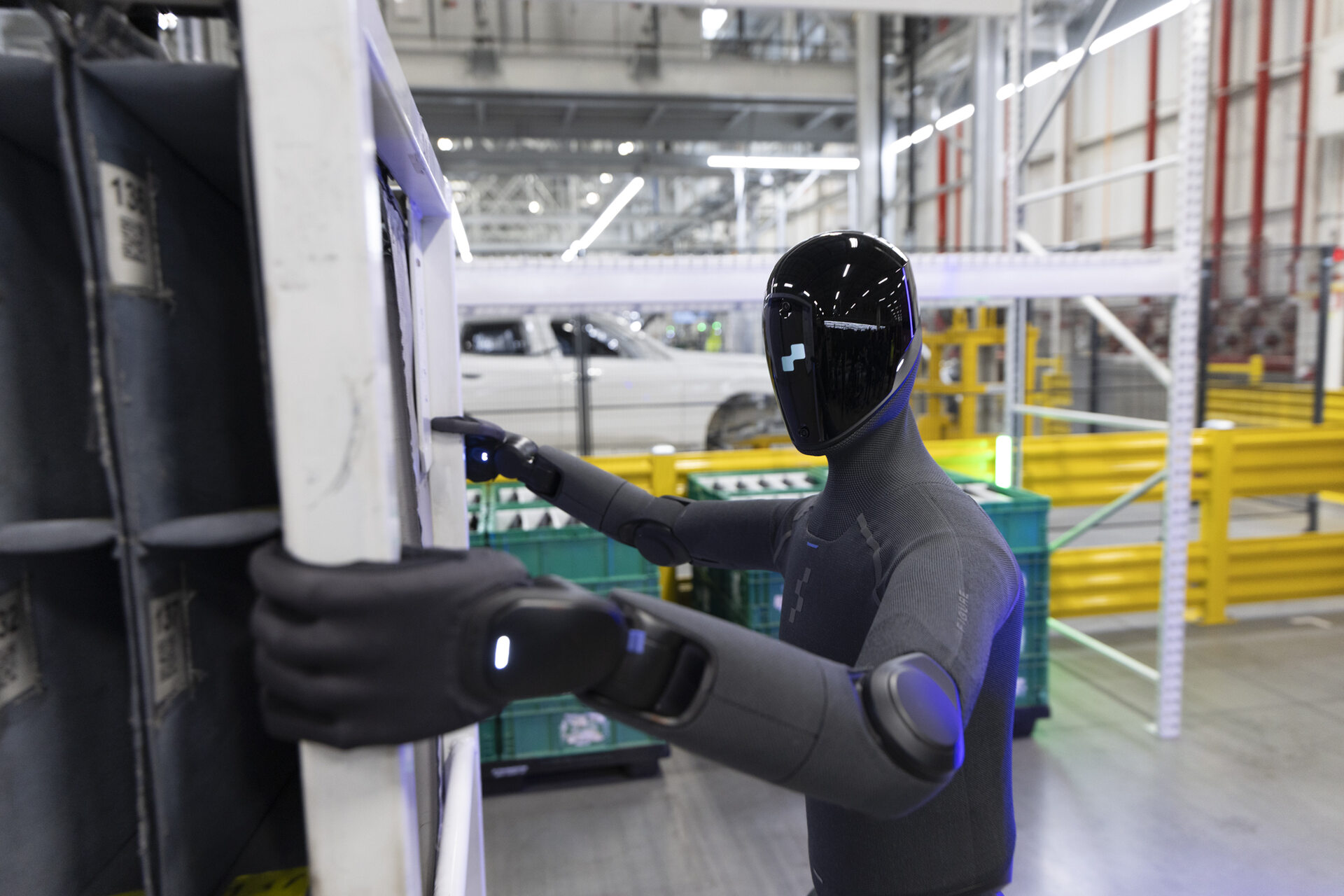
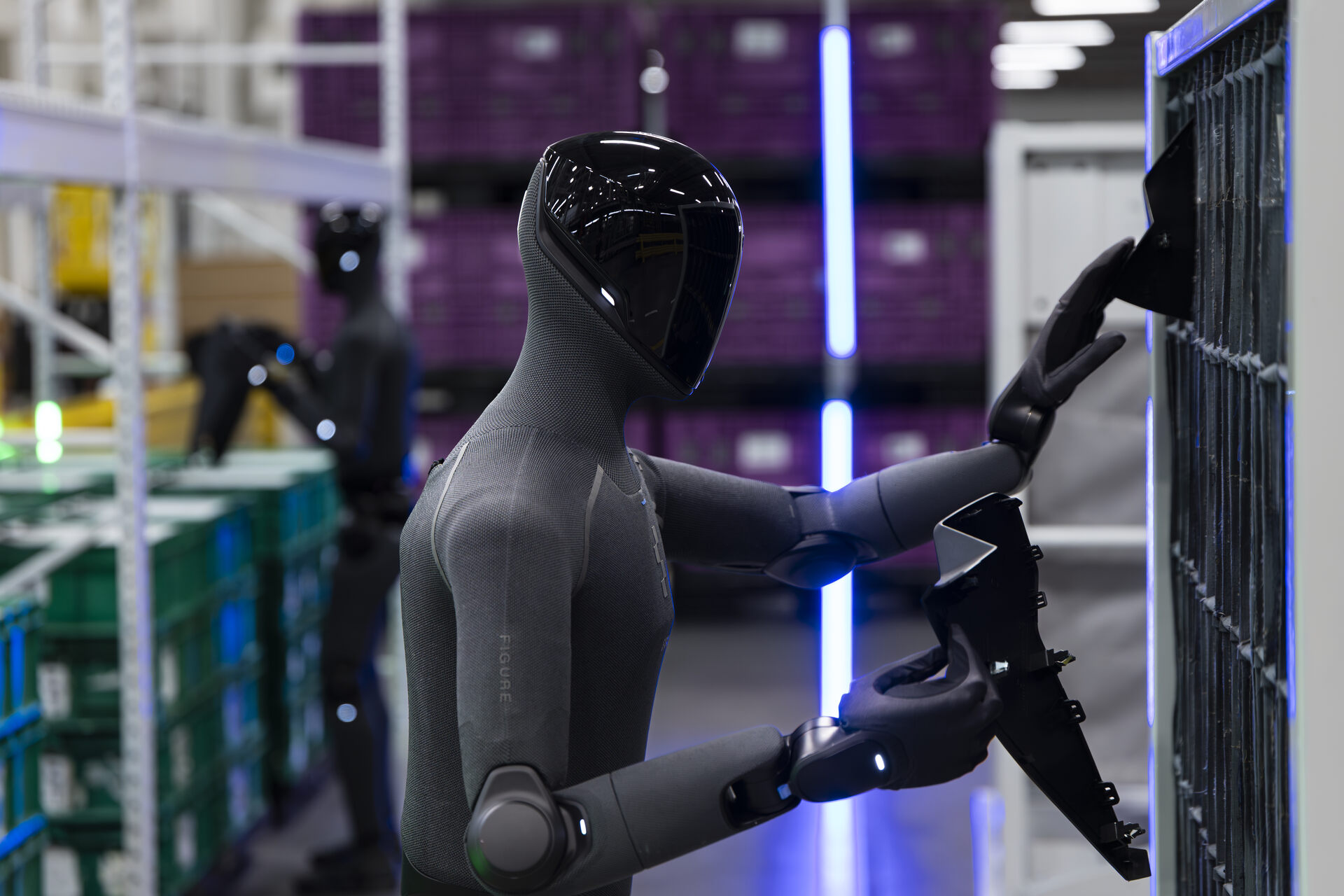
The new job changes the type of difficulty. In the body shop, Figure 02's work was essentially a high-precision picking and placing task, repeated in an already highly automated area. With Figure 03, however, the robot must manage the sequencing: The components arrive in large containers without a perfectly uniform orientation and must be placed in the correct slots on a trolley. This trolley is then transferred to a collection point, from which a automated tugger train or one Smart Transport Robot brings the material to the assembly station, making it available to the workers according to the principle “just in sequence”.
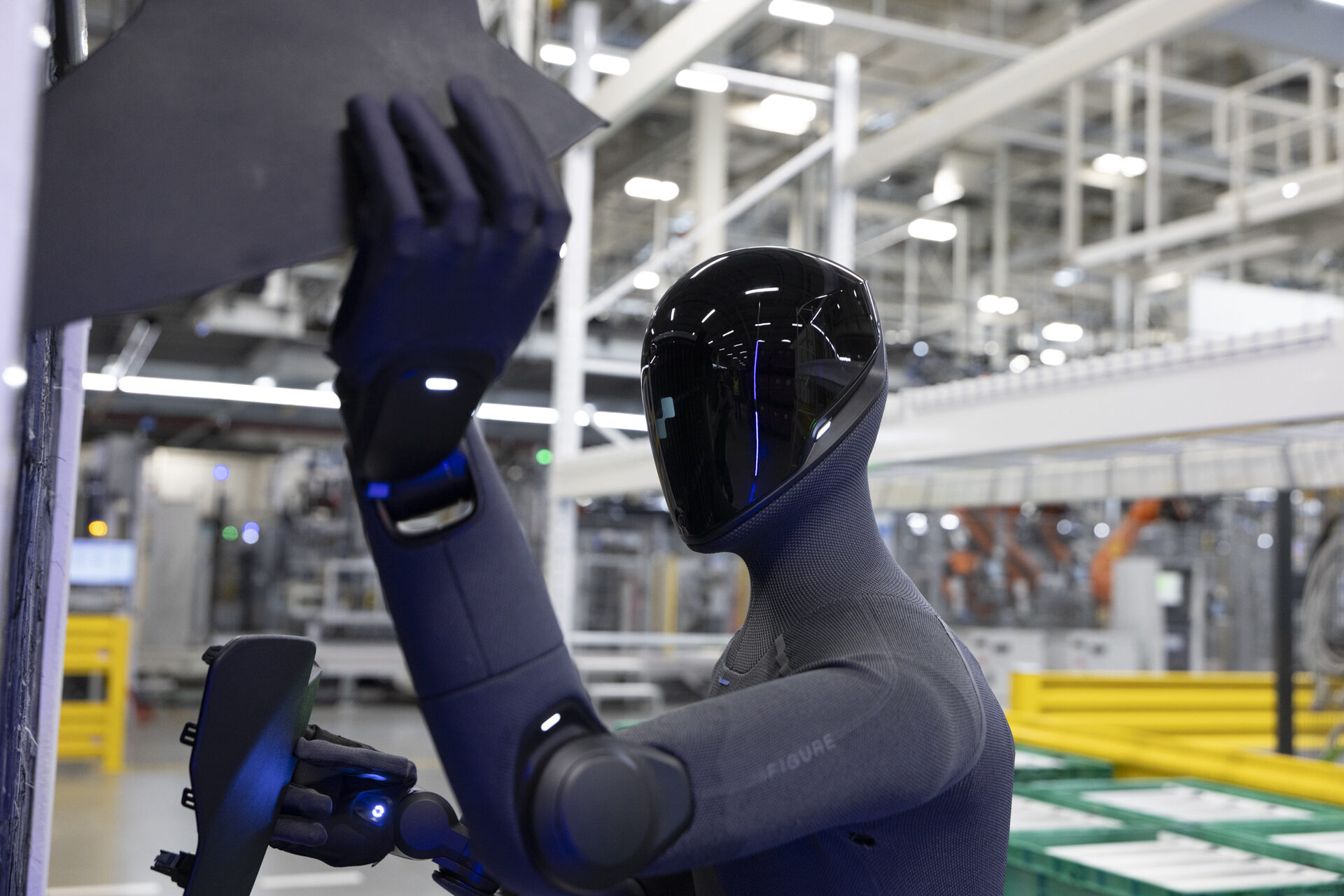
The difference is substantial. A rigid system works well when geometries, times, and coordinates remain stable. In internal logistics, however, a part can be rotated, partially covered, or moved from its intended position. Figure AI describes the new use case as an exercise in loco-manipulation: The humanoid must coordinate its hands, arms, torso, and feet, maintaining balance and reach while grasping thin parts, placing them in the correct compartment, and, when necessary, moving a heavy cart on wheels. Control is entrusted to Helix 02, a proprietary vision-language-action model that translates images and instructions into motor actions, adapting them to observed changes.
Ulrich Wieland, Vice President Production Control and Logistics at BMW Manufacturing, called Spartanburg the place where humanoid robotics entered the group’s daily operational activities.
“After successfully completing a pilot project with Figure 02 in our body shop, we are now looking at using Figure 03 in a logistics sequencing use case.”
The declaration identifies the industrial issue: it's not enough to demonstrate that the robot can perform a task; it must be incorporated into the factory's schedule, safety regulations, and supply systems.
New hands, wireless charging and adaptive control
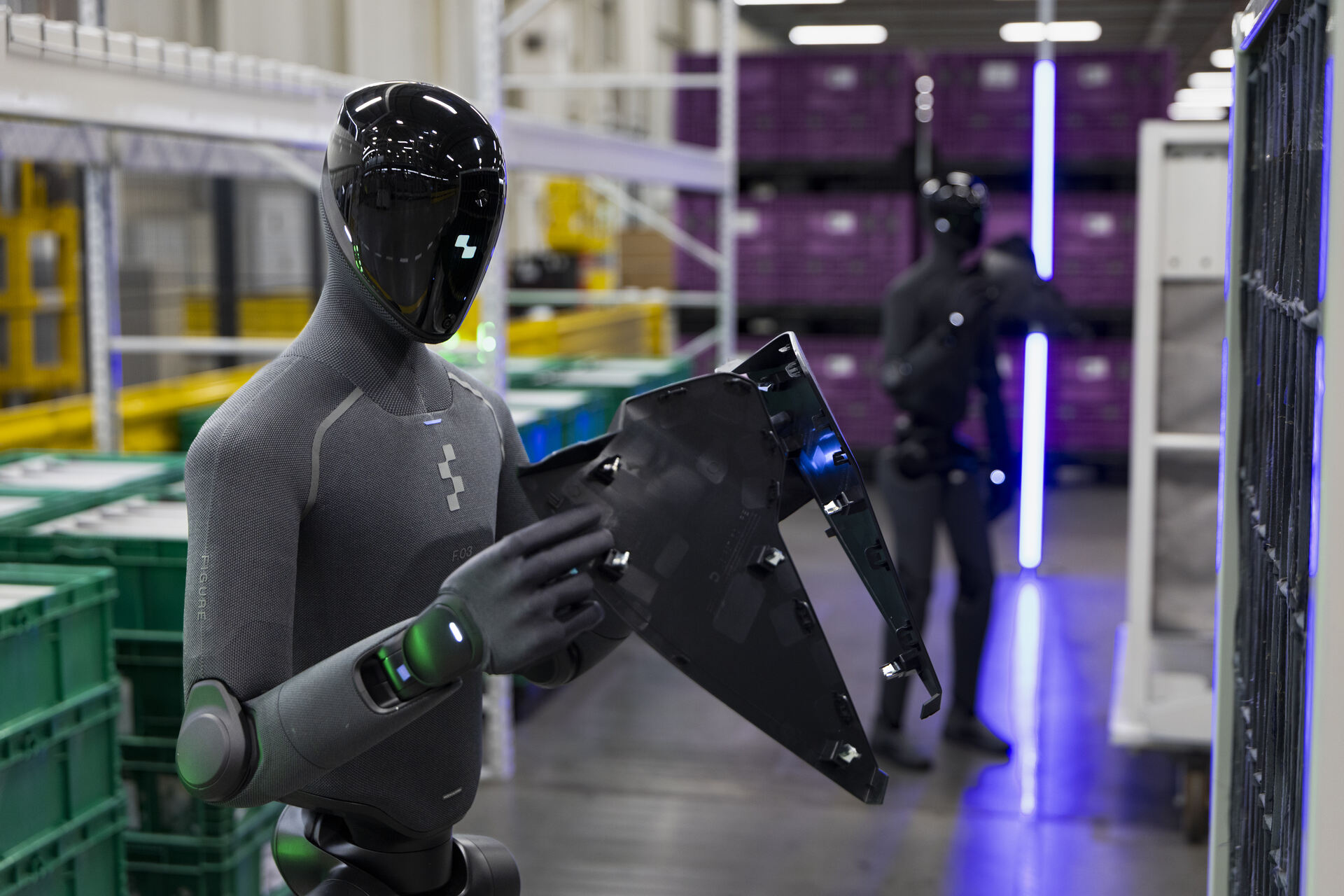
Figure 03 introduces hardware changes aimed at a more continuous presence in the workplace. The source indicates soft components to improve contact safety, wireless charging to increase availability, audio functions for voice communication and updated hands with tactile sensors e cameras in the palmsThe manufacturer also declares a weight of 61 kilograms, a load capacity of 20 kilograms, a nominal autonomy of five hours and a maximum speed of 1,2 meters per secondThese are manufacturer specifications, useful for framing the system but not equivalent, by themselves, to a measure of the performance achievable in each industrial cycle.
Brett Adcock, founder and CEO of Figure AI, especially emphasized the evolution of the physical interface.
The robot introduces several new features to expand its applications. These include soft components designed for increased safety, wireless charging for increased uptime, and audio capabilities for voice communication, as well as improved hands with tactile sensors and palm cameras designed to increase precision and dexterity.
The combination of close-up visual perception and tactile feedback is particularly relevant when parts are thin, overlapping, or difficult to grasp without deforming them.
The potential value of the humanoid, therefore, does not derive from its resemblance to the human body as such, but from the ability to operate in spaces, corridors, and workstations designed for humans, without completely rebuilding the system. This flexibility, however, must be verified against concrete parameters: error rate, cycle time, fault recovery, technical availability, energy consumption, maintenance, and exception management. The Spartanburg project will be significant precisely to the extent that it makes these factors observable, going beyond the success of a single demonstration.
Hall 52 integrates robotics, virtual factory and AI controls
Figure 03 is inserted into the Hall 52, assembly and logistics area where variants of the BMW X3 are produced and where, in the future, the assembly of the Electrified BMW iX5The building has been expanded and updated according to the setting BMW iFACTORYBefore equipment and components arrive on the line, three-dimensional simulations allow you to verify footprints, operating sequences, and interference, reducing the risk of a problem emerging only during physical startup.
La BMW Virtual Factory It is also used to simulate human movements and refine manual operations, with explicit attention to ergonomics. In parallel, the system AIQX, Artificial Intelligence Quality Next, combines cameras and sensors for visual and acoustic inspections, providing feedback to workers via connected devices. The presence of the humanoid should therefore be viewed as part of a broader architecture, in which virtual models, line data, autonomous mobile vehicles, and operators share information on the production status.
This is where the digital transformation It takes on an organizational dimension. The introduction of a learning robot isn't just about purchasing a machine: it requires communication standards, industrial cybersecurity, clear responsibilities in the event of a shutdown, staff training, and procedures for validating software updates. BMW reported that, even in the Figure 02 project, IT infrastructure, occupational safety, process management, and department logistics functions were involved from the earliest stages. Integration occurred through standardized interfaces in the BMW Smart Robotics environment.
The German group is also extending its experimentation beyond Spartanburg. In 2026, it announced in Leipzig a project with Hexagon's humanoid AEON and the creation of a Center of Competence for Physical AI in Production, responsible for assessing the maturity, industrialization, and transferability of the various systems. This multi-vendor approach suggests that the goal is not to be tied to a single model, but to build common criteria for selecting applications, partners, and levels of autonomy.
For manufacturing companies, the most useful lesson concerns methodology. Humanoid robots appear to be finding their place not where traditional automation is already optimal, but rather in variable, monotonous, or arduous tasks that today require continuous adaptation. Their viability will depend on their ability to sustain real shifts, maintain predictable performance, and integrate with people and systems without creating new bottlenecks. In Spartanburg, the transition from Figure 02 to Figure 03 now presents a more severe test: not just repeating a movement, but interpreting an imperfect environment and contributing to the smoothness of the entire logistics flow.
Inside BMW's US factory: Figure 03 humanoid robot at work in logistics
Here are three insights that might interest you:
How the BMW Group is bringing physical AI to its Leipzig plant
Photo Gallery: The BMW Group's Physical AI in the Factory of the Future
This is how the Atlas robot can already work and interact with us