


 SEARCH


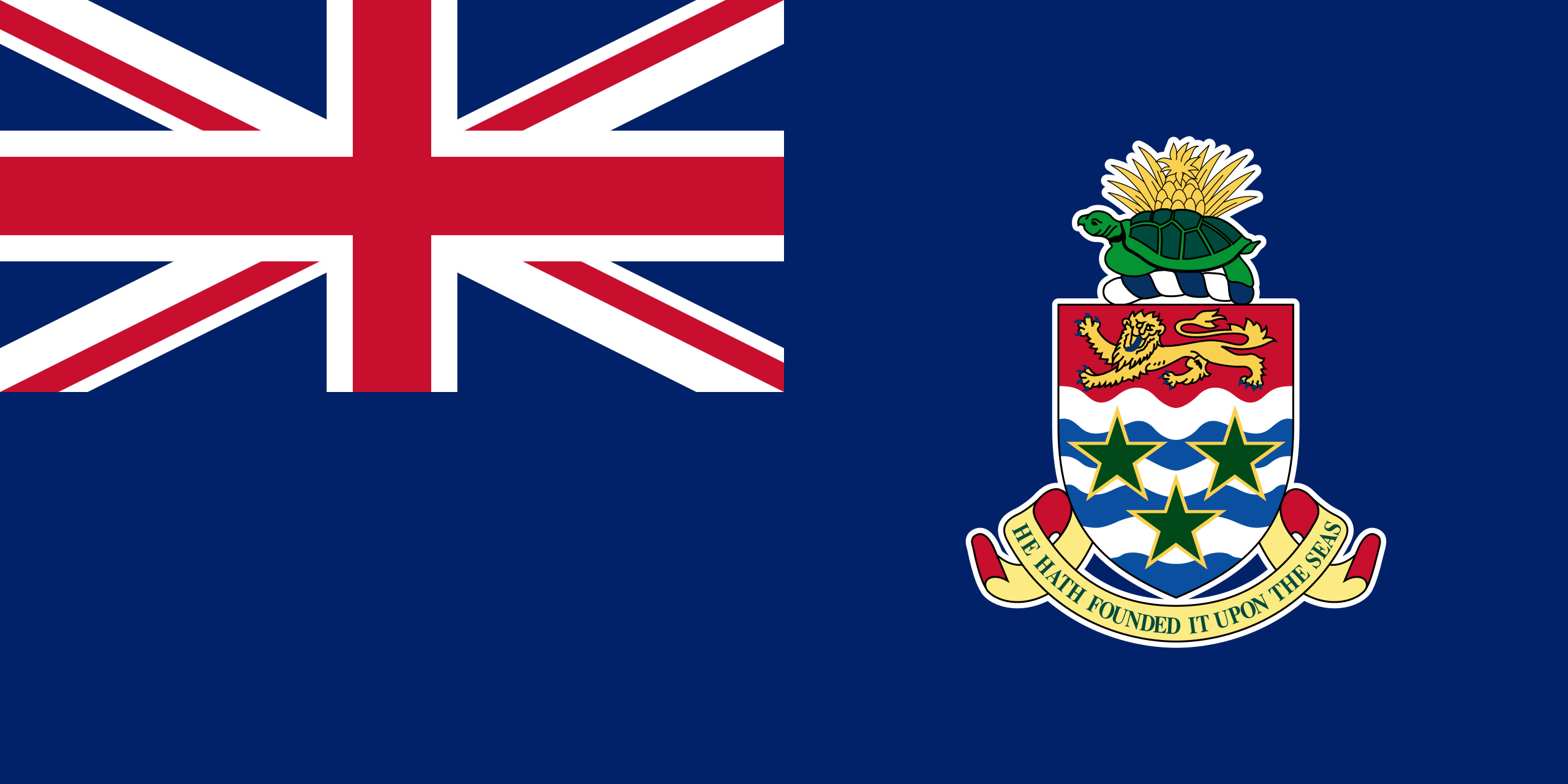
CIRI translates risk, infrastructure and investment into over 60 indicators to guide public decisions in the British Caribbean archipelago.

For a small Caribbean archipelago, the climate resilience It's not an abstract concept. It means understanding whether new infrastructure will continue to function after extreme events, how well an investment will protect communities and economic activities, whether essential networks are becoming less vulnerable, and what role natural ecosystems can play in defending the land. Isole Cayman are trying to translate these questions into data through the Cayman Islands Resilience Index (CIRI), a national digital platform designed to measure resilience and feed it directly into public decisions and investments.
The project has reached a decisive stage on 13 May 2026, when representatives from over twenty government ministries and departments, along with other stakeholders, gathered at theIntergenerational Hub of George Town to test the prototype. It wasn't just a demonstration: participants entered data, interpreted results, and tested how the index could be used to assess the contribution of individual projects to the Cayman Islands' overall resilience.
Behind the interface there is a complex methodological question: How do we assign a measurable value to a territory's ability to prepare, adapt, and react to climate risks? The project group has identified more than 60 indicators, intended both to photograph existing conditions and to assess how infrastructure, policies and investments can strengthen them.
The result could transform a principle often relied on qualitative assessments into an operational tool. Before implementing a project, the administration could have a shared framework to assess its impact, not only economic or environmental, but also the islands' ability to withstand future shocks.

Six dimensions to understand how prepared a territory is
The CIRI derives directly from the Climate Change Policy 2024-2050 of the Cayman Islands and is also aligned with the National Energy Policy 2024-2045The index organizes resilience around six strategic areas: economic strength, a livable built environment, healthy and resilient communities, resilient infrastructure networks, harmony with nature, and integration and coordination.
It is precisely this multidimensional approach that distinguishes the project from a simple environmental dashboardA region may have energy-efficient buildings and remain vulnerable if critical infrastructure is fragile; it may protect part of its coastline but lack sufficient institutional coordination mechanisms; or it may invest in adaptation without considering the effects on the most exposed communities.
The platform must therefore connect economy, infrastructure, environment, society and administrative capacityThe Government's stated objective is to move from a predominantly reactive response to risks to evidence-based, preventive planning, using shared data and criteria to understand where investments can produce the greatest benefit.
This principle is particularly relevant for small island communities. Rising temperatures, coastal impacts, increased storm intensity, and pressure on natural resources can rapidly spread from one sector to another. Damage to an essential network can become an economic problem; the loss of natural protections can increase the exposure of settlements; a planning decision can have consequences that will last decades.
CIRI therefore tries to introduce a sort of common language of resilience, through which different administrations can evaluate their decisions with compatible parameters.

From the old “scorecard” to an index built together with users
The project was born under another name. The National Resilience Scorecard It was formally launched in October 2025, after its operational launch in July of that year, as the Cayman Islands' first online tool to assess the potential impact of public and private investments on national resilience. The program is funded by theEuropean Union through Green Overseas Programme, implemented by French expertise, while the development involves the Ministry of Health, Environment and Sustainability and specialists from Integrated Risk Management Associates (IRMA).
The original plan included eleven months of work divided into four phases, including the construction of the tool and the online platform, experimentation with ministries and the training necessary to integrate its use in public institutions.
Before writing the software, the group conducted a comparative study. This included an inception report, a comparative study of similar tools used around the world, questionnaires, focus groups, and consultations with public and non-governmental stakeholders. The aim is to prevent the platform from being simply imported from other contexts and instead adapt it to the characteristics of the three islands.
The February 11, 2026 Over twenty ministries, departments, and non-governmental stakeholders participated in a design workshop at the Intergenerational Hub. During the day, indicators, risks, maintenance methods, and potential critical issues with the tool were discussed. A new name was also chosen: Cayman Islands Resilience Index, abbreviated to CANDLE.
The choice of name signals a conceptual shift. A "scorecard" is more reminiscent of a report card; an index, on the other hand, aims to construct a measure that can be updated, compared, and used over time.


In May the prototype moves from meetings to practical testing
Three months after the design workshop, CIRI entered the most concrete phase. 13 May 2026 institutional users were able to experiment with the prototype and theInvestment Guidance Tool, entering information and observing how the system returned the results.
Marilise Turnbull, project manager for IRMA, explained the value of this step by underlining how difficult it is to operationalize a term like resilience:
“Resilience is a bit of an abstract concept.”
Making indicators visible allows users to question current conditions and where improvements can be made.
The test also helps identify far less theoretical issues: an indicator must be understandable, supported by available data, updatable, and stable enough to allow comparisons over time. A sophisticated platform loses much of its value when the necessary information is too expensive to collect or depends on methodologies that differ from one administration to another.
Experimentation with those who will actually use CIRI therefore takes on an importance comparable to IT development. The Government specifies that the feedback collected during the pilot will be used to make the tool user-friendly, measurable and effective in the long term.
After the pilot and training phase, the program includes the refinement of the platform, the preparation of a manual and the formal transfer of the system to the Government of the Cayman Islands, who will have to manage it over time.

Climate data and investments end up on the same platform
The most interesting aspect of CIRI is probably the connection between measuring resilience and investment decisions.
When the project was still called the National Resilience Scorecard, the Government had explicitly stated three objectives: to improve the ability to prioritize resilience projects, to provide greater clarity to investors on opportunities consistent with national objectives, and to make the territory's progress in climate adaptation more transparent.
This means that the index shouldn't simply describe the state of the Cayman Islands. It should also help answer a forward-looking question: Does a certain investment really make the territory more resilient?
The difference is substantial. A traditional monitoring system collects indicators and shows how they change over time. A decision support tool, on the other hand, seeks to use that information before a decision is made, comparing the project with previously identified objectives and vulnerabilities.
CIRI could therefore enter into the evaluation of infrastructure, public programs and private investments, highlighting strengths, gaps, or potential contributions to national resilience. The platform is designed not only for the government, but also for investors and other stakeholders.
There is also a financial dimension. The Minister for Health, Environment and Sustainability, Katherine Ebanks-Wilks, explicitly linked the tool to the ability to access the international climate finance, arguing that a data-driven platform can help the Government better plan projects and demonstrate how investments are aligned with strategic objectives.
For a small area, being able to document needs, results, and expected impacts in a structured manner can be an advantage in accessing capital for adaptation.

Measuring resilience also carries the risk of simplifying it
However, transforming a complex problem into over sixty indicators brings with it an inevitable difficulty: what is measurable does not necessarily coincide with everything that is important.
The project itself seems to recognize the problem. During the February workshop, participants openly discussed what should be measured, what risks to include, how to maintain the platform, and what critical issues might emerge.
A quantitative indicator can measure the robustness of a network, the exposure of an infrastructure, or certain environmental parameters. It's more difficult to translate a community's ability to organize during a crisis, inequalities in access to resources, or the indirect effects of an urban planning choice into a number.
Then there is the problem of the weightingIf economy, infrastructure, community, and environment are included in the same index, it is necessary to establish how much each element should impact the result. Changing the weights can alter the overall assessment of a project without changing the project itself.
For this reason the value of the CIRI will depend less on the production of a single score and more on the transparency of the methodology, the quality of the data and the ability to show why a given initiative improves or worsens specific components of resilience.

A digital laboratory that could be of interest to other small islands
The Cayman Islands are not presenting the project solely as a domestic solution. From the outset, the Government and partners have indicated the possibility of the experience becoming a reference for other countries. Overseas Territories and subnational island jurisdictions.
The reason is understandable. Many small territories share structural problems: limited surface area, concentrated infrastructure, dependence on imports, exposure to extreme weather events, and administrative resources inferior to those of large states.
A replicable digital platform would not eliminate these vulnerabilities, but it could offer a common method for identifying, comparing, and linking them to financial decisions.
The project remains however in the pilot and training phase: There are no long-term results yet to demonstrate how much the index will concretely change investment selection or infrastructure design.
This is precisely the next test. After developing the indicators, engaging the administrations, and building the prototype, the Cayman Islands will have to demonstrate that CIRI can be a stable part of decision-making processes rather than becoming just another dashboard consulted only by specialists.
If it works, the innovation won't consist so much in digitizing a series of climate parameters. It will consist in creating a mechanism through which every new decision can also be questioned in terms of future resilience, transforming environmental, infrastructural, social and economic data into a concrete variable of public planning
Here are three insights that might interest you:
In Anegada, solar power reduces diesel's contribution to the microgrid.
In Cape Verde, "smart" water keeps young people on the island
Green technologies and high-tech agriculture: Santa Lucia's turning point


