SEARCH


Every year, thanks to their pee, large cetaceans transport tons of nutrients to tropical ecosystems: a phenomenon that shapes the oceans
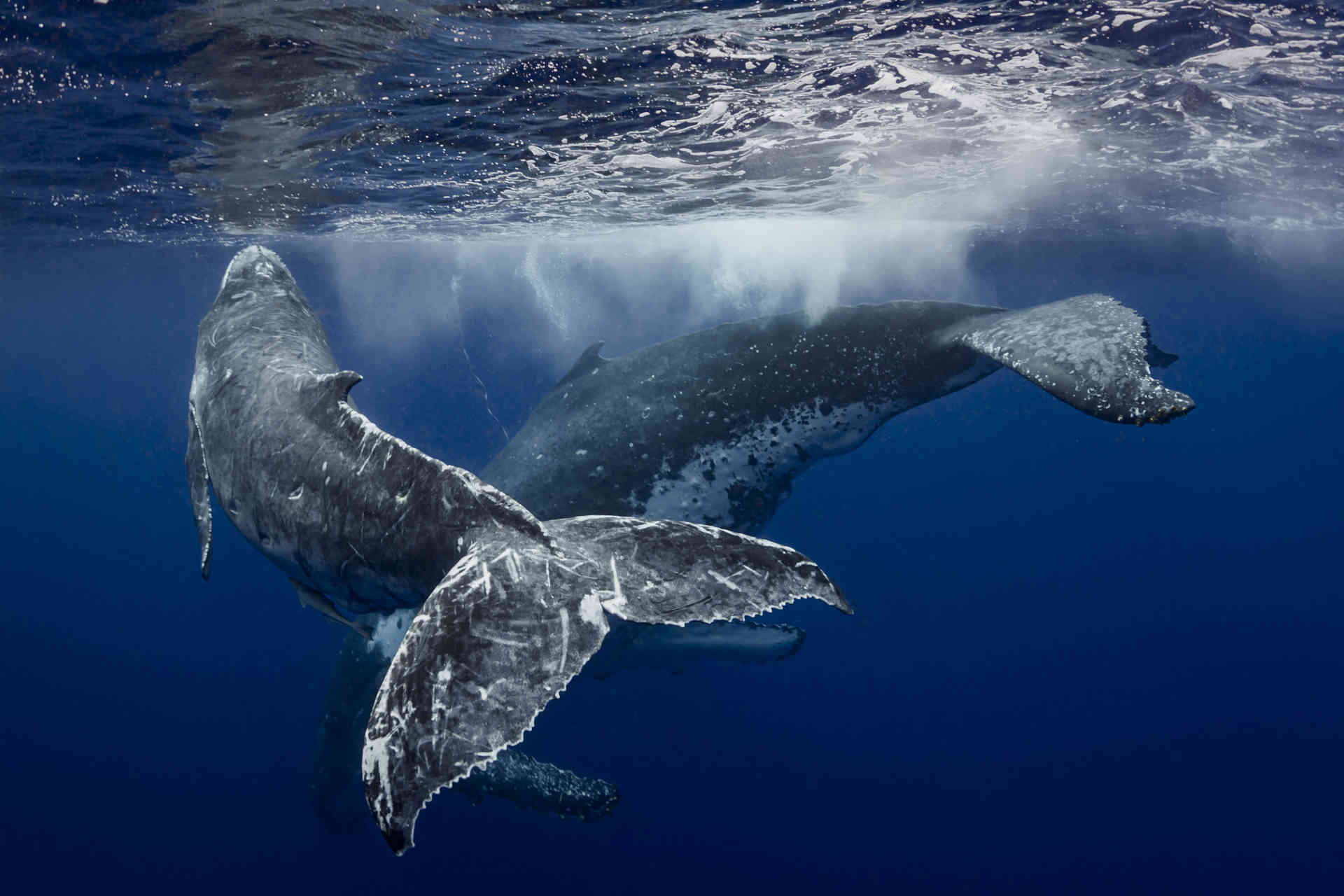
Le whale have only just begun to recover from dramatic population declines due to centuries of overhunting. And scientists have begun to realize how important they are to the health of the oceans and the planet.
Several studies have already shown that these enormous marine mammals absorb large quantities of CO2, counteracting the increase in global temperatures, and that fuel ocean life transporting nutrients from the ocean floor to the surface in their feces, in what researchers call the “whale pump.”
Now, new research shows that whales move tons of nutrients even at thousands of miles away, carrying about 4.000 tonnes of nitrogen each year to nutrient-poor coastal areas of the tropics – thanks to their pee.
Whales: The True Engineers of the Marine Ecosystem
In 2010, scientists discovered that whales, by feeding at depth and shedding their feces at the surface, move tons of nutrients from the cold seabed to warmer areas of the ocean (a phenomenon known as “whale pump”). A few years later, the same researchers from the University of Vermont, led by the biologist Joe Rogan, they demonstrated that the recovery of whale populations, decimated by centuries of industrial fishing, can help protect marine ecosystems from existential threats such as rising temperatures and acidification of waters.
In 2023, one studio led by the University of Alaska Southeast has suggested that an increase in the number of whales globally may actively contribute to theCO2 elimination from the atmosphere. A whale can capture on average 33 tons of carbon dioxide during its life, dragging them with it to the bottom of the ocean, where its enormous carcass becomes food for the ecosystems of the most extreme depths. To make a quick comparison with trees, to which we traditionally assign the role of "carbon sinks", just think that a live oak, in 500 years of life, captures about 12 tons of carbon dioxide. And it is one of the most efficient trees in storing carbon.
Thanks to their size and longevity, these large cetaceans support life on the planet by improving the predictability and stability of marine ecosystems and contributing to the reduction of greenhouse gases in the atmosphere.
Now that populations are finally beginning to recover from the terrible decline caused by decades of unregulated industrial fishing, the role of whales for the health of the planet is becoming increasingly clear. And scientists say we can expect the recovery of large populations of cetaceans to have an impact on the very structure and functioning of the world's oceans.
Whale Urine Nourishes Tropical Ecosystems: Study
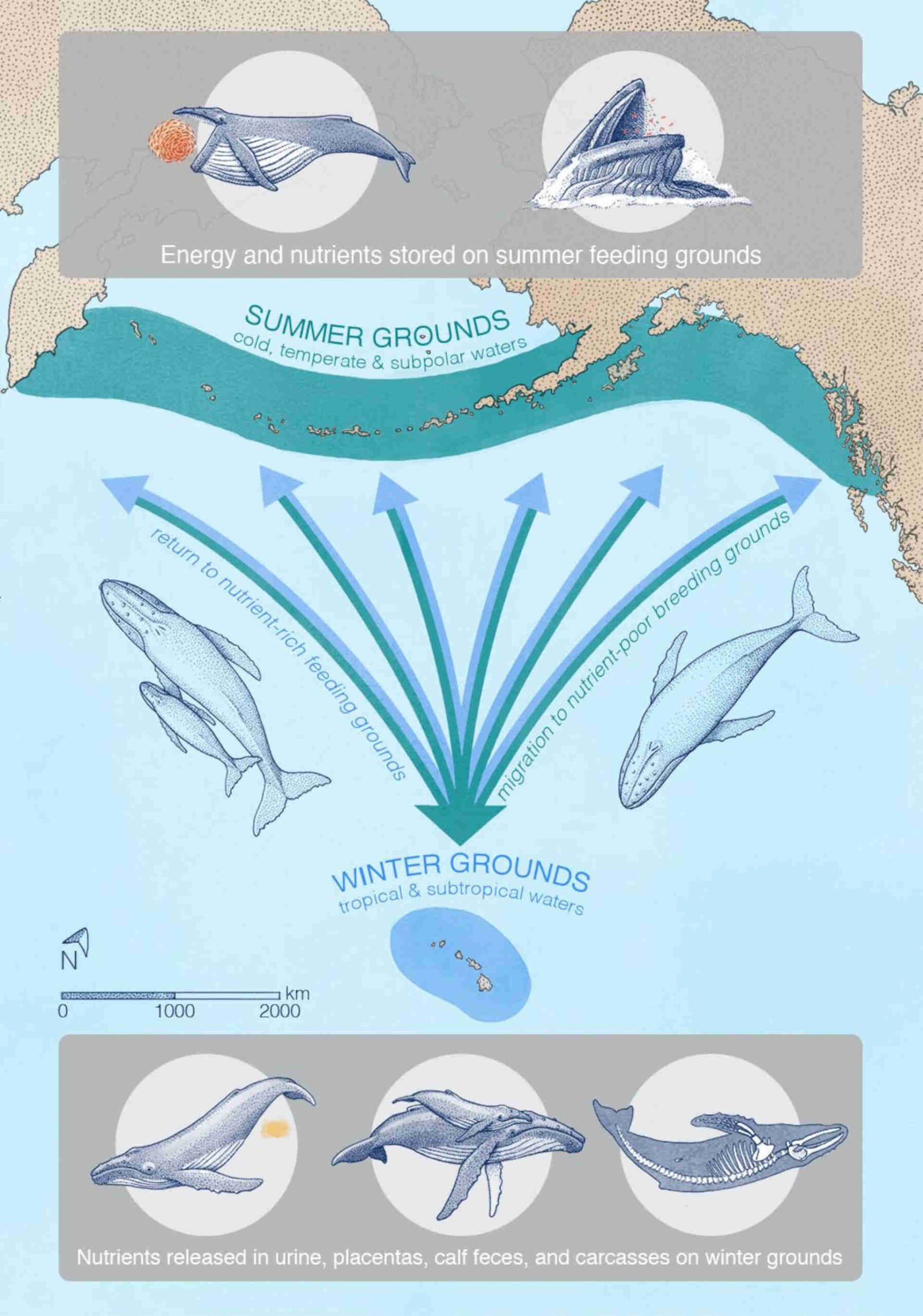
A study recently published in the journal Kind Communication reveals that the Whales' contribution to the health of the sea is even more crucial. These animals, which include the largest species ever to live on the planet, transport tons of nutrients thousands of kilometers each year, from Alaska to Hawaii, sustaining the most nutrient-poor tropical and subtropical ecosystems.
Whales therefore do not just move tons of nutrients from the depths to the surface, but also transport them thousands of kilometers, carrying them with them on their very long migrations and releasing them mainly in the form of urine. As scientists explain, the skin, carcasses, feces of puppies and their placentas also contribute to this transfer of nutrients, but it is mainly pee that transports these substances.
Nutrients come from the cold waters where the whales feed and end up in the coastal waters of the tropics, where cetaceans breed. For example, thousands of humpback whales migrate each year from the Gulf of Alaska to Hawaii. There, in the Hawaiian Islands Humpback Whale National Marine Sanctuary, the whales' nutrient intake—tons of urine, skin, dead bodies, and feces—is roughly the double that transported by physical forces local, according to the estimates of the team of scientists.
According to the new study, large whales transport 45.000 tons of biomass each year and approximately 4.000 tons of nitrogen across the world's oceans, bringing to coastal areas of the tropics nutritious nutrients that support the rich ecosystems that provide food for sharks and other fish. Scientists call it “the conveyor belt of the great whales".
From the North Sea to the Tropics: The Conveyor Belt of the Great Whales
In summer, adult whales feed on high latitudes (for example in Alaska, Iceland and Antarctica) and gain weight by feeding on krill and herring. According to recent research, humpback whales in the North Pacific gain about 13 kilos per day in spring, summer and autumn. They need this energy for an extraordinary journey: the baleen whales, in fact, migrate thousands of kilometres towards the winter breeding areas, in the tropics, without eating.
Le gray whales, for example, travel more than 10 kilometers between feeding grounds off Russia and breeding grounds along Baja California. humpback whales Southern Hemisphere whales migrate more than 8 kilometers from Antarctica to the coast of Costa Rica, where they lose about 90 kilos per day, leaving large quantities of nitrogen-rich urea in the water. A study conducted in Iceland suggests that fin whales, during foraging periods, produce more than 900 liters of urine per day.
How do you explain Joe Rogan, a biologist at Vermont University and author of the new study,
“We call it the ‘great whale conveyor belt,’ but you could also think of it as a funnel, because whales feed over large areas, but they need to be in a relatively small space to find a mate, reproduce, and give birth. At first, the calves don’t have the energy to travel long distances like their mothers.”
This means that nutrients scattered across the vast ocean are concentrated in much smaller coastal and coral ecosystems, "as if you were collecting leaves to make compost for the garden,” says Roman.
Life on another scale: the impact of large cetaceans on the planet
Of all the mammals in the world, whales are those that make the longest migrations. But that is not the only reason why they are able to shape ecosystems. As explained Andrew Pershing, oceanographer at Climate Central, one of the authors of the study,
“Because of their size, whales are able to do things that no other animal can do. They live life on another scale.”
Therefore, the scientist continues, they really have a impact on a planetary scale. Discovering that nutrients come from these migrating animals, rather than a river, changes the way we think about ocean ecosystems.
As Rogan explains, if plants and phytoplankton, which absorb carbon dioxide and release oxygen, are the planet's lungs, then whales and other animals are its circulatory system:
“Seabirds transport nitrogen and phosphorus from the ocean to the land in their poop, increasing the density of plants on islands. Animals make up the circulatory system of the planet, and whales are the extreme example,”
concludes the scientist.
Here are three insights that might interest you:
The ocean's ambassador whales at the UN: the Maori proposal
Deep Sea Mining, the gold rush that threatens whales
The ocean's memory is longer than expected: study