


 SEARCH


From Czechia to Georgia via Liberland, a reflection on personal autonomy, global mobility, individual responsibility, and new institutions.

How much of our freedom actually depends on external circumstances and how much, instead, on the decisions we choose to make? Samuela DavidovaThe answer lies not only in laws, political systems, or economic opportunities, but above all in the individual's ability to recognize available alternatives and transform them into concrete actions. It's a perspective that runs through his professional career, from communications to international relations, from entrepreneurship to experimenting with new institutional models.
Originally from the Czech Republic and today established in Tbilisi, in GeorgiaDavidova has developed a reflection on freedom that combines philosophy, personal responsibility, and observation of differences between national legal systems. Her approach stems from the belief that many limitations considered inevitable are actually the result of cultural conditioning, entrenched habits, and internalized expectations.
This setting has found its own identity in The Freeist, the philosophical and editorial project through which she promotes a conception of freedom centered on the individual. Unlike libertarianism understood exclusively in political or economic terms, Samuela considers the relationship between personal autonomy, responsibility and ability to act, without denying the existence of constraints imposed by institutions and material conditions.
As he explains in a long chat with Innovando.News, the fundamental principle consists in taking full responsibility for one's own existence, despite the complexity of external circumstances. A position that is summarized in a particularly significant reflection:
"We are born free, and for some reason, we often forget that we are. The way out, therefore, is to act."
One of the central aspects of his thought concerns the sovereignty over one's own timeIn a society characterized by constant connectivity, professional commitments, and productivity as a benchmark for success, Davidova invites us to question who actually organizes our days. Freedom doesn't necessarily mean reducing working hours, but rather the ability to consciously choose how to spend them, which relationships to cultivate, and which priorities to pursue.
The choice to live in Georgia represents a concrete application of this philosophy. Davidova appreciates its administrative simplicity, the ease of starting economic activities and a tax regime that, for certain categories of small entrepreneurs, provides for a tax of1 percent of turnoverThe Georgian experience allowed her to directly compare different models of relationships between citizens, businesses and public administration, but also to recognize how much the choice of a country depends on personal and cultural needs that are not always predictable.
A Tbilisi It also promoted professional meetings and networking breakfasts, bringing together entrepreneurs, international professionals, and individuals interested in voluntary collaboration. The format favored small groups, in-depth conversations, and relationships built around shared values. According to Davidova, trust arises primarily from genuine interest in others and a willingness to think long-term, rather than from the pursuit of immediate commercial advantages.
Another dimension of its activity concerns the jurisdictional mobility and banking diversificationThrough services related to access to Georgian financial institutions, Samuela concretely explores the opportunities offered by the ability to operate across different regulatory systems. This area raises questions about the actual accessibility of freedom of movement, which is conditioned by citizenship, financial resources, skills, and family circumstances. Her approach attributes a crucial role to mindsets and the ability to acquire new skills, while acknowledging differences in starting conditions.
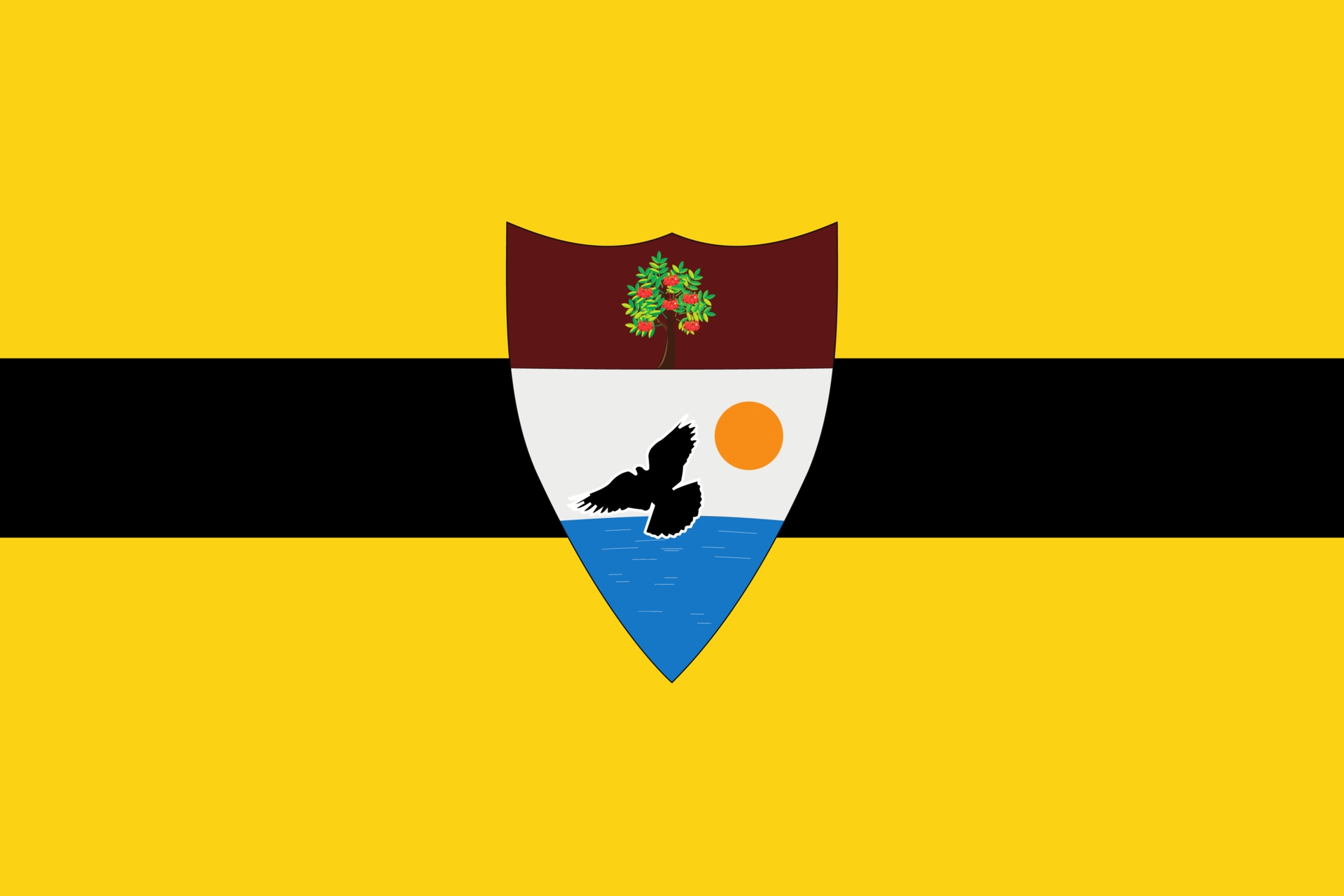
The relationship between individual freedom and institutional innovation also emerges from his involvement in freeland, the self-proclaimed micronation in 2015 on a disputed territory along the Danube, between Croatia and Serbia, and without international recognition as a sovereign state. Samuela Davidova participated in the communication and international relations activities of the project, which proposes a governance model inspired by libertarianism, voluntary membership and the use of Blockchain.
This experimentation also extends to thespatial economyIn his view, small political entities could facilitate the entry of new operators into the sector through innovative regulatory frameworks and flexible corporate instruments, without necessarily developing satellite launch infrastructure. This perspective, however, must address the issues of legal recognition, international responsibility, and the regulation of extraterrestrial activities.
The common thread remains the belief that technological innovation, international mobility and new organizational models They can expand individual possibilities, but no external transformation can replace personal responsibility. The Czech entrepreneur therefore avoids entrusting the future of freedom to geopolitical forecasts or the success of a particular technology, preferring to focus on the choices each individual can make in the present.
With Samuela Davidova we have explored the philosophy of The Freeist, control of one's time, Georgia's entrepreneurial opportunities, building international communities, the limits of jurisdictional mobility and the role of freeland and blockchain in institutional experimentation and spatial economics, trying to understand how freedom can be transformed from an abstract principle into a concrete capacity for choice.


Your career spans communications, international relations, entrepreneurship, philosophy, and institutional innovation. What's the common thread that unites these seemingly diverse experiences?
I hadn't planned a single path, but looking back, I realize it all revolved around a single question. For four years, I've been presenting opportunities to expand individual freedom, and after speaking to hundreds of people around the world and speaking at conferences on several continents, I've realized that the problem isn't a lack of opportunity. There's something holding us back. Some of these limitations are external, others are internal. The areas of activity have changed, but the question has remained the same: what prevents us from fully realizing our lives, and what can we do about it? Simply put, the fundamental principle is to take full responsibility for one's existence, despite complexity and external forces, without resigning oneself to suffering. My values are freedom, growth, acceptance, and responsibility. Seeking to understand individual freedom, as well as living it concretely, has changed me too. I've become more compassionate and less stoic.
Through "The Freeist," you promote a conception of freedom that begins with the individual. How would you define this philosophy, and how does it differ from libertarianism understood in strictly political or economic terms?
Many great people have written and spoken about freedom on a theoretical, political, or economic level, generally referring to states. When we talk about freedom, the first association is often with rights, laws, and authorizations, as if freedom were a contract with an intermediary who decides whether to grant it to us or not. The Freeist starts from a different assumption. In our essence, we are born free. Later, we internalize the conditioning of the place and culture in which we grow up, but what we have learned through conditioning can also be unlearned. This is why I consider freedom on a personal level, where it takes on a subjective character, because each of us starts from our own initial situation. Some limitations are external, but many are internal: mountains that we have built ourselves and that, in reality, do not exist. It is much more convenient to argue that freedom is something we must fight for or wait for authorization. The Freeist has stopped waiting for someone's permission. If I want a certain right, I can move to a place where it is recognized, instead of fighting against an institution that operates on a global scale. much bigger than mine.”

He places considerable importance on the concept of "sovereignty over one's time." In a society characterized by constant connectivity, productivity demands, and professional expectations, what does it really mean to be master of one's own time?
“The peculiarity of time is that, if we don't organize it, a huge space is created for someone else to organize it for us. We are born within a pre-established structure, with holidays assigned to specific dates and anniversaries that we are expected to celebrate. This is why I like to ask: who owns your time? Your boss, your client, your government, social media? Who organizes your schedule, you or others? Does the clock follow your rhythm, or do you wake up because an alarm goes off, to be at a place and time set by someone else? It's not about going or not going somewhere. It's about choosing how to spend our time and with whom. The answers to these questions are simply information. They can show us the choices we make during the day and make us understand that it might be time to take back control, even when we had accepted those appointments and commitments in the past. The same goes for productivity. Working sixteen-hour days generally means that we are running away from something, not that we are working efficiently. There is something very It's interesting to work effectively for four or six hours, while maintaining a life filled with friends, family, and time spent in the places we love. Above all, we own our schedule and our time, even if we sometimes forget it.
You chose to live and work in Georgia, highlighting its simple administration, tax system, and openness to new entrepreneurial initiatives. What opportunities does the country offer international entrepreneurs, and what challenges are most frequently overlooked?
Georgia is my favorite country to live in. I became a tax resident because I chose to settle here, and I appreciate the fact that there's a 1 percent tax. I can file my tax return myself in a minute and pay 1 percent on my business, without mandatory social and health insurance. This shocked many people accustomed to Central European systems. It's also easy to socialize, there are many foreigners, communicating in English is simple, and doing business is easy. Many transactions can be carried out remotely via power of attorney, from purchasing real estate to opening a bank account. Georgia is one of the very last countries where it's legally possible to open a premium bank account without being a resident. The difficulty people underestimate is that different countries work differently for each individual. It's such a subjective issue that some places can provoke completely unexpected negative reactions, and you can't find out without visiting them yourself. Therefore, asking others whether it's worth moving to a certain place doesn't make much sense. The best solution is to go there and see for yourself.

Through networking breakfasts and other initiatives in Tbilisi, you've helped build professional communities. What transforms a network of contacts into a genuine ecosystem based on trust and collaboration?
“I used to organize networking breakfasts, although I no longer do so. For me, it's less about offering value before asking for something in return and more about personally creating what I'd like to see in the world. This automatically attracts people who share similar values. There were only fifteen places available, and the meetings were mostly attended by foreigners. I'd choose a keynote speaker, and the event took the form of a live podcast in front of the other attendees. It was really interesting, and we could delve deeply into the topics, especially when other industry experts were present. I was surrounded by like-minded people who shared the value of voluntary connections. They were independent individuals who didn't need external motivation. They knew how to organize their time and recognized its value. This meant having people in the same room who were genuinely interested in participating.”
Your work brings you into contact with people, businesses, and organizations operating in diverse cultures and legal systems. What skills do you consider essential for building trusting relationships and lasting international collaborations in an increasingly fragmented world?
The first is having a genuine interest in other people and what they need. Maybe we can really help them, and I believe that this approach can yield extraordinary results. The second is the ability to think long-term. It's not about trying to solve something tomorrow, but about thinking long-term.


The ability to choose between different countries, tax systems, banks, and jurisdictions can expand personal freedom, but it isn't equally accessible to everyone. Is there a risk that jurisdictional mobility will become a privilege reserved for the wealthiest individuals with greater freedom of movement?
Being rich and highly mobile are two completely different things. You don't need a lot of money to move, because it's primarily a question of mindset, and especially a rigid mindset. You can get used to living very comfortably in an extremely expensive place, and then moving has nothing to do with money. Of course, the starting conditions are different. There are many places on Earth where it's not even possible to make a normal international money transfer, yet some people manage to escape these systems. On the other hand, we've never lived in an era where it's so easy for anyone in the world to change their situation, even starting from extreme poverty. It's never been so easy to earn money from scratch, and the same goes for access to education. Things are getting easier and easier. Moving from one place to another is a skill that can be learned. The ability to choose between countries and tax systems is first and foremost a mindset we must acquire, along with the willingness to take responsibility for our lives and improve our conditions. If we are chronically unhappy in "If you live in a particular place, there's a very good chance there's a better one. There are so many places on Earth. If we spend most of our days complaining about the conditions we live in in one of them, there's no point in continuing to do so."
Its activities combine philosophical reflection, concrete projects, and professional services. How can an abstract principle like freedom be translated into tangible decisions and initiatives, without reducing it to a marketing slogan?
“The book, of course, is precisely about concrete decisions and initiatives. Freedom is, first and foremost, action. We are born free, and for some reason, we often forget it. The way out, therefore, is to take action, to abandon the victim position, and to overcome the mountains we have built ourselves. I could have stayed in Central Europe and continued to complain. Instead, I transformed my frustration into energy to move to a place where I wouldn't waste my energy complaining, but could use it to fully realize my life. Later, I started helping other people open premium bank accounts remotely, because I had already personally explored the available options. Perhaps it wouldn't even be necessary to start such a business. Realizing one's life through hobbies, building community, or family would have the same meaning. The value created and the possibility of living a happier life would be the same. We can look outside for those responsible for our problems, or we can get down to business and actually achieve something.”


Its activities also include Liberland's international strategy and its space program. What concrete contribution can an emerging political entity make to space research and the space economy, sectors traditionally dominated by established states and large corporations?
“Fortunately, this is one of the things that are actually changing in the 21st century. I believe that one of the greatest contributions a country with an innovative legal system can make is precisely this: the regulatory framework. Liberland is the first blockchain-based meritocracy; it embodies the libertarian perspective and is founded on voluntary membership. It embodies many values related to freedom. Such a system can lower the barriers to entry for smaller countries and companies, allowing them to access the market and compete with more conservative companies and the large states that have dominated the sector. Thanks to modern technologies and blockchain, the industry can become much more diverse. We won't launch a rocket from Liberland tomorrow, or from any other small country. But it is possible to establish a limited liability company there, which will be subject to its laws. This is where small states can make a difference by offering a business-friendly legal framework. They are also more flexible. And it's not just about space. We should first make a difference on Earth, where we already do, and we can do it in space too.”
Looking ahead to the next decade, which technological, social, or geopolitical development do you think could most contribute to expanding individual freedom, and which, instead, could most subtly or dangerously limit it?
I don't play the prediction game, because it's not really possible to predict what will happen or how likely it is, and it would be irrelevant anyway. If something very serious were to happen, the probability percentage wouldn't matter at all. There are many things that could limit our freedom, but we ourselves are the ones who limit it. We shouldn't wait for something or someone to do it for us. It's questionable how much we can influence these phenomena, and we probably can't change large systems like a state or a market. Of course, we depend on them, but hoping excessively that they will change is nothing but a hope. Voting is more or less the same thing, because it means putting your vision of truth in competition with that of millions of people who don't share our values. So the most we can do, not just in the next decade but throughout our entire existence, is to embrace our individual freedom and realize it fully. There is no one in the world who can do more than we can do ourselves to achieve this goal. I hope this is a good conclusion to our interview. Whatever makes people feel limited, I hope they can make it as irrelevant to one's life as possible and find, in the world and within oneself, the conditions necessary to achieve what one wishes to achieve. I wish everyone great courage in pursuing their own self-realization and a wonderful life."
How to question the legitimacy of the idea of the State
Rethinking the relationship with objects and the surrounding environment
Samuela Davidova and the Liberland project for 2023
Here are three insights that might interest you:
Liberland and Annobón: Digital Diplomacy Between Two Emerging States
Vít Jedlička: “Governing Liberland with Technology and Freedom”
Liberland, the Blockchain State Where Freedom is Programmable


