


 SEARCH


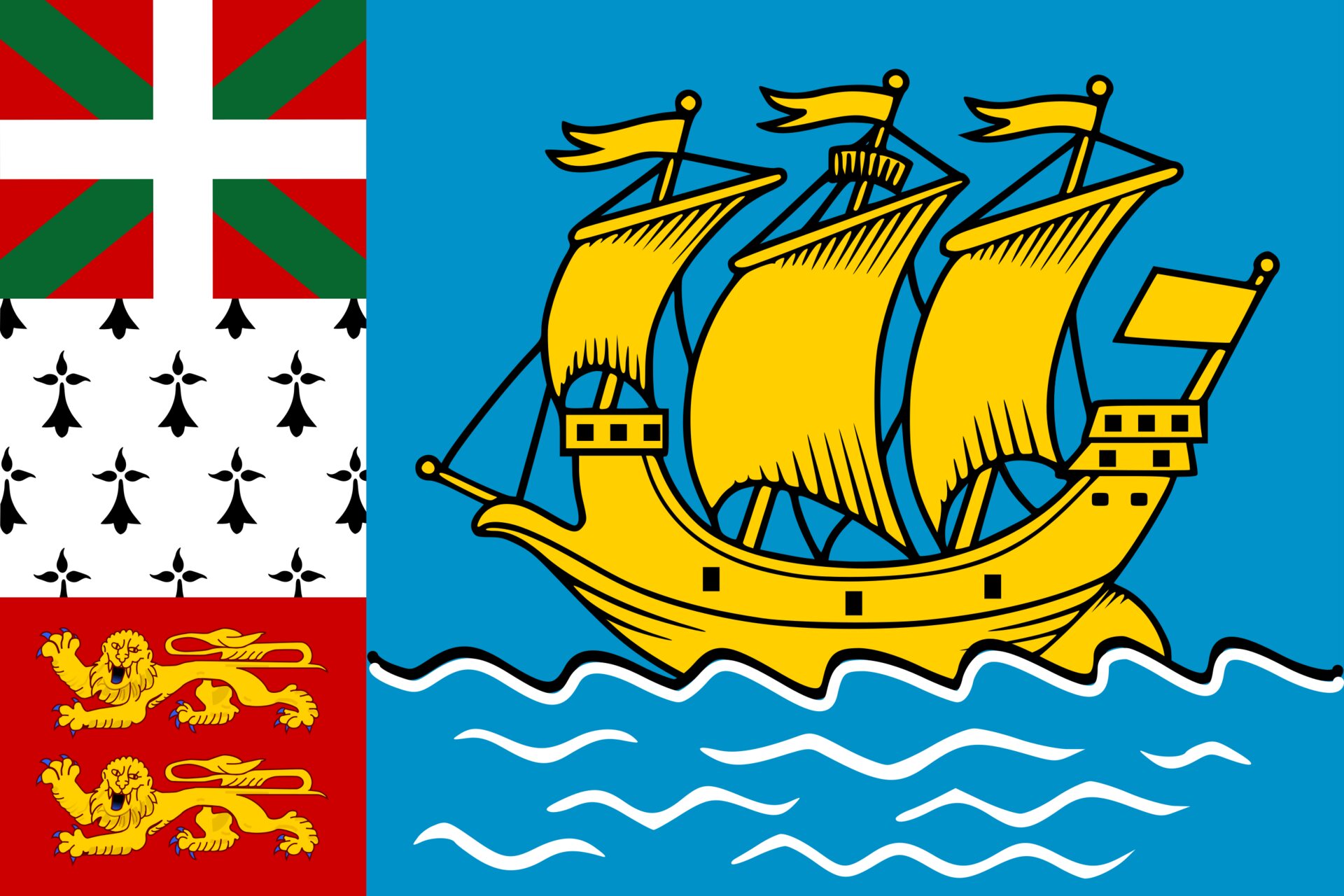
Scientific fishing, aquaculture, processing and geospatial analysis are trying to give new value to the marine resources of the French archipelago.

Circa 30.000 tons of potentially exploitable biomass and just 2.000-3.000 tons fished each year. The gap between the two numbers sums up one of the economic contradictions of Saint-Pierre and Miquelon, a small French archipelago in the northwestern Atlantic, a few dozen kilometers from Newfoundland. The sea occupies a huge space in its history and geography, but today it does not generate productive activity commensurate with the available resources.
In 2026, the issue has returned to the center of local economic policy. It's not simply a matter of fishing more. Scientific research on stocks, quota management, fleet modernization, local transformation, aquaculture, and geospatial tools are all contributing to an attempt to rebuild a blue economy capable of producing greater value without repeating the exploitation patterns that have marked the history of North Atlantic fishing.
The problem has deep roots. The collapse of the cod fishery and the 1992 Canadian moratorium on the Grand Banks disrupted an economic model that for generations had tied the archipelago to large-scale fishing. Since then, Saint-Pierre and Miquelon has sought diversification, while the public sector has assumed a growing role in employment. However, the sea remains the primary natural capital on which to build territorially specific productive activities.

Thirty thousand potential tons and a still fragile supply chain
A mission of theGeneral Inspectorate for the Environment and Sustainable Development, published in January 2026, describes a sector characterized by persistent structural problems. The small quantities actually caught are compounded by incomplete scientific knowledge of some species present in the French exclusive economic zone.
The issue isn't just biological. A marine resource can be available without automatically becoming an economically viable activity. Vessels suited to the species and operating conditions, landing infrastructure, ice, processing, health certification, logistics, and markets capable of absorbing production are needed. In an archipelago with a small population, local consumption alone cannot sustain a larger supply chain.
Among the indications formulated in 2026 is a 360-degree fleet audit, designed to evaluate their versatility and performance before planning new investments. The goal is to prevent the availability of quotas or resources from leading to the purchase of production capacity that is inconsistent with the species actually exploitable and with processing and marketing possibilities.
The reorganization also concerns professional representation. In June 2026, the resumption of theProfessional organization of fishing activities in Saint-Pierre-et-Miquelon, with the aim of improving quota management and comparisons between operators. In a small system, the organization of supply and access to resources can have as much impact as the technology used at sea.

Science is trying to turn the ocean floor into a productive map.
One of the most innovative components comes from aquaculture. In 2026, a study was published dedicated to the cultivation on the seabed of the Atlantic scallop, Placopecten magellanicus, in the archipelago. The work uses a multi-criteria analysis based on Geographic Information System, or GIS, to identify the areas in which the environmental and operational conditions are most suitable for breeding.
The logic is different from that of a concession determined solely on the basis of space availability. GIS systems allow for the overlaying of environmental and territorial variables and the exclusion or grading of zones based on their suitability. The seabed thus becomes a data-analyzable surface, allowing for comparison of the species' biological needs, physical characteristics, and compatibility with other maritime uses.
The Atlantic scallop is an economically important species in the Northwest Atlantic. The interest for Saint Pierre and Miquelon lies in the possibility of combining a resource already consistent with the regional ecosystem with spatial planning techniques that reduce the empirical component in site selection. Naturally, the study does not demonstrate the commercial viability of a new sector: it identifies suitability conditions that will have to be addressed in terms of costs, permits, production, and the market.
The archipelago has already seen attempts at aquaculture. Bivalve mollusc production was practiced in the past in Miquelon, but has since ceased, while a project to re-produce aquaculture was launched in 2021. mussel farming in the Grand Étang lagoon, with the first harvests marketed locally in 2022. Recent history therefore invites us to distinguish biological feasibility from long-term economic sustainability.

In Miquelon, the transformation focuses on less traditional species
Another issue is retaining a greater share of the value generated by fishing on the archipelago. The processing plant Miquelon, belonging to the mixed economy company A Mare Labor, has undergone a restructuring which includes a line for the treatment of sea cucumber and, progressively, capacities dedicated to the scallop.
The sea cucumber is emblematic of the desired diversification. It doesn't belong to the historical image of large-scale cod fishing, but it can be destined for specific international markets. The possibility of processing it locally changes the economic structure of the supply chain: rather than simply landing the raw material, the archipelago can perform part of the pre-marketing operations.
However, local transformation must compete with the infrastructures of Terranova, geographically close and embedded in a much larger industrial system. Payment times, ice availability, port services, and conditions offered to vessels influence where the catch is landed. For Saint-Pierre and Miquelon, attracting landings means boosting factories, employment, and local supplies.
Scientific knowledge of resources is the other side of the problem. A work of theIfremer published in 2026, collects the results of the 2022-2025 action plan on six important fishery resources and formulates management recommendations for five species. For Atlantic halibut, a bilateral agreement concluded in 2024 with Canada assigns the archipelago the 3 percent of the total allowable catch, inserting local management into an inevitably cross-border biological and regulatory system.

Research, coasts and resources must share the same sea
The territorial maritime strategy further broadens the picture. Maritime bass strategy document organizes priorities around the sustainable development of marine activities, ecosystem protection, knowledge and research, training, risk prevention, and coastal management.
The choice is forced by the archipelago's very geography. Areas potentially suitable for fishing and aquaculture coexist with navigation, biodiversity, vulnerable coastal areas, and settlements exposed to erosion and submersion. In Miquelon, the issue is particularly evident: the project to relocate the settlement stems precisely from the vulnerability of the coastal strip and makes it difficult to separate economic planning from environmental adaptation.
In June 2026 the local institutions also dedicated a day to emerging innovations in the blue economy, involving administrations, businesses, and the population. The term can encompass a wide range of activities, but in the case of Saint-Pierre and Miquelon, it takes on a concrete meaning when associated with stock data, GIS mapping, new commercial species, local processing, and supply chain organization.
The gap between potential and results remains wide. The approximately 30.000 tons of biomass considered exploitable are not an automatic catch target and cannot be interpreted without scientific assessments on a species-by-species basis. Simply increasing volumes would be an incomplete response to a problem that primarily concerns added value, knowledge of resources, industrial capacity and sustainability of stocks.
This is where the archipelago's economic project stands apart from nostalgia for the great fisheries of the past. Saint-Pierre and Miquelon lacks the scale to reconstruct the industrial model that revolved around cod, but it can use research, data, and processing to extract greater value from more controlled quantities and different species. The test case for 2026 is very concrete: making the new supply chain organization work, exploring the opportunities of aquaculture, and making local processing competitive without consuming the natural capital on which the entire project depends.
Here are three insights that might interest you:
ReSea: Coastal Innovation for Resilience and the Blue Economy
WSense, this is how the Internet of Things reaches the depths of the sea
Fish Oil and Fish Meal: The Hidden Impact of Aquaculture


