SEARCH


Centuries-Old Ice Invades Canadian Arctic Waters: Climate Change Shortens Seasons for Safe Transit

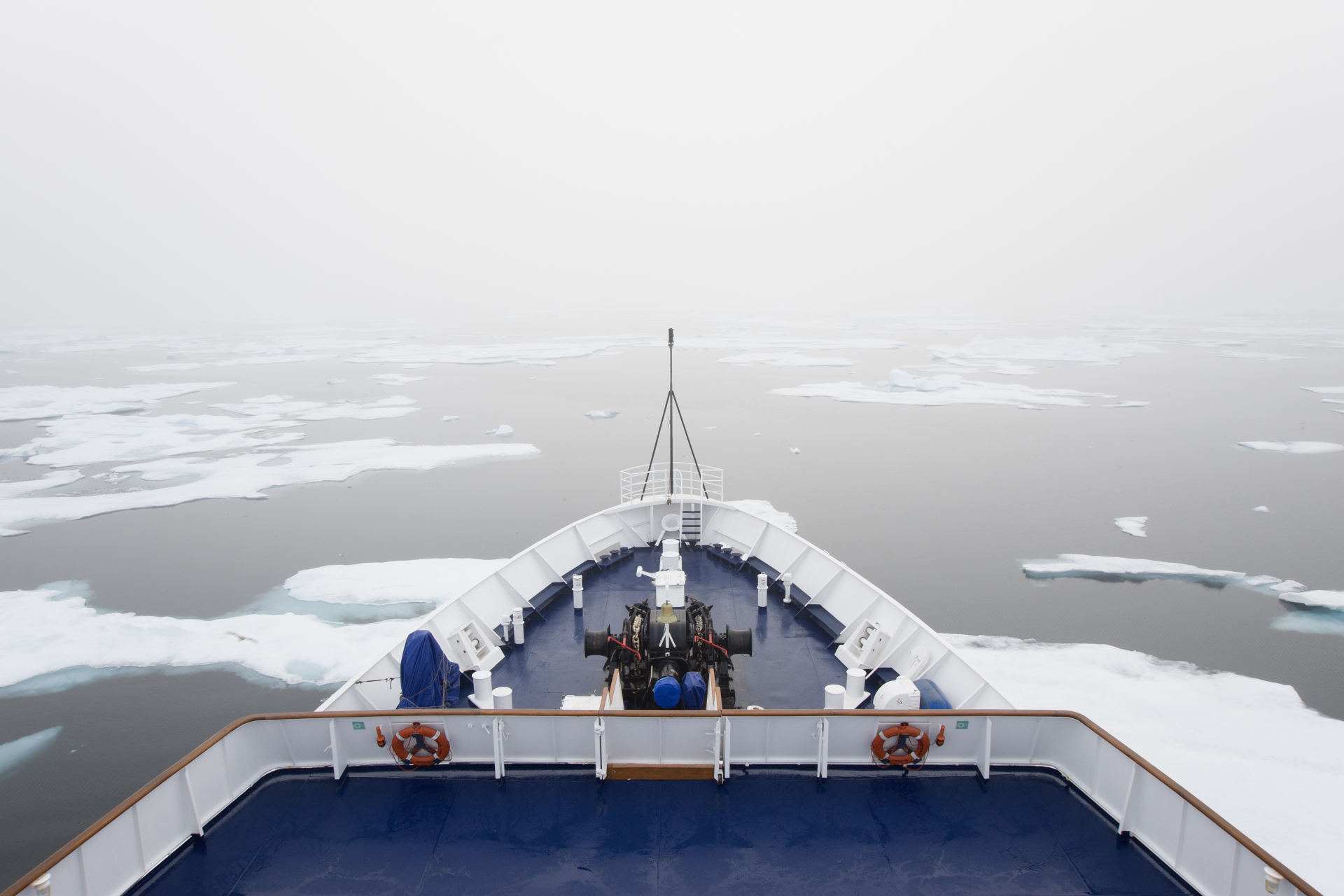
Currently, the ships that travel between Europe and the Far East must cross the Panama Canal. However, by passing through the ice of the Canadian Arctic, they would save about 4.000 kilometers. Therefore, the attention on the Northwest Passage It has never diminished, not even after Franklin's dramatic lost expedition, which in 1845 saw 129 men die in the attempt to cross the last stretch of the Arctic route.
In the 2000s, an increasingly evident seasonal ice melting has rekindled interest in themaritime industry: climate change could make waterways the Northwest Passage, allowing the distances between Asia and the Old Continent to be shortened.
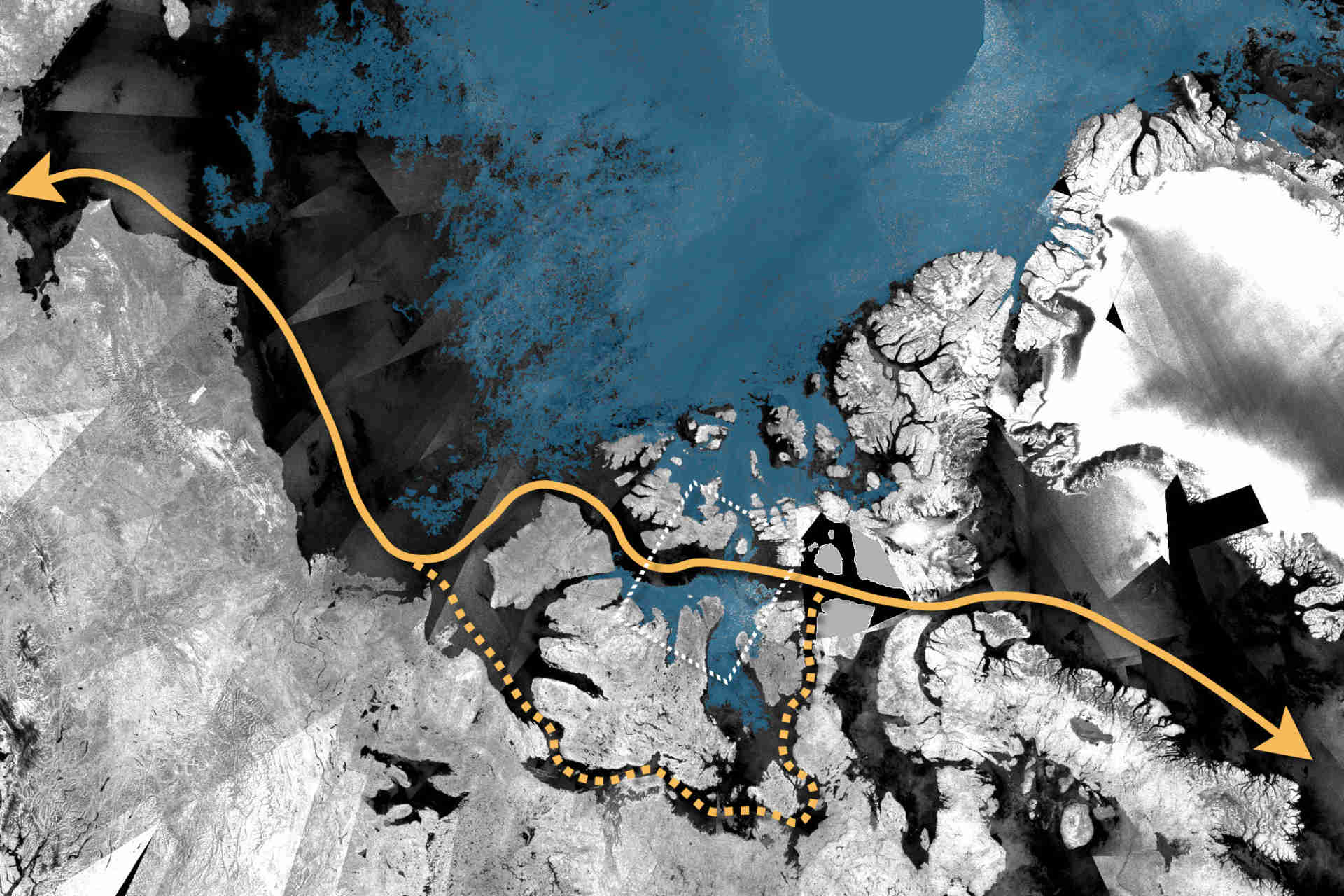
There is, however, a phenomenon that forecasts of this type had not considered: the climate change is also causing the migration of thick Arctic ice into the Canadian channels of the Northwest Passage, causing the formation of dangerous bottlenecks along the way.
2008, the Northwest Passage becomes navigable
For several years it was believed that the Northwest Passage it would become easily navigable due to the melting of the ice. One 2013 study, in particular, had come to the conclusion that the Canadian Arctic route might even become accessible to ships not equipped with icebreakers over the course of this century.
In the same year, Nordic Orion, a 225-metre long bulk carrier, became the first big ship to travel the route for commercial purposes. The Northwest Passage had opened just 5 years earlier: in 2008, for the first time in modern history, the route was completely free from ice – and therefore finally navigable.
To better understand the extent of the phenomenon, it is enough to look at the recent history of this stretch of sea: the destination of ambitious and dramatic Arctic expeditions, the Northwest Passage was won in 1906 from the Norwegian explorer Roald Amundsen, who completed the crossing in three years.
Since then, it cannot be said that the Canadian Arctic route has become navigable, on the contrary: by 1906 to 2007, the year in which it appeared almost free of ice for the first time in living memory, the Northwest Passage was crossed about ten times in total. In 1957 it was the turn of the Storis, the first US-flagged ship to circumnavigate the continent, and in 1984 the MS Explorer, which became the first cruise ship to complete the Passage.
In 2008, official talk began about safe transit seasons. By the following year, conditions were already such that two cruise ships and several pleasure boats were able to sail the Arctic route.
Melting ice and choke points on Arctic routes
A study just published in the journal Oceanography has dashed the hopes of the shipping industry, which is increasingly interested in safe and fast transit through Canadian Arctic waters. Nature Communications Earth & Environment.
According to the research, in some parts of the Northwest Passage the safe transit season is not lengthening at all, suggesting future scenarios in which it will be possible cross the Arctic route all year round. In contrast, analyzing 15 years of sea ice maps from the Canadian Arctic, researchers found that long stretches of the northern flyway showed a significant decrease of the duration of the navigation season between 2007 and 2021.
The results of the study demonstrate that the multi-year ice, which move southward from the northernmost regions of the Arctic Ocean, create choke points along some sections of the route, reducing the overall length of the sailing season.
"It is assumed that the loss of sea ice in the Arctic Ocean will lead to new shipping lanes, particularly around the Northwest Passage, but it is very dangerous to assume that this will be the case everywhere and conditions are constantly changing.",
explains the doctor Alison Cook of the Scottish Association for Marine Science (SAMS) in Oban, lead author of the study.
With the loss of seasonal ice caused by climate change, what happens is that the perennial ice (that which resists the summer season) is released and ventures on a journey southwards which takes it to nourish dangerous choke points along the routes of the Northwest Passage. This thicker ice, Cook explains, could be more unpredictable than the seasonal one.
Thickest Arctic Ice Ends Up in Canadian Channels
Even the most recent climate models, the study says, have difficulty capturing the ice dynamics on a local scale within the narrow channels of the Canadian Arctic Archipelago. But it is a fundamental element for vessels transiting the Northwest Passage, which “become susceptible to the southward flow of dense multi-year ice from the Arctic Ocean, a phenomenon that is increasing due to climate change".
This ice comes from the Last Ice Area, a region north of Canada and Greenland that is projected to be the last stronghold of summer sea ice and is home to the thickest ice in the entire Arctic. Even the last Arctic ice, therefore, will continue to flow southward into the channels of the Canadian shipping lanes, making it very difficult to make predictions about the future navigability of the Passage.
According to researchers, the sailing season along all routes of the Northwest Passage It will be very variable. Hypotheses that a reduction in sea ice will allow safe passage along the Northern route, in particular, should be avoided.
The maritime industry and the interest in the northern route
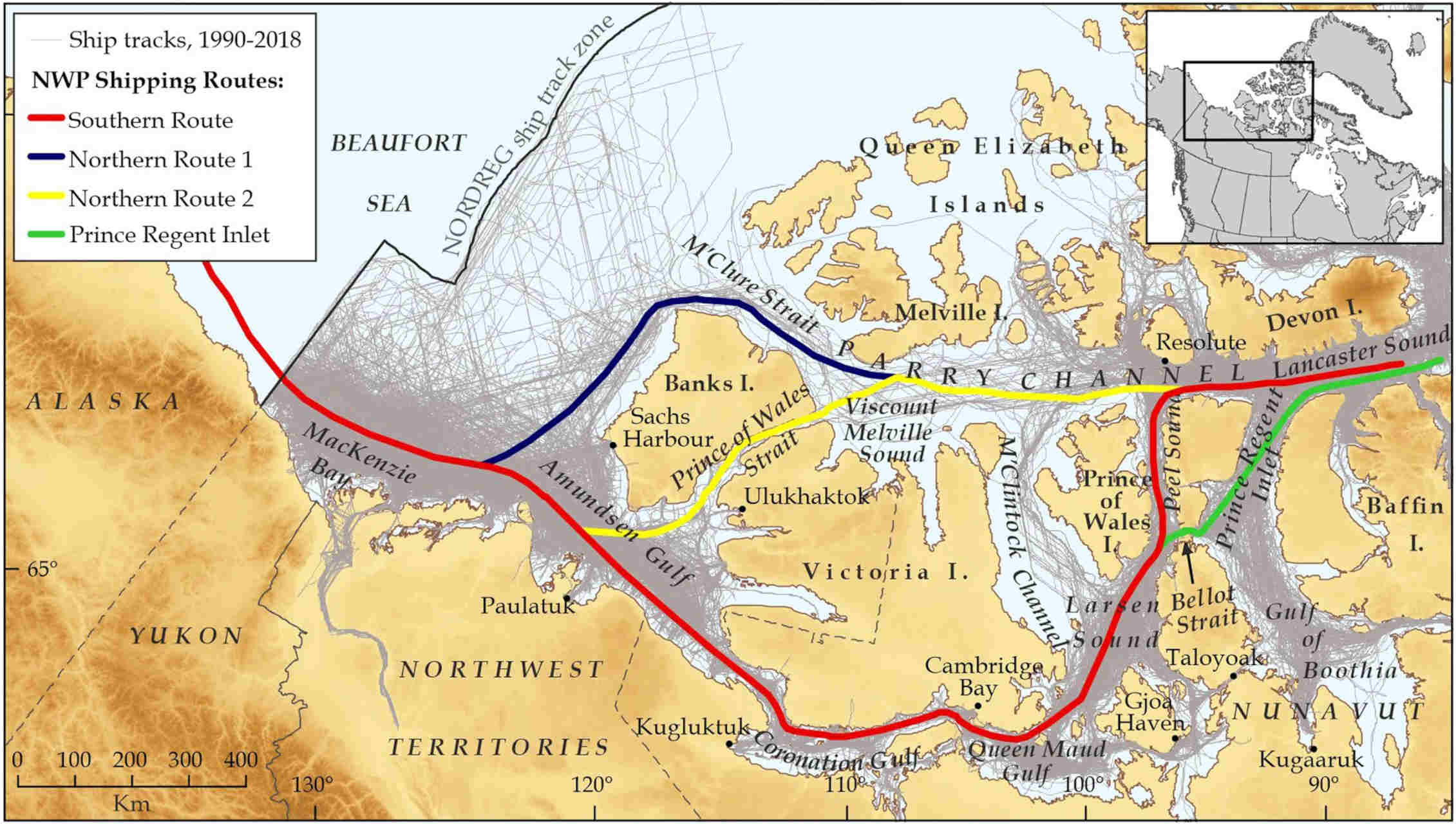
The Northwest Passage includes a shallow-water southern route passing south of Victoria Island and a Northern deepwater route which extends across the Parry Channel. Currently, the study says, 97% of ships use the southern route, “but the northern route is shorter and considered more efficient and therefore is of greater interest for commercial and transit operations".
Maritime transport through Canadian Arctic waters is of particular concern. global interest, as the Northwest Passage could emerge as a viable, shorter and potentially cheaper alternative to traditional routes linking the Atlantic and Pacific Oceans, such as the canals Panama and Suez. Considering that 90% of global goods travel by sea, it is easy to understand the scope of the issue.
Historically, scientists explain, both routes have been considered dangerous because of the fog. Sea ice, however, has remained the main obstacle to timely navigation through the Northwest Passage. And the route of greatest commercial interest, the northern one, is also the one where choke points cause more obvious limitations to maritime traffic.
As Dr. Cook further explains:
“Cruise ships, cargo ships and tankers will be using these channels, particularly between August and September, when sea ice coverage is the least, but this is when multi-year ice may be most prevalent.”
In short, it is unlikely that the climate change determine a lasting increase in the navigation season on the Northern route. On the contrary, it is (and will remain) the main cause of the continued presence of dangerous choke points along the route.
Here are three insights that might interest you:
Arctic Ocean to absorb less CO2 than expected
GreenFjord, the life of Greenland's glaciers concerns everyone
The retreat of glaciers could create new ecosystems by 2100