SEARCH


Satellite images prove that MPAs work: in strictly protected areas, illegal fishing is virtually non-existent.
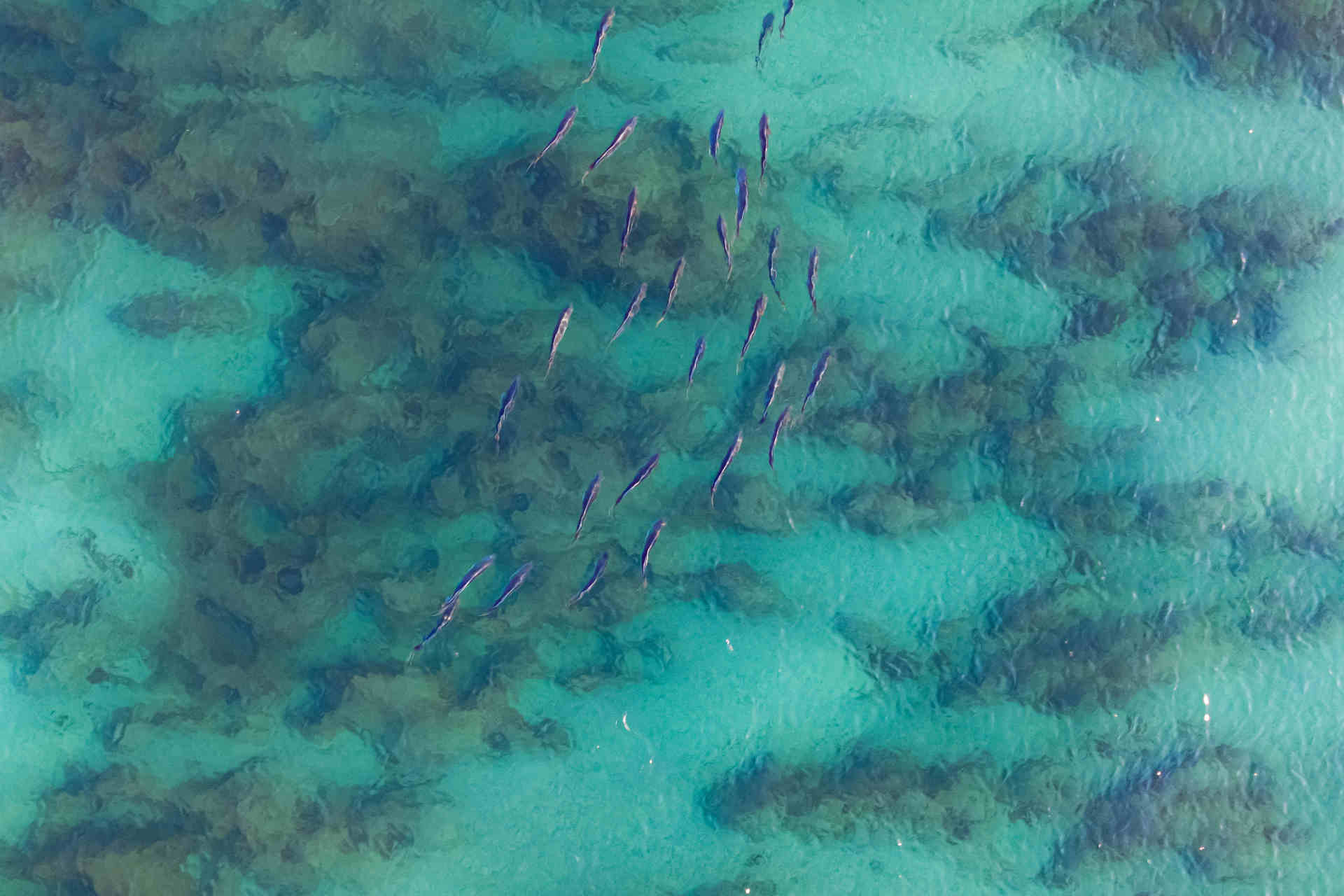
Highly or fully protected marine areas actually manage to discourage illegal fishing: is the result of a recently published research which, by combining satellite images and Artificial Intelligence, reveals for the first time the extent of traffic within marine parks by tracking even vessels that do not report their presence.
The results of the study are decidedly comforting: although there are exceptions, the data demonstrate that in the most protected marine reserves in the world illegal fishing is almost absentEfforts to conserve marine ecosystems, if applied diligently, work.
Marine protected areas curb illegal fishing: the study
A new research just published on Science raises hopes for the conservation of marine ecosystems. The analysis, which bears the eloquent title "In fully and highly protected marine areas, industrial fishing is almost non-existent”, he combined satellite data and machine learning to locate previously untraceable vessels, and found that most highly protected MPAs are effective in deterring illegal fishing.
Several researches have shown that theestablishment of AMP It restores marine life within the protected area's boundaries, increasing stocks available to local fishermen and strengthening resilience to ocean warming. As he explains: Enric Sala, one of the study's authors, National Geographic Explorer-in-Residence and founder of Pristine Seas,
Because strictly protected marine areas discourage illegal fishing, fish are much more abundant within their boundaries, producing more offspring and helping repopulate surrounding areas. In other words, the fishing industry benefits from compliance.
On the other hand, when these parks are protected only on paper, this does not happen. Therefore, in recent years there has been much discussion about the effectiveness of MPAs for the conservation of ecosystems and species at risk: until now, in fact, it was not very clear to what extent the declared levels of protection were able to achieve concrete results, especially regarding the illegal and unregulated fishing within these very delicate areas.
The new study, combining data and technologies that have so far yielded conflicting results, manages for the first time to demonstrate that the most rigorously protected marine reserves are respected, even by fishing vessels operating illegally.
Illegal fishing vessels can no longer hide
The researchers analyzed five billion positions of vessels coming from Automatic Identification Systems (AIS), those automatic vessel tracking systems which today, together with marine radar and VHF communications, are the basis of global maritime traffic management.
They then combined the data acquired by the AIS with satellite images generated by the synthetic aperture radars (SAR) of the satellites of the constellation Sentinel-1, from the European Copernicus program, widely used to monitor industrial fishing. As the study states,
Unlike AIS, which relies on voluntary transmission, SAR actively detects vessels by sending radar pulses to the ocean surface and measuring the reflected signals. Machine learning algorithms then identify vessels from these reflectance patterns and classify them as fishing or non-fishing vessels.
The use of artificial intelligence models The researchers explain that the developments by Global Fishing Watch allowed them to detect most vessels longer than 15 meters, including those without active AIS, which often do not transmit their position precisely to avoid detection. It was thus discovered that the AIS data did not detect almost 90% of fishing vessels Detected by SAR. Illegal fishing vessels can no longer hide.
As Juan Mayorga, co-author of the study, explains:
"We are much closer to having a complete picture of human activity across the ocean. This is especially important for the ocean's most precious treasures, the world's most protected areas, where biodiversity and enforcement stakes are highest."
For example, SARs recorded the presence of industrial vessels in 163 marine protected areas that had no AIS activity, particularly in regions of Southeast Asia, where data collected by AIS systems is often incomplete.
AMP: the higher the level of protection, the greater the benefits
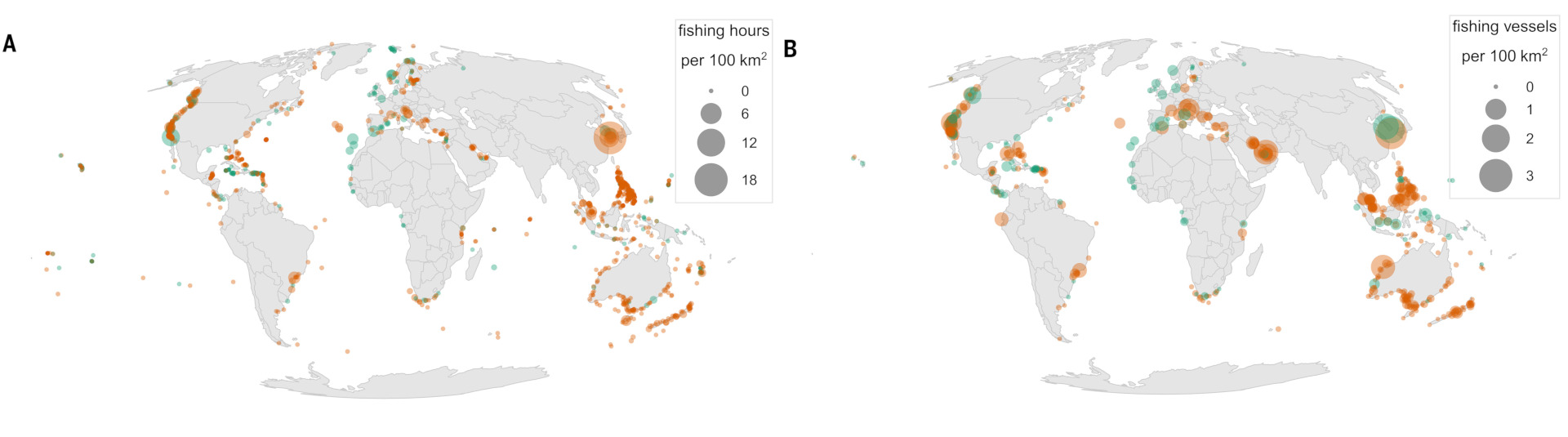
Based on the results of the study, the 78,5% of the 1380 MPAs The analyzed areas show no commercial fishing activity. Of those where satellite imagery did detect illegal fishing, 82% average less than 24 hours of activity per calendar year.
In any case, strictly protected marine areas show nine times fewer fishing boats per square kilometer compared to unprotected coastal areas, demonstrating that strict implementation of regulations effectively discourages illegal fishing activities.
However, there are some AMPs that still show high levels of exploitationThe Chagos Archipelago Marine Protected Area in the Indian Ocean is the most affected. Here, 2700 hours of fishing in one yearOther highly sensitive areas include the South Georgia and South Sandwich Islands Marine Protected Area and the Great Barrier Reef Marine Park, each of which accounts for approximately 900 hours of illegal fishing per year. However, several marine protected areas in France, Malaysia, South Korea, the United States, and South Africa are still crossed by industrial fishing vessels for over 250 hours per year.
Aside from these “high intensity” sites, however, most marine protected areas show significant activity. minimal or no fishing: 1325 out of 1380 AMPs analyzed recorded less than 24 hours of fishing in a year, while in 1084 marine parks no trace of industrial vessels was detected.
"Thanks to satellites, we have discovered, for the first time, that the level of protection determines the degree of risk fishermen are willing to take: rigorously protected marine areas discourage illegal fishing. The more stringent the regulations in place to conserve ocean areas, the greater the benefits nations receive."
concludes Sala.
Here are three insights that might interest you:
In the Azores the largest marine protected area in Europe
Does the Marine Sanctuary in the heart of the Pacific threaten fishing?
European Swordfish Market Fuels Illegal Fishing