SEARCH


After the Spartanburg test, the German brand is starting a pilot project with humanoid robots integrated into the production of batteries and components
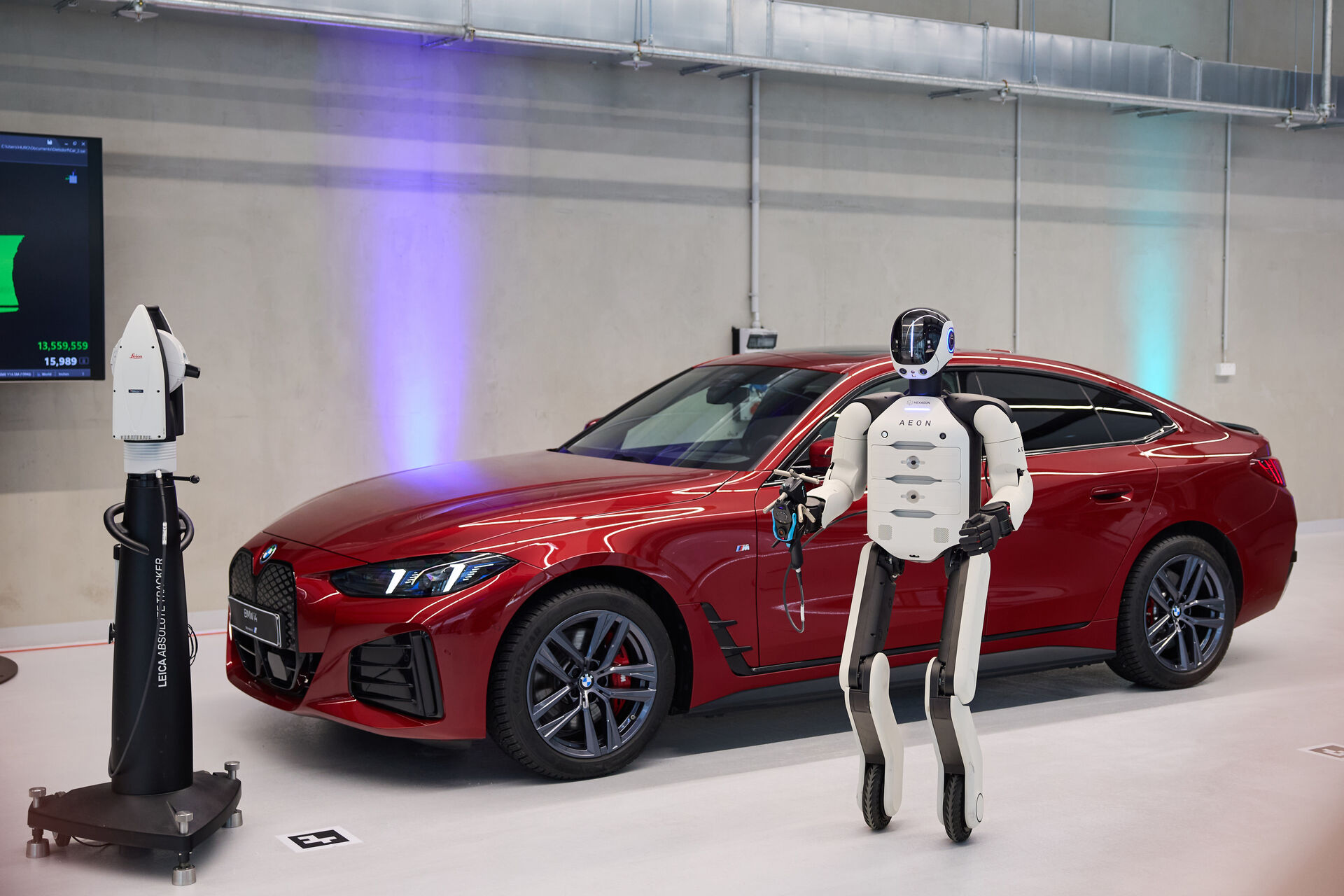
The digital transformation of automotive manufacturing is entering a new phase of operation. The BMW Group has launched a pilot project with humanoid robots for the first time in Europe at its Plant Leipzig facilities, bringing the paradigm of digital transformation to Germany. Physical AI: is the integration between digital artificial intelligence and physical machines capable of learning and acting in complex industrial environments.
After an initial test conducted in 2025 at its Spartanburg facility in the United States, the Bavarian group is now transferring its expertise, operational models, and integration protocols developed in a real-world environment to Europe. The goal is not a technological demonstration, but a structured verification of the feasibility of integrating humanoid robotics in series production processes, particularly in the assembly of high-voltage batteries and in the processing of components.
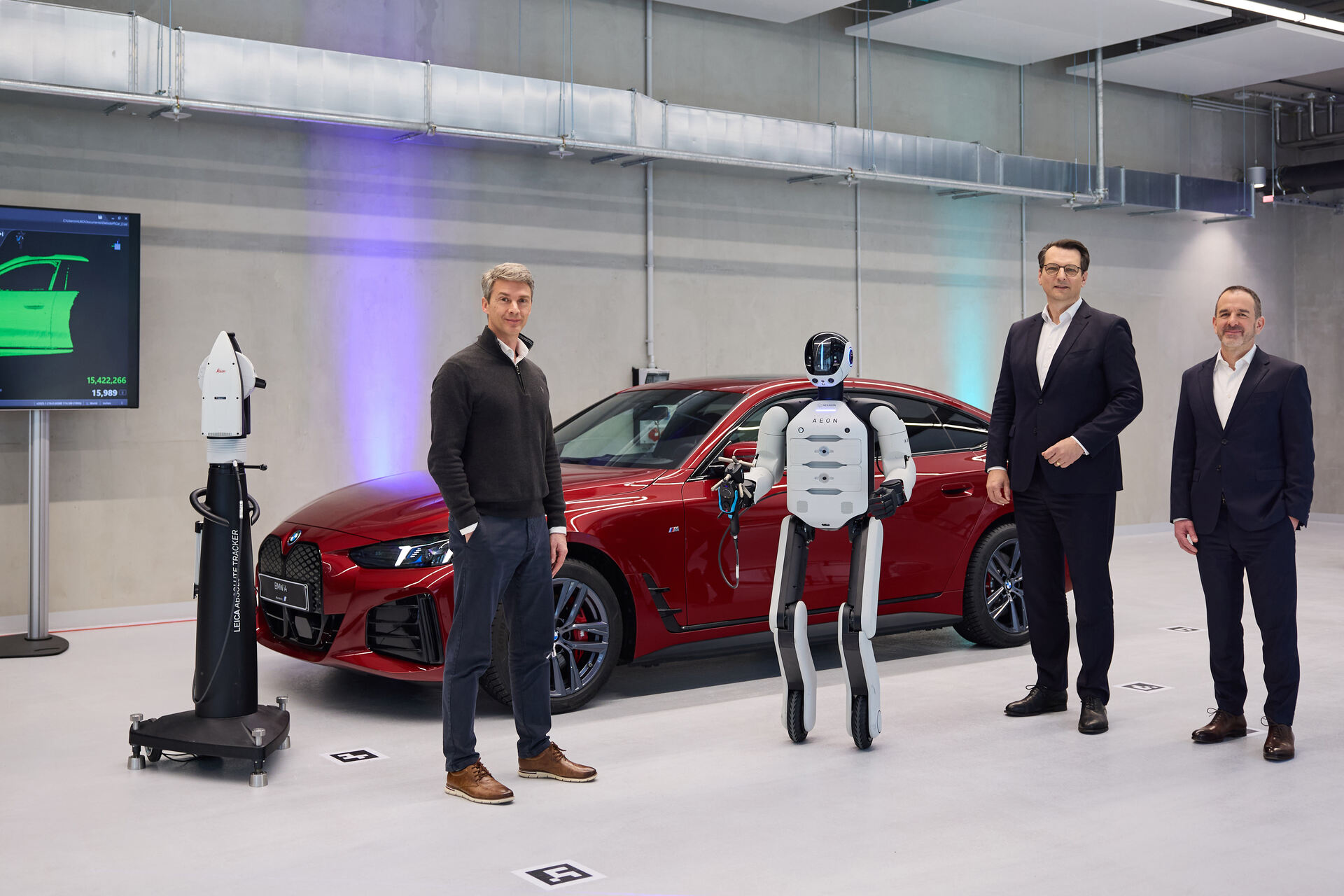
"Digitalization improves the competitiveness of our production, both here in Europe and globally. The symbiosis of engineering expertise and artificial intelligence opens up entirely new possibilities in production processes."
said Milan Nedeljkovic, member of the Board of Management of BMW AG for Production, underlining how digitalization represents a factor of systemic competitiveness.
Physical AI and unified data model in production
In contemporary industrial lexicon, the concept of Physical AI It identifies a convergence between advanced algorithms and mechatronic systems capable of operating autonomously in dynamic environments. This isn't just automation, but digital agents that learn, optimize, and make decisions in real time, integrated with robotic platforms.
For this to be possible, an infrastructural prerequisite is necessary: a unified IT and data model throughout the entire production system. The BMW Group has gradually transformed isolated information silos into a coherent and standardized data platform, making continuous information on logistics, quality, planning, and machine status available.
In this context, the autonomous AI agents They can take on increasingly complex tasks, operating in real industrial environments and interacting with existing systems. The combination of these agents and physical robots is the heart of Physical AI.
The framework is part of the BMW iFACTORY strategy, which identifies digitalization and artificial intelligence as the cornerstones of flexible and resilient production. According to recent analyses of the European automotive sector, the adoption of advanced AI systems in production is considered a key lever for maintaining competitiveness in a context of electrification, cost pressures, and supply chain volatility.
The Center of Competence and the phased approach
To structure this path, the group has established the Center of Competence for Physical AI in Production, with the task of consolidating know-how, coordinating tests and evaluating technological partners according to industrial maturity criteria.
The approach adopted is sequential. After a theoretical evaluation of the supplier, a laboratory testing phase follows with real-world use cases from the BMW production system. Only after that does the initial implementation in an industrial environment proceed, followed by the actual pilot phase.
Michael Nikolaides, Senior Vice President Production Network, Supply Chain Management, highlighted how
“pilot projects are essential to verify the effective integration of Physical AI in real-world operational conditions.”
The transition from the laboratory to the production line represents a critical juncture, both technologically and organizationally.
A key element that emerged from previous experiences concerns the early integration of IT production functions, occupational safety, and process management. Humanoid robotics, by definition, interacts more directly with environments and layouts originally designed for human operators: this requires safety protocols and standardized interfaces.
The project with Hexagon and the AEON robot
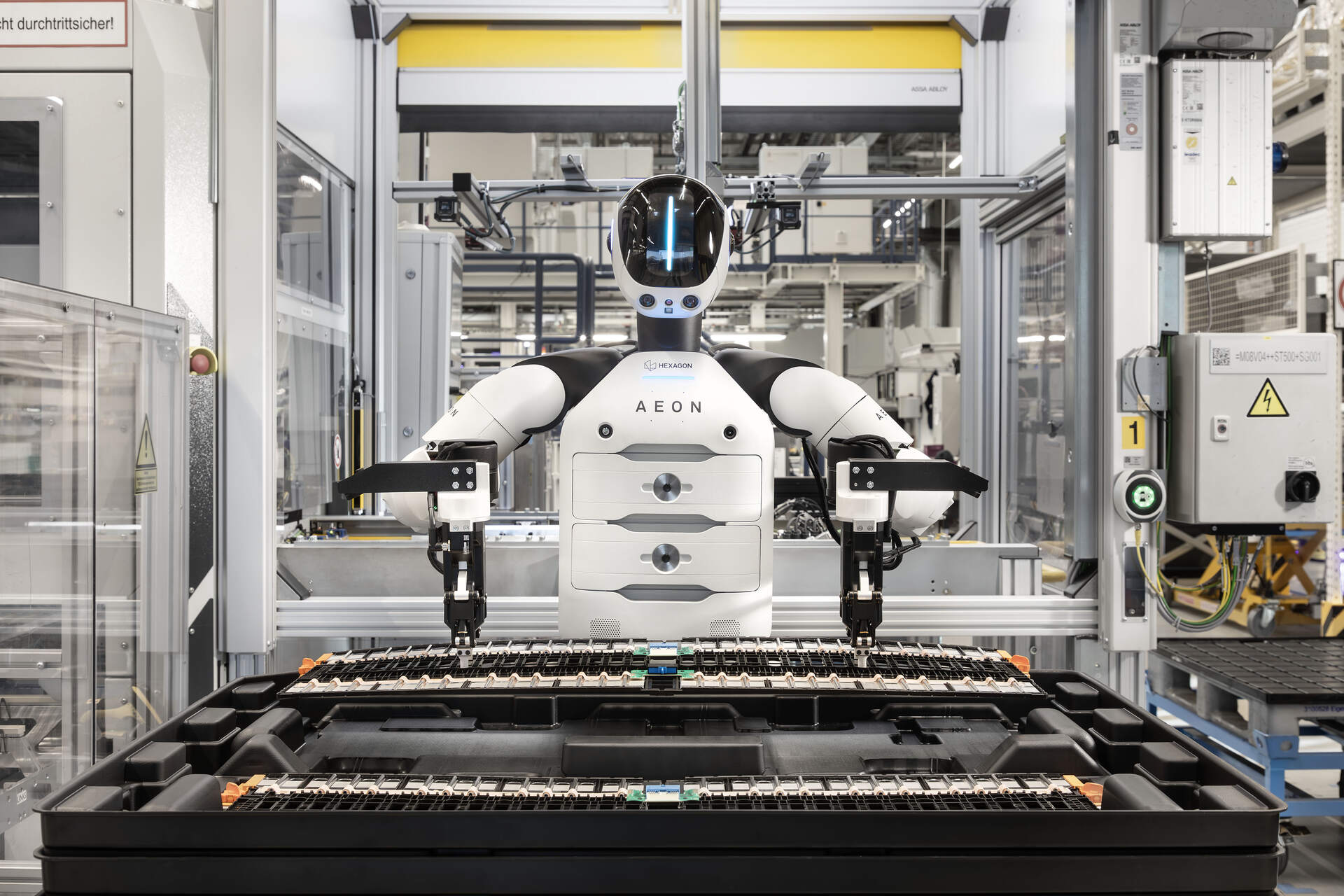
The European pilot project is being conducted in collaboration with Hexagon, a long-standing partner of the Munich-based company in the field of sensors and industrial software. The Zurich-based Hexagon Robotics unit presented its first humanoid robot, called AEON, in June 2025.
After a theoretical evaluation and laboratory tests, a first experimental operation was carried out in Leipzig in December 2025. A new test phase is planned for spring 2026, with a view to starting the full pilot in the summer of the same year.
AEON is designed with an anthropomorphic architecture that allows for the flexible use of various end-effectors, gripping tools, and scanning systems. Wheeled mobility expands its dynamic deployment along the line. The focus is on multifunctionality: not a robot dedicated to a single operation, but a platform capable of adapting to different production contexts.
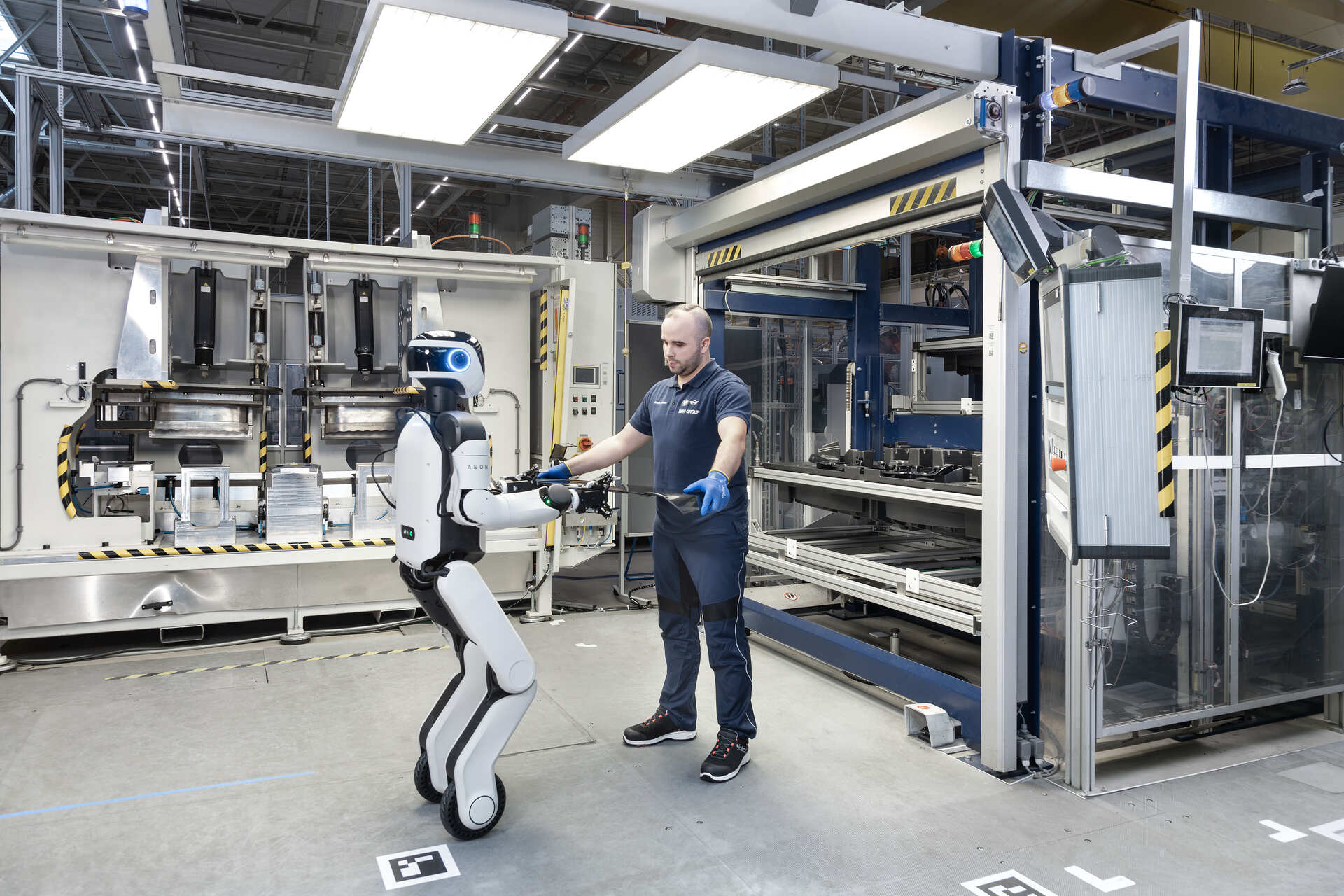
The identified application areas include the assembly of high-voltage batteries (a strategic segment in electrification) and the production of components for external parts. In both cases, these activities may involve repetitive, ergonomically challenging, or high-precision operations.


Test lessons in North Carolina
The US precedent provides relevant operational insights. In 2025, at the German group's plant in North Carolina, BMW collaborated with Figure AI to test the Figure 02 humanoid robot in a real-world environment.
According to the company, over a period of ten months, the robot supported the production of over 30.000 units of the X3 model, working ten-hour shifts five days a week. The primary task involved removing and positioning sheet metal parts for the welding process, a task that requires pinpoint precision and is physically demanding for the operators.
Overall, the system moved more than 90.000 components and performed approximately 1,2 million steps in over 1.200 operating hours. Beyond the numbers, the key aspect is validation under industrial conditions: the transition from lab to production was faster than expected, thanks to the ability to transfer previously trained motion sequences.
Integration was achieved via standard interfaces within the BMW Smart Robotics ecosystem, ensuring coexistence with existing automated systems, such as the autonomous transport robots already in use in the body shop.
An often overlooked aspect concerns the organizational dimension. The early involvement of the production teams fostered transparency and acceptance, reducing internal resistance and facilitating the robot's integration into the operational routine.
Advanced automation and its impact on work
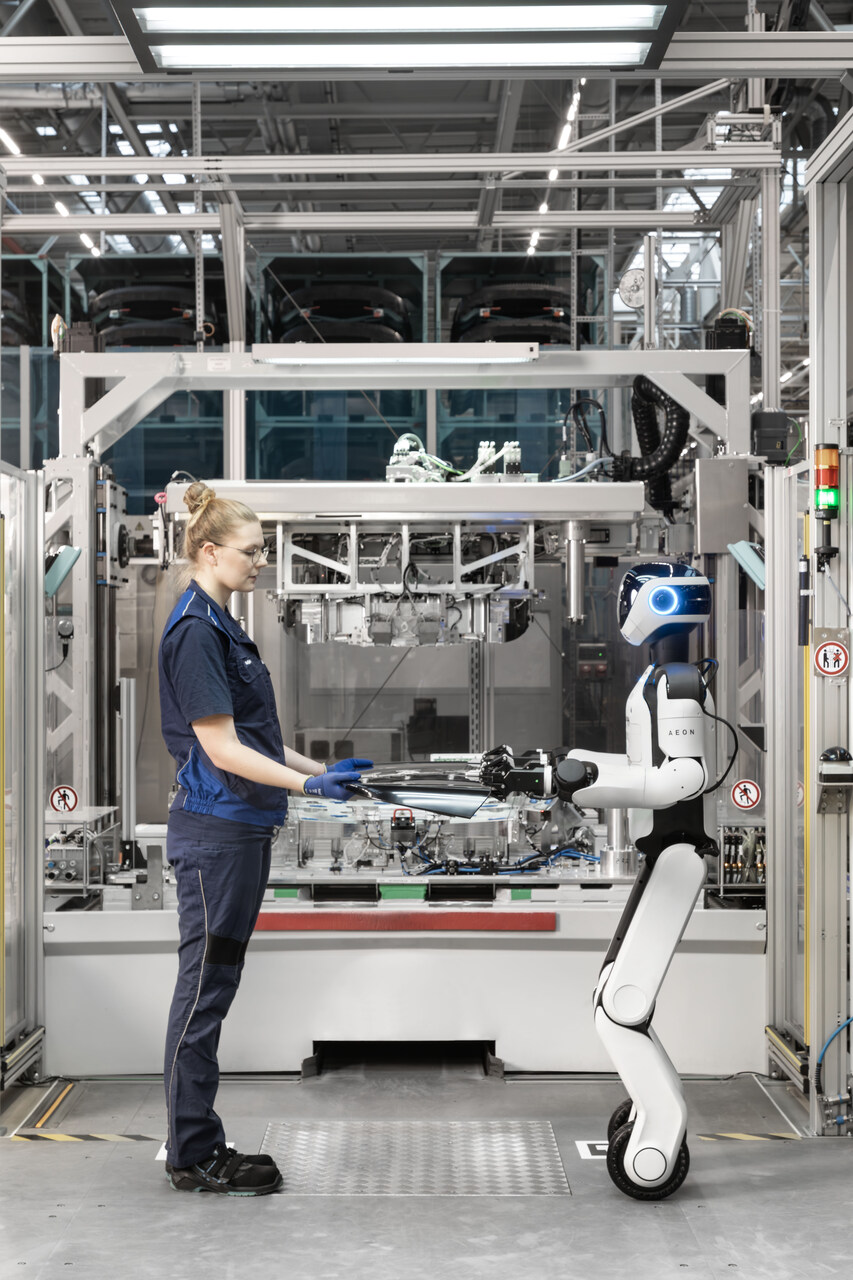
The introduction of humanoid robotics doesn't replace traditional automation, but complements it. According to the BMW Group's vision, humanoids represent a complement capable of intervening where layouts and flows have historically been designed for people, not fixed industrial robots.
Priority applications concern tasks monotony, ergonomically burdensome o critical from a safety perspectiveThe stated goal is to relieve the physical burden on operators and improve working conditions, rather than replace specialized skills.
In a European context characterized by a shortage of skilled labor in the manufacturing sector, the use of robots capable of adapting to existing workstations could represent a complementary response, provided that integration is accompanied by retraining and technological governance processes.
The project in the large Saxon city therefore represents not only a technological but also an organizational testbed. If the tests confirm its operational sustainability and the added value in terms of flexibility and quality, Physical AI could evolve from an experiment to a structural component of automotive production.

Towards adaptive and data-driven manufacturing
The BMW case highlights a broader trajectory of European industry: the progressive convergence between unified data platform, artificial intelligence e collaborative roboticsThis is not a sudden leap, but a phased evolution, based on controlled tests and operational metrics.
According to industry analysts, the ability to orchestrate intelligent systems in complex manufacturing environments will be one of the key competitive differentiators in the coming years. The challenge is not only technical, but systemic: integrating software, hardware, security, and human expertise into a single, coherent architecture.
With the Leipzig pilot project, BMW is bringing this vision to the heart of German manufacturing. Physical AI is thus moving from an experimental concept to a large-scale industrial testing phase, paving the way for factories to become increasingly adaptive, connected, and capable of learning.
Humanoid robots and physical AI: How the BMW Group factory is changing
Humanoid robots and physical AI: How the BMW Group factory is changing (in German)
BMW Group Center of Competence for Physical AI in Production, Strategy, and Innovation
Here are three insights that might interest you:
Photo Gallery: The BMW Group's Physical AI in the Factory of the Future
The BMW iX Flow is the first maxi SUV with an "enchanted" livery
From biohybrid robotics, muscles and tendons for more human-like machines