


 SEARCH


Three sustainable inks printed on a rectangular strip and salt to power a wide range of low-energy single-use devices
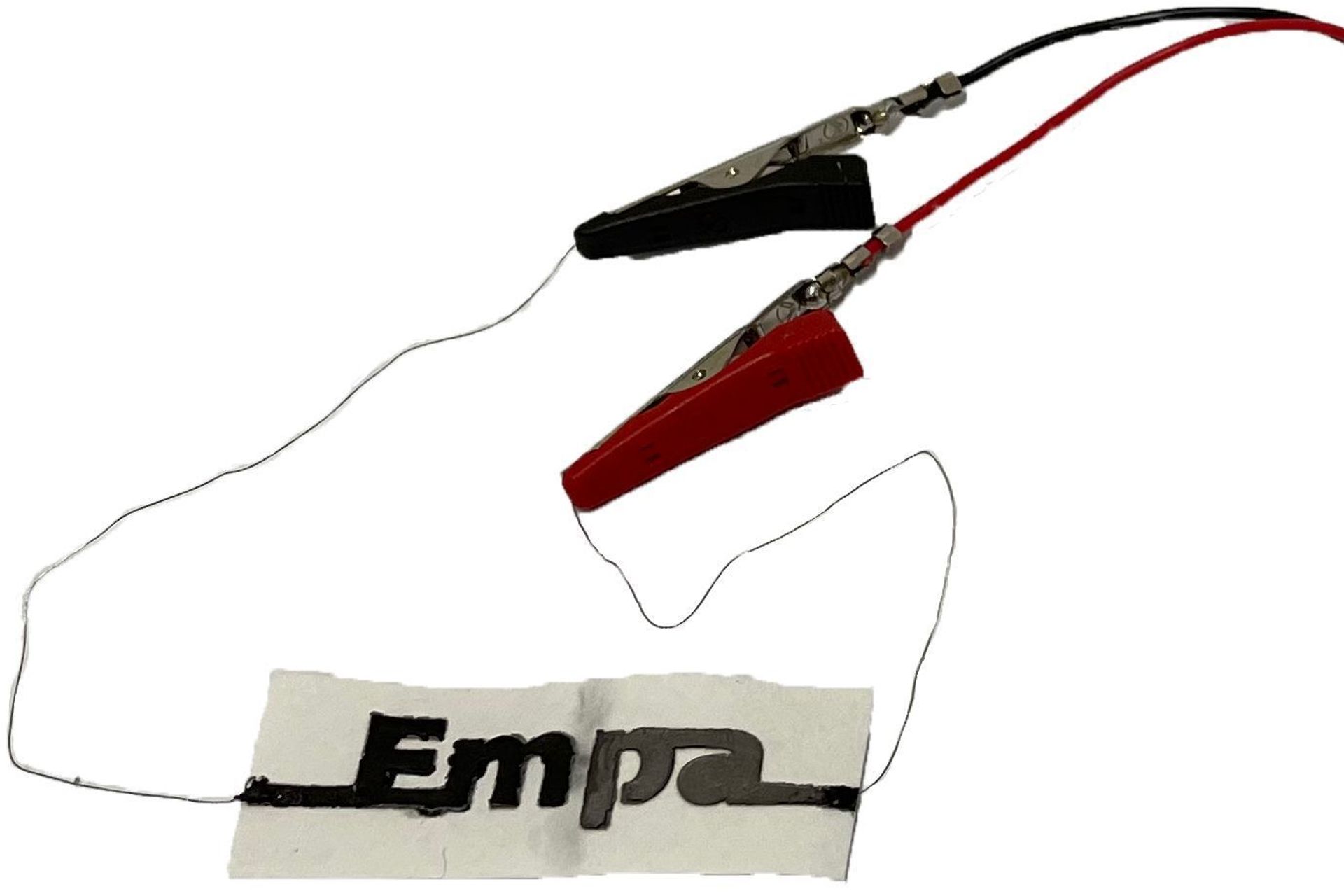
A team of researchers from EMPA, a federal institute based in Thun, St. Gallen and Dübendorf, has developed a water-activated disposable paper battery.
Swiss scholars suggest that it could be used to power a wide range of low-power single-use electronic devices, such as smart object tracking tags, environmental sensors and medical diagnostic devices, while minimizing their environmental impact.
The test study was published in the journal "Scientific Reports".
Thus EMPA rail pads reduce noise along railways

Graphite flakes and zinc powder to act as anode and cathode
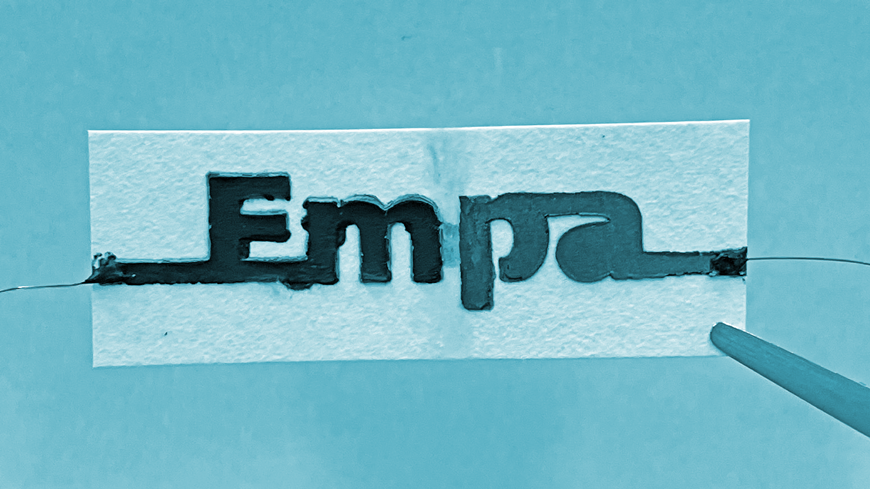
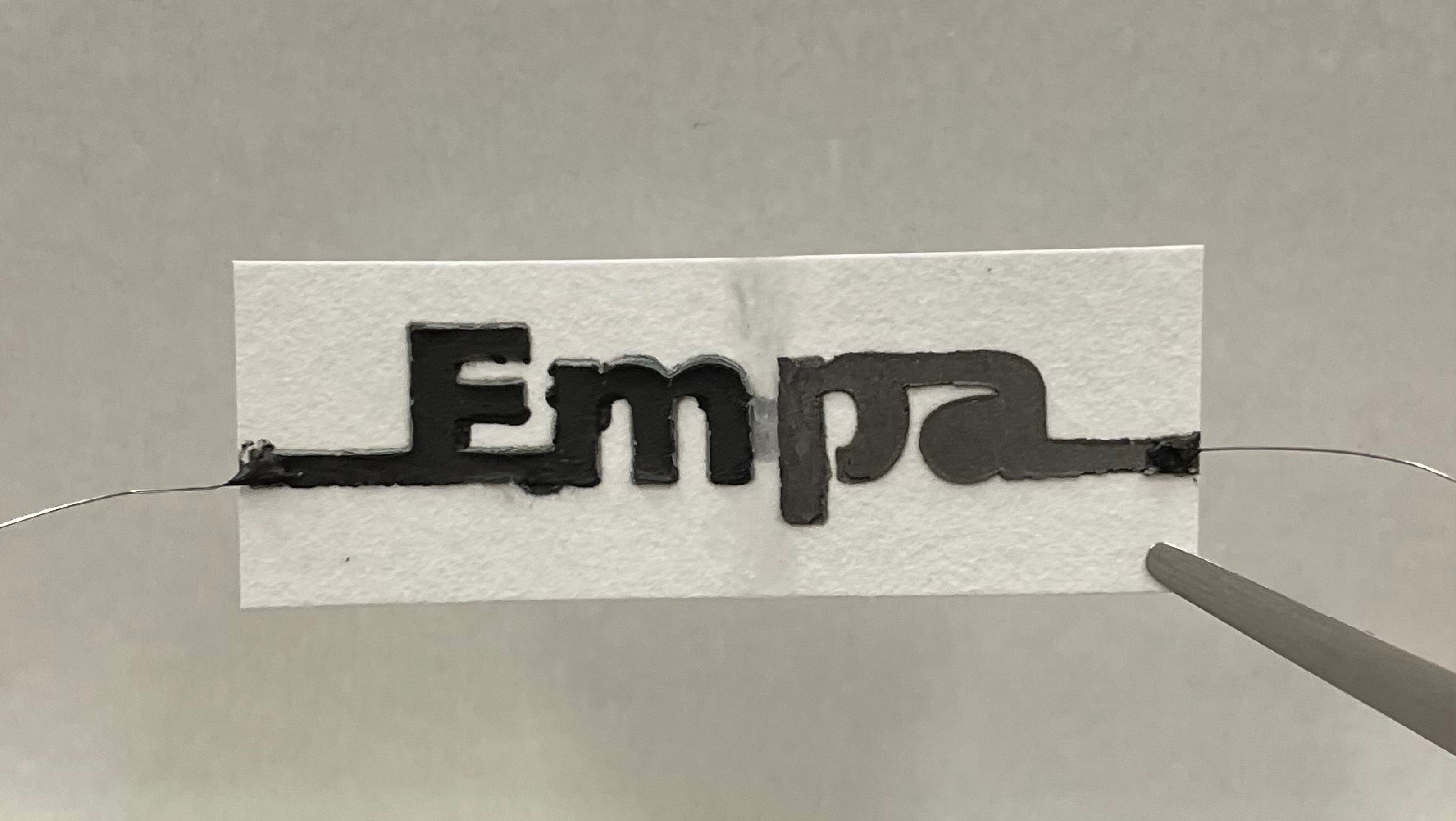
The battery, devised by Gustav Nyström and his team at the Eidgenössische Materialprüfungs- und Forschungsanstalt, consists of at least one cell of one centimeter square and three inks printed on a rectangular strip of paper.
The salt, in this case simply sodium chloride or table salt, is dispersed into the paper strip and one of its shorter ends has been dipped into the wax.
On one of the flat sides of the paper is printed an ink containing graphite flakes, which acts as the positive end of the battery (the cathode), while on the other side of the paper is printed an ink containing zinc powder, which acts as the negative end of the battery (the anode).
Another ink containing graphite flakes and carbon black is printed on both sides of the paper, on top of the other two inks.
This ink forms the current collectors that connect the positive and negative ends of the battery to two wires, located at the end of the paper dipped in the wax.
When a small amount of water is added, the salts within the paper dissolve and charged ions are released, thus making the electrolyte ionically conductive.
These ions activate the battery by dispersing through the paper and oxidizing the zinc in the ink at the anode, thus releasing electrons.
By closing the (external) circuit, these electrons can be transferred from the zinc-containing anode – through the graphite and carbon black-containing ink, wires and device – to the graphite cathode, where they are transferred to the ambient air oxygen, reducing it .
These redox reactions (reduction and oxidation) then generate an electric current that can be used to power an external electrical device.
Larger buildings are being built in Switzerland with airgel
A truly “green” energy source for low power electronics
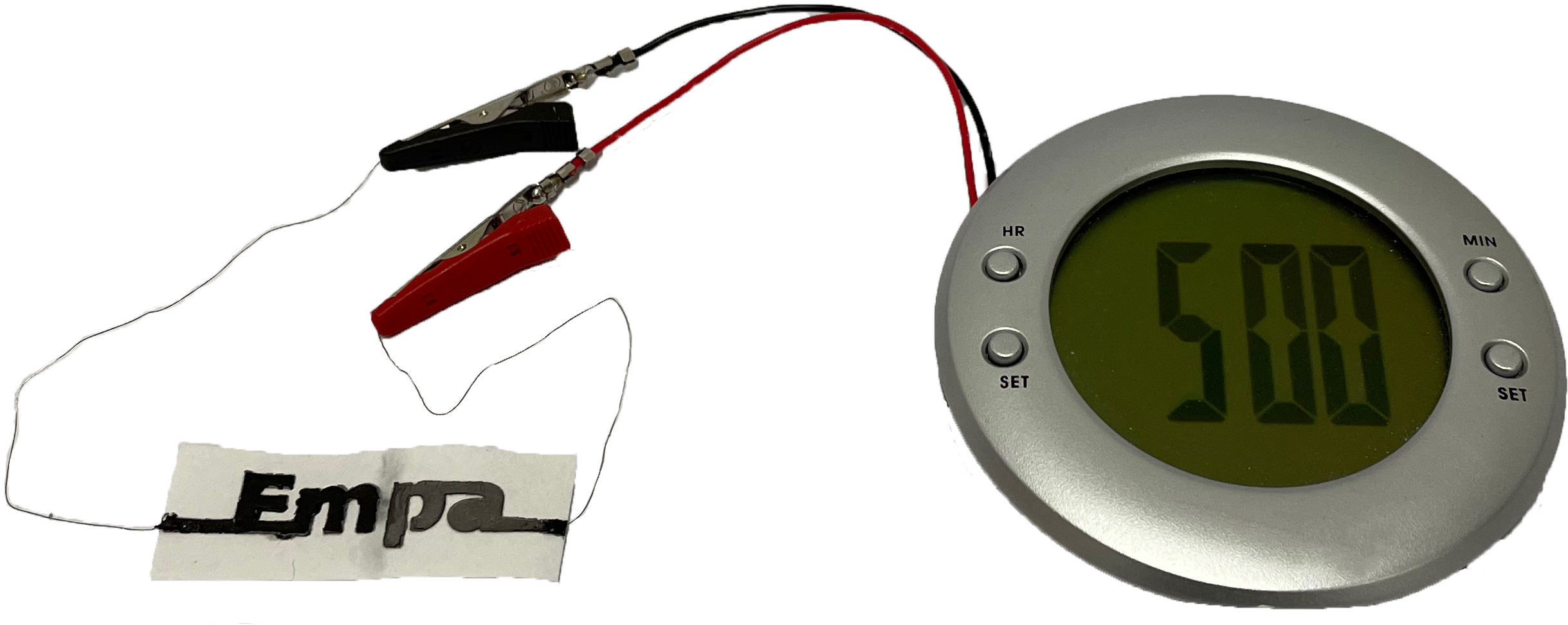
To demonstrate the battery's ability to run low-power electronic devices, Gustav Nyström's EMPA team combined two cells into a single battery to increase operating voltage and used it to power an alarm clock with liquid crystal display .
Performance analysis of a one-cell battery revealed that after adding two drops of water, the battery activated within 20 seconds and reached a stable voltage when not connected to a power-consuming device. of 1,2 volts.
The voltage of a standard AA alkaline battery is 1,5 volts.
Innovative stroke therapy thanks to Swiss medicine
Paper drying is the only vulnus (easily solved) of the system
After one hour, the performance of the one-cell battery decreased significantly due to drying of the paper.
However, after the researchers added two more drops of water, the battery maintained a stable operating voltage of 0,5 volts for more than another hour.
The researchers argue that the biodegradability of the paper and zinc could allow their battery to minimize the environmental impact of low-power disposable electronics.
The… Fruit avatars attacking food waste
Gustav Nyström: “The more Zn there is, the longer the battery is able to work…”
“The peculiarity of our new battery is that, unlike many metal-air batteries that use a metal foil that gradually wears out as the battery runs out, our design allows only the amount of Zinc actually added to the ink. necessary for the specific application“, says Nyström.
Metallic foils were more difficult to control and were not always completely worn away, resulting in wasted materials.
The more Zinc the ink contains, the longer the battery can work.
A more critical point of the current water-activated battery design, adds the scientist from the Eidgenössische Materialprüfungs- und Forschungsanstalt, is the time it takes for the battery to dry out.
“But I am sure that we can design differently to overcome this problem.”
For environmental sensing applications at a certain humidity or in humid environments, however, paper drying would not be an issue.
The Comprex supercharger becomes… “2.0” and roars again

A complementary technology to the degradable paper supercapacitor
Previously, the team at the Swiss Federal Laboratories for Materials Science and Technology had already developed a degradable supercapacitor, also based on paper, which could be charged and discharged thousands of times without losing efficiency.
Compared to batteries of the same weight, supercapacitors have about 10 times lower energy density, but at the same time ten to one hundred times higher power density.
Supercapacitors can therefore be charged and discharged much faster. They can also withstand many more charge and discharge cycles.
“The two devices are therefore complementary”, explains Nyström again.
The idea behind the new water-activated battery was to be able to produce fully charged devices that release energy only after the activation of a stimulus, in this case simply a drop of water…

An alarm clock with liquid crystal display was used by EMPA to test the qualities of its water-activated single-use paper battery


